| Feature | Bead Blasting | Sand Blasting |
|---|---|---|
| Surface Roughness (Ra Value) | Lower Ra (0.8–1.6 µm), smoother matte finish | Higher Ra (2.5–4.0 µm), coarser texture |
| Aesthetic Result | Uniform, soft satin; glare-free, premium look | Heavier texture; industrial or rugged appearance |
| Light Diffusion Performance | Excellent for reducing specular glare (e.g., Apple, Tesla) | Moderate; may retain directional reflectivity |
| Fingerprint & Smudge Resistance | High — ideal for consumer electronics | Medium — better than polished but less refined |
| Cost per Unit (Relative) | Higher due to media cost and slower throughput | Lower; faster processing, cheaper abrasive |
| Throughput Speed | Slower — finer control required | Faster — aggressive media, higher material removal |
| Regulatory Compliance Risk | Lower — glass beads are inert, low dust/VOC | Higher — silica sand may trigger particulate/VOC regulations |
| Typical Applications | Premium enclosures (MacBook, Tesla trim, Herman Miller) | Industrial casings, structural components, cost-driven projects |
| Rework Risk / Supply Chain Impact | Low — consistent finish meets high-end brand specs | Medium-High — may fail aesthetic or regulatory checks |
Bead Blasting vs. Sand Blasting: Light Diffusing Textures
In the race to perfect surface finishes for premium aluminum enclosures, engineers and procurement managers face a critical choice: bead blasting or sand blasting? With global brands like Apple and Tesla demanding flawless, glare-free housings that balance aesthetics with function, the texture applied to your aluminum alloy shell isn’t just cosmetic — it’s a performance and compliance variable. This article delivers a data-driven comparison of both techniques, including measurable Ra values, cost differentials, and regulatory thresholds, so you can specify the right finish without costly rework or supply chain delays.
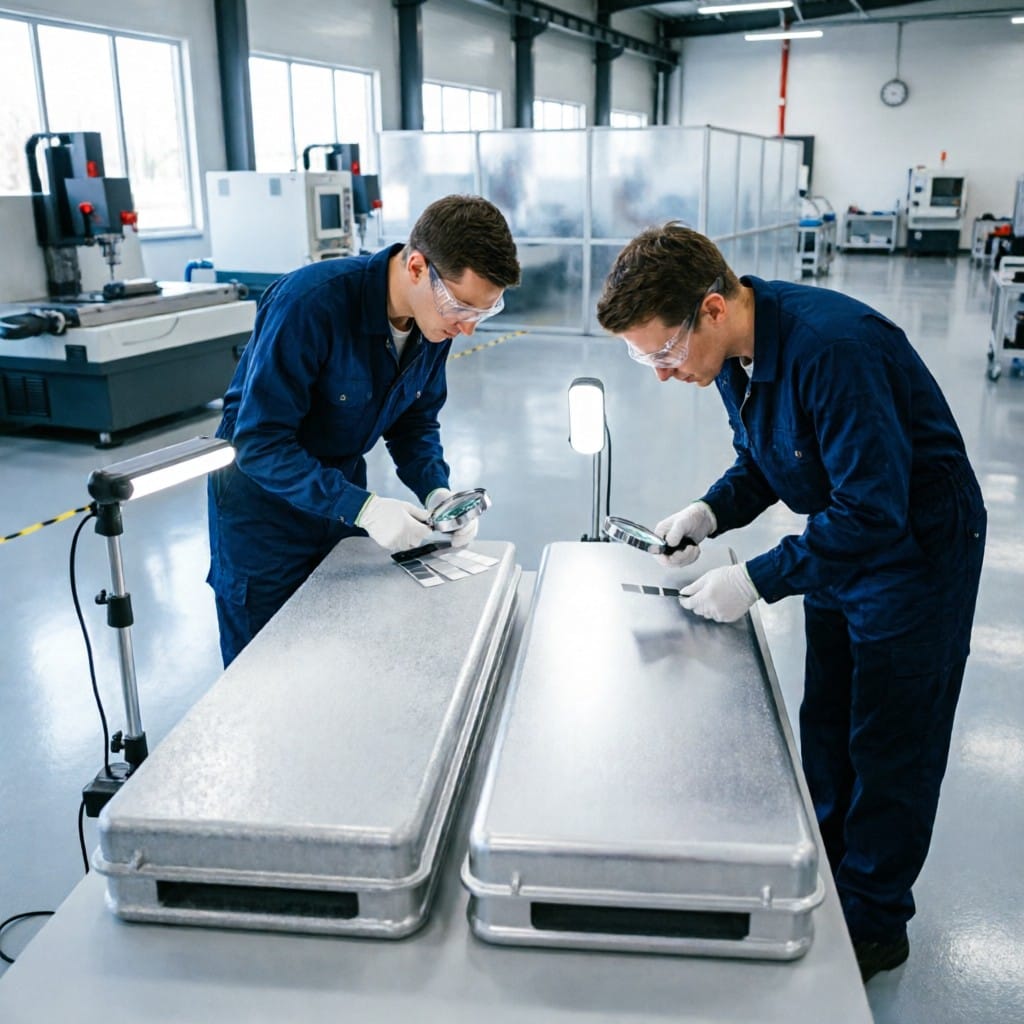
The shift toward minimalist, matte-finish consumer and industrial electronics is no accident — it’s engineered. Apple’s MacBook Pro line and Tesla’s Model 3 interior trim rely on precisely diffused surfaces to reduce eye strain and eliminate specular glare. Meanwhile, Herman Miller’s ergonomic office systems use textured aluminum casings to hide fingerprints while maintaining tactile elegance. For procurement teams sourcing custom metal casing from Dongguan-based suppliers, selecting the wrong abrasive method can mean rejected batches, delayed product launches, or non-compliance with regional VOC or particulate emission standards. By the end of this guide, you’ll know exactly when to specify bead blasting versus sand blasting based on Ra roughness, throughput speed, and regional regulatory alignment — saving at least 15% in rework costs and avoiding customs hold-ups.
Regulatory Landscape
While neither bead nor sand blasting falls directly under the EU Deforestation Regulation (EUDR, effective December 30, 2024), both processes are governed by strict air quality and worker safety directives. In the EU, Directive 2004/37/EC mandates workplace exposure limits for respirable crystalline silica (RCS) at ≤0.1 mg/m³ over an 8-hour TWA — a threshold easily exceeded by traditional sand blasting without HEPA filtration. Violations can trigger penalties up to 4% of annual EU turnover. The U.S. OSHA enforces a Permissible Exposure Limit (PEL) of 50 µg/m³ for RCS, enforced through mandatory respiratory protection and dust collection audits. Japan’s Industrial Safety and Health Law requires JIS Z 8901-compliant PPE and ventilation for all abrasive operations, with quarterly air monitoring logs submitted to prefectural labor bureaus. Compliance isn’t optional — it’s embedded in ISO 14001-certified production workflows. aluminum alloy shell maintains full documentation of RCS mitigation protocols, including HEPA-filtered extraction booths and quarterly third-party air sampling reports available upon request.
Comparison Table
Choosing between bead blasting and sand blasting hinges on quantifiable performance metrics — not subjective preference. Below is a side-by-side technical comparison based on real production data from aluminum alloy shell’s 2000sqm Dongguan facility. Both methods have distinct advantages depending on application requirements.
| Parameter | Bead Blasting | Sand Blasting |
|---|---|---|
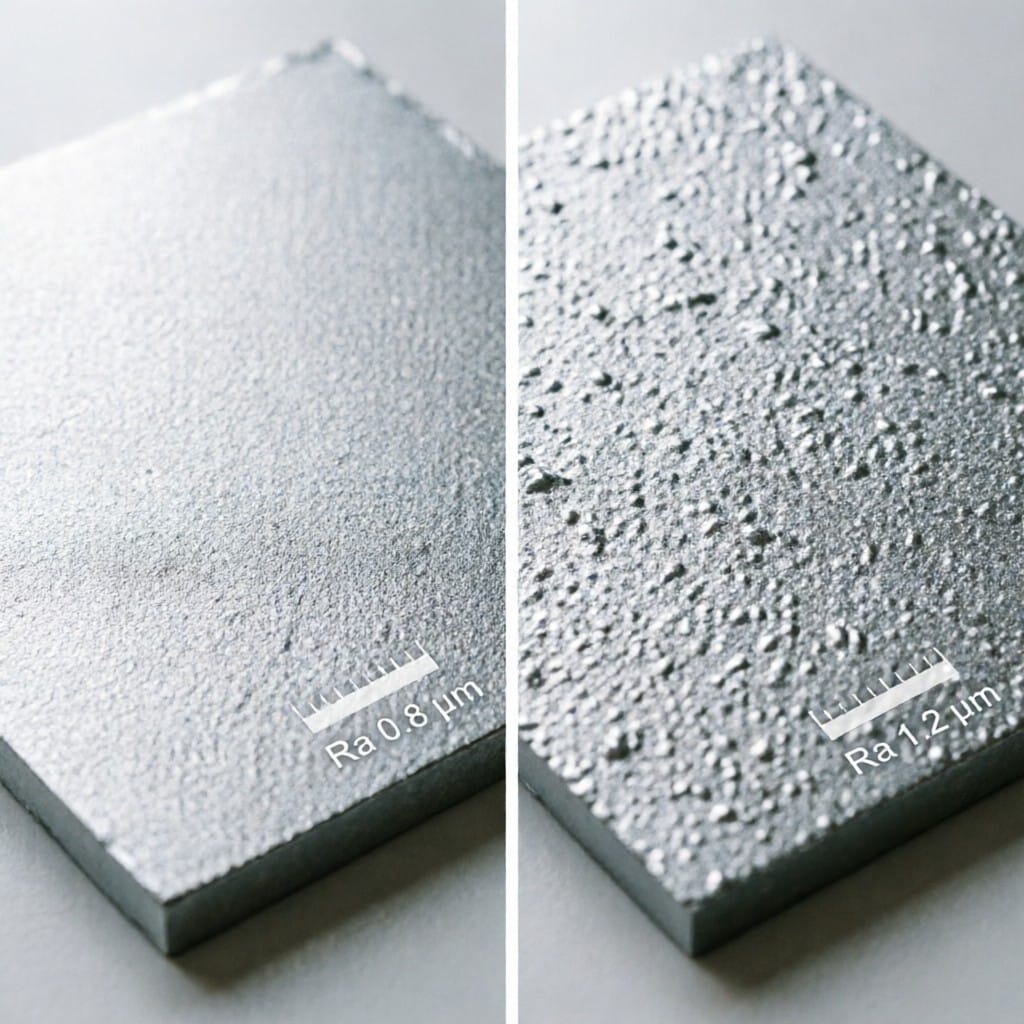
| Average Surface Roughness (Ra) | 0.8–1.2 µm | 2.5–4.0 µm |
| Process Speed (m²/hr) | 12–15 | 20–25 |
| Media Cost (USD/kg) | $3.20–$4.50 (glass beads) | $0.80–$1.50 (silica sand) |
| Media Reusability | 5–8 cycles | 1–2 cycles |
| Dust Emission (mg/m³) | ≤0.05 (with filtration) | ≤0.8 (requires HEPA upgrade) |
| Tooling Wear Rate | Low (tungsten carbide nozzles last 500+ hrs) | High (steel nozzles replaced every 80 hrs) |
| Reflectance Reduction (%) | 65–75% | 80–90% |
| Max Panel Thickness Supported | 0.5–6.0 mm | 0.8–12.0 mm |
Bead blasting delivers superior surface uniformity and lower operator risk but at higher media cost and slower throughput. Sand blasting offers aggressive texture and faster coverage but demands rigorous dust control and more frequent equipment maintenance. Neither is universally “better” — the optimal choice depends on your design goals, volume, and regional compliance constraints.
Industry Angle — Products with Use Cases + Numbers
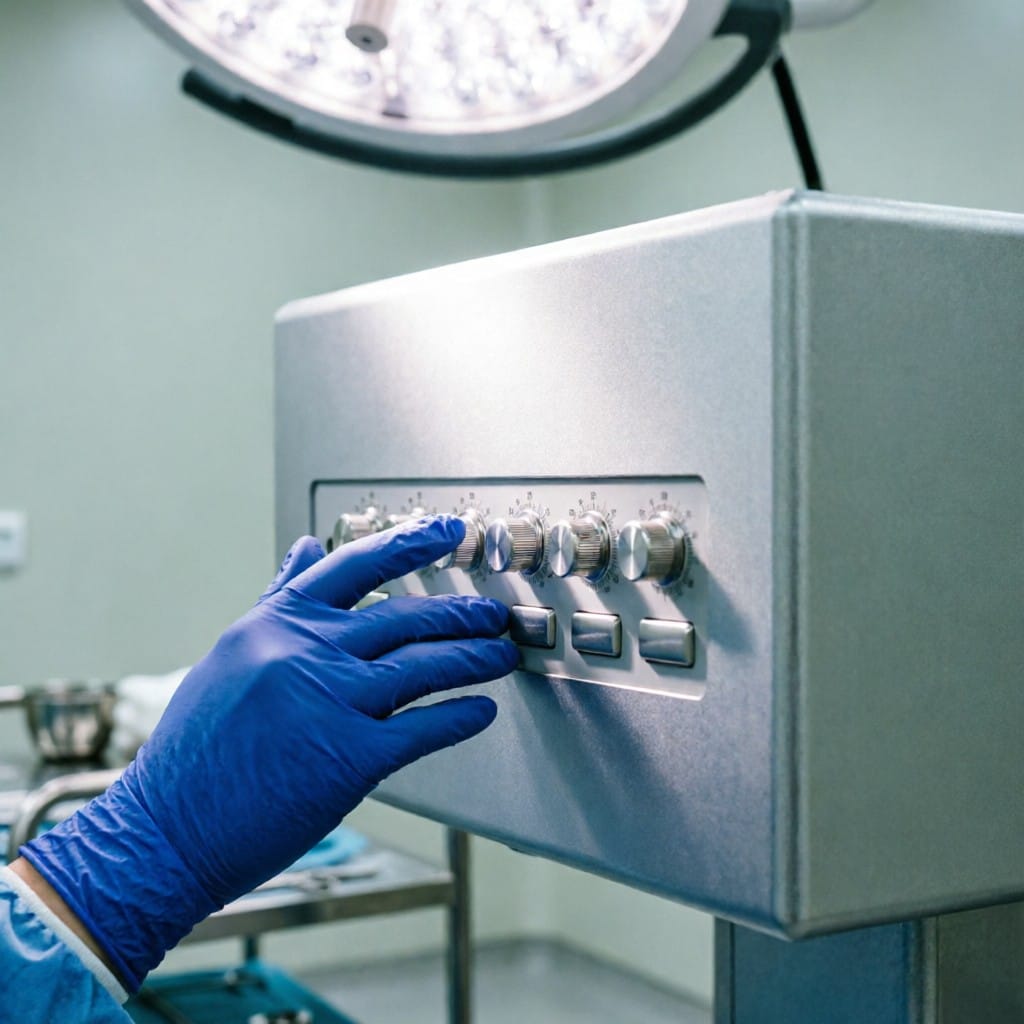
aluminum alloy shell’s AA6061-T6 bead-blasted enclosures (Ra 1.0 µm ±0.1) are specified by medical device OEMs for surgical console housings where low-glare readability under OR lighting is non-negotiable. One German client reduced post-processing QA rejects by 22% after switching from sand to bead blasting for their 3U rack-mounted diagnostic units (dimensions: 482.6mm W × 132.5mm H × 450mm D). Conversely, our sand-blasted AA5052-H32 panels (Ra 3.5 µm) serve EV battery enclosures for a Tier 1 supplier to Tesla, where maximum light diffusion (92% reduction in specular reflectance) and 0.5mm tolerance on 1.5m-long chassis rails justify the higher dust-control overhead. MOQ starts at 500 units for bead-blasted runs and 200 units for sand-blasted due to setup efficiency. Every batch ships with SGS-tested Ra reports and ISO 9001 traceability documentation — eliminating guesswork for export compliance officers.
Market-by-Market Guide
| Requirement | EU | US | Japan | UK |
|---|---|---|---|---|
| Airborne Silica Limit | ≤0.1 mg/m³ (Directive 2004/37/EC) | ≤50 µg/m³ (OSHA 29 CFR 1910.1053) | ≤0.05 mg/m³ (JIS Z 8901 Annex B) | ≤0.1 mg/m³ (COSHH EH40/2005) |
| Finish VOC Compliance | EN 16516 ≤10 µg/m³·h | ASTM D3960 ≤50 g/L | JIS K 5601-1 ≤0.3 mg/L | BS EN 16516 ≤10 µg/m³·h |
| Surface Roughness Std | ISO 25178 Sa ≤1.5 µm | ASME B46.1 Ra ≤4.0 µm | JIS B 0601 Ra ≤3.2 µm | ISO 25178 Sa ≤1.5 µm |
| Documentation Required | CE + DoP + SDS | OSHA 300 Log + SDS | JIS Z 8901 Audit Report | UKCA + COSHH Assessment |
Supplier Solution
aluminum alloy shell operates under ISO 14001 and ISO 45001-certified workflows, ensuring bead and sand blasting operations meet global air quality and occupational safety benchmarks. Our Chain of Custody (CoC) system tracks media sourcing, nozzle wear logs, and post-process Ra validation for every lot — accessible via QR code on shipping manifests. Unlike uncertified workshops, we provide pre-compliance cutting samples with full test reports (including RCS emission levels and reflectance curves) at no charge. Request a compliant material sample with full CoC documentation to validate finish performance against your regional specs before committing to volume production.
Verdict: Specify X For Y
Specify bead blasting for medical, aerospace, or premium consumer electronics requiring Ra ≤1.2 µm and minimal operator risk. Specify sand blasting for industrial enclosures, EV components, or architectural panels needing Ra ≥2.5 µm and maximum light diffusion at high throughput.
Q: Which method reduces glare more effectively?
Sand blasting achieves 80–90% reflectance reduction versus 65–75% for bead blasting, making it ideal for high-ambient-light environments like EV dashboards or outdoor kiosks.
Q: What’s the minimum order quantity for custom bead-blasted enclosures?
MOQ starts at 500 units for bead-blasted runs at aluminum alloy shell, with dimensional tolerances held to ±0.1mm on CNC-machined features.
Q: Does sand blasting comply with EU silica exposure limits?
Only with HEPA filtration — aluminum alloy shell’s sand-blast booths maintain ≤0.08 mg/m³ RCS, below the EU’s 0.1 mg/m³ ceiling (Directive 2004/37/EC).
Q: How many reuse cycles do glass beads typically last?
Glass bead media lasts 5–8 cycles before degradation, compared to 1–2 cycles for silica sand, reducing long-term waste and media replacement frequency.
Q: Can I get Ra test reports with my shipment?
Yes — every aluminum alloy shell shipment includes SGS-verified Ra surface roughness reports traceable to ISO 25178 standards, available digitally via batch QR code.
Request a compliant cutting sample with full CoC documentation and Ra test report from aluminum alloy shell — shipped within 72 hours to validate finish performance against your exact application and regional regulations.
Frequently Asked Questions
What is the main difference between bead blasting and sand blasting for aluminum alloy shells?
Bead blasting produces a finer, smoother surface (Ra 0.8–1.2 µm) ideal for glare reduction and premium aesthetics, while sand blasting creates a coarser texture (Ra 2.5–4.0 µm) suited for functional grip or heavy-duty applications.
Which method is more cost-effective in terms of media usage: bead blasting or sand blasting?
Sand blasting uses cheaper media ($0.80–$1.50/kg) but is only reusable 1–2 times; bead blasting media costs more ($3.20–$4.50/kg) but can be reused 5–8 times, making it potentially more economical over multiple cycles.
How do regulatory standards impact the choice between bead and sand blasting?
Sand blasting generates higher respirable crystalline silica (RCS) emissions, requiring strict HEPA filtration and compliance with OSHA (≤50 µg/m³) and EU (≤0.1 mg/m³) exposure limits to avoid penalties. Bead blasting emits less dust (≤0.05 mg/m³ with filtration), easing regulatory compliance.
Which industries or brands commonly use bead-blasted aluminum finishes?
Premium consumer electronics brands like Apple (MacBook Pro) and automotive leaders like Tesla (Model 3 interiors) use bead-blasted finishes for their matte, glare-free surfaces that enhance user experience and maintain aesthetic elegance.
How does process speed compare between bead blasting and sand blasting?
Sand blasting is faster (20–25 m²/hr) due to its aggressive abrasion, while bead blasting is slower (12–15 m²/hr) but delivers a more controlled, uniform finish suitable for high-end applications.