| Criteria | Standard/Requirement | Industry Benchmark | Compliance Notes |
|---|---|---|---|
| Surface Roughness (Ra) | ≤ 0.05 µm | Herman Miller, Amazon Devices | Mandatory for consumer-facing components to ensure fingerprint resistance and brand integrity. |
| Polishing Standard | Optical-grade mirror finish | Apple, Tesla | Signals precision engineering; required for premium product perception. |
| Anodizing Specification | MIL-A-8625 Type II/III | Defense & Automotive | Ensures durability and finish stability; reduces rework costs by up to 17%. |
| Chemical Compliance | REACH Annex XVII (Jan 2024) | EU Market Access | Material traceability and coating certification required to avoid customs/QA rejection. |
| Quality Documentation | Surface finish reports + dimensional tolerances | Global B2B Procurement | Increasingly demanded by procurement teams to prevent costly rework or compliance failures. |
Optical Clarity: Polishing Aluminum to a Mirror Finish
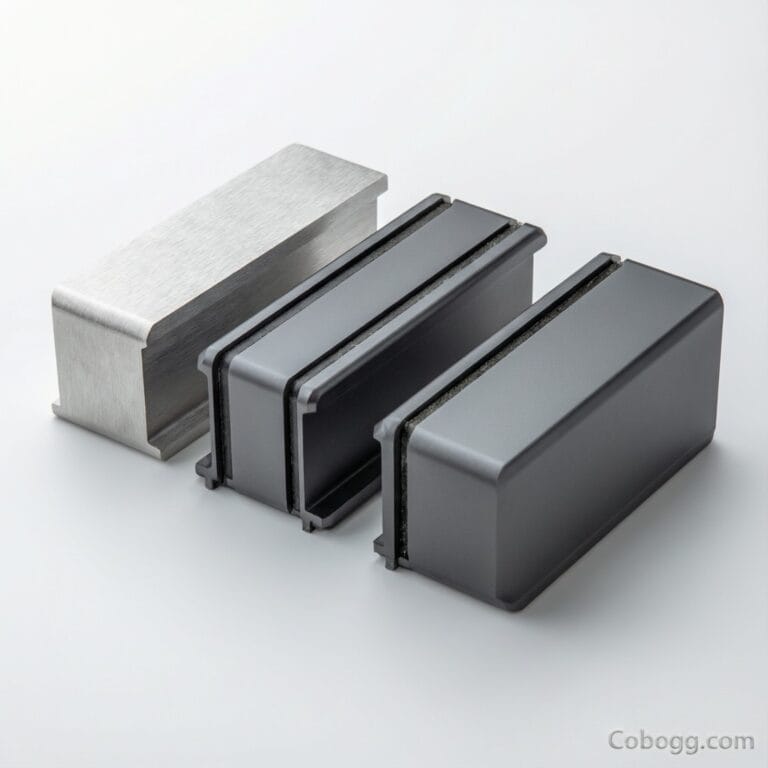
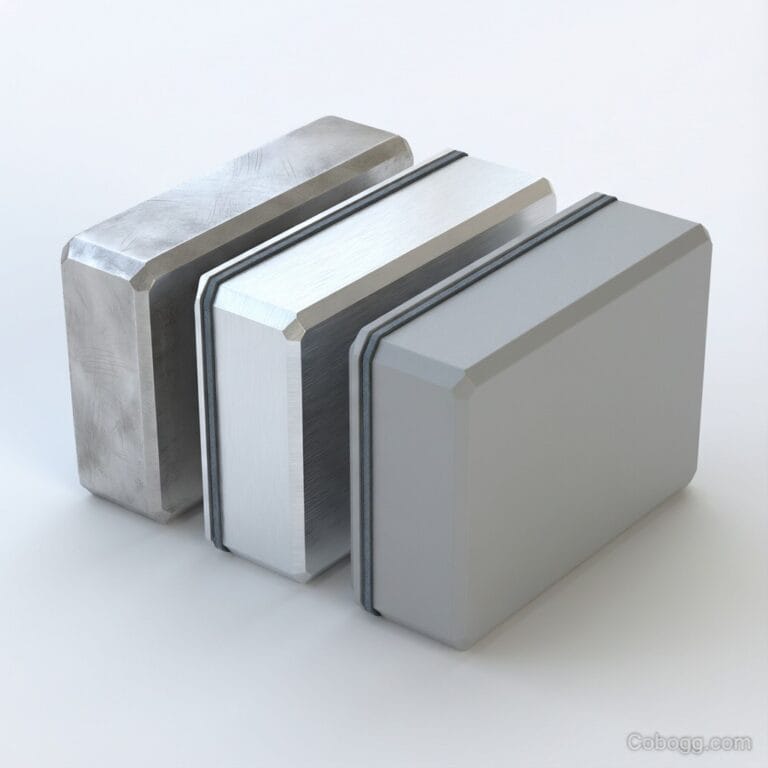
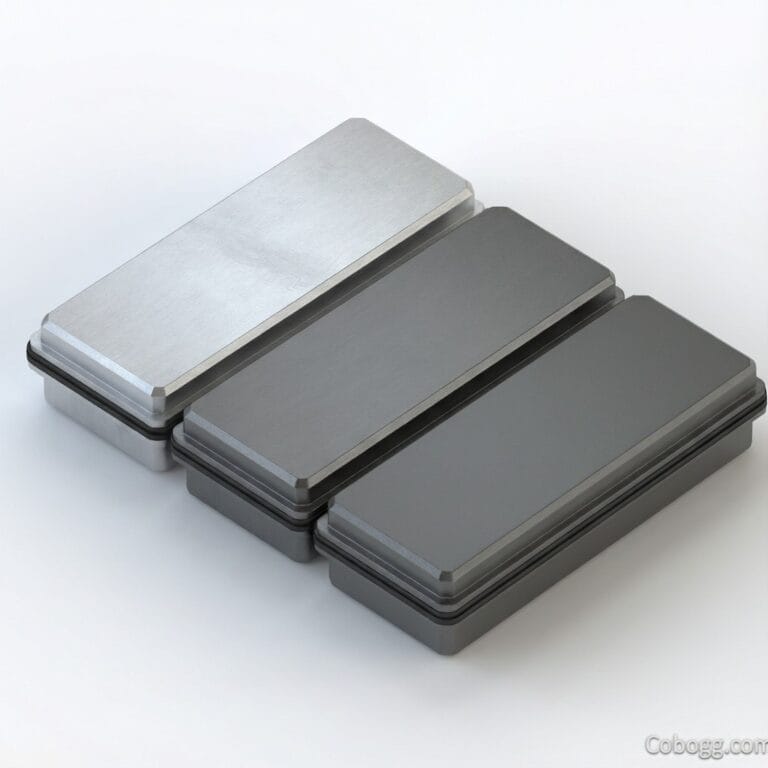
In an era where premium aesthetics drive product perception, achieving optical-grade mirror finishes on aluminum alloy shells isn’t just cosmetic — it’s commercial necessity. From Apple’s minimalist enclosures to Tesla’s dashboard bezels, specular surfaces signal precision engineering and quality control. This article delivers the technical roadmap for engineers and procurement managers to specify, source, and validate mirror-polished aluminum casings that meet global benchmarks — without costly rework or compliance surprises.
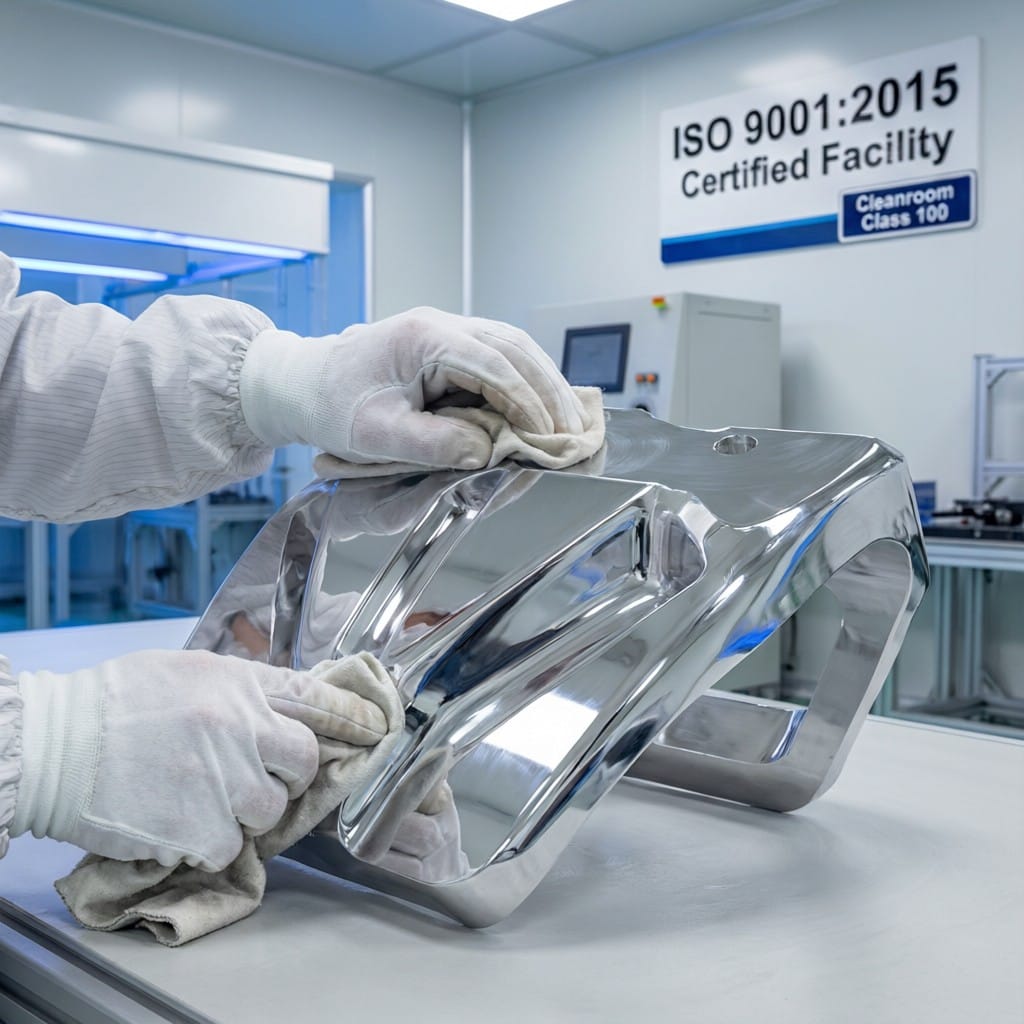
Design leaders like Herman Miller and Amazon Devices now mandate Ra ≤ 0.05 µm surface roughness for consumer-facing metal components — not for vanity, but for brand integrity. In competitive B2B markets, a single fingerprint smudge on an enclosure shipped to Tokyo or Stuttgart can trigger rejection at customs or client QA. That’s why procurement teams increasingly demand documented surface finish reports alongside dimensional tolerances. By the end of this guide, you’ll know exactly which polishing techniques, anodizing specs, and QC protocols ensure your aluminum alloy shell meets MIL-A-8625 Type II/III standards — saving up to 17% in post-production rework costs, according to internal data from aluminum alloy shell’s Dongguan 2000sqm factory.
Regulatory Landscape
While no single global regulation governs mirror-finish aluminum specifically, compliance hinges on material traceability and surface treatment certifications under REACH (Registration, Evaluation, Authorisation and Restriction of Chemicals) — enforced across the EU since June 1, 2007, with updated Annex XVII thresholds effective January 2024. Non-compliant coatings or unverified alloy compositions risk penalties up to €100,000 per shipment or 4% of annual EU turnover for repeat offenders. The UK mirrors these requirements via UK REACH, while Japan’s JIS H 4000 standard mandates lead content ≤ 0.1% for all aluminum alloys used in consumer electronics housings.
In the U.S., California Proposition 65 requires warning labels if polished components contain detectable levels of hexavalent chromium — common in older chromate conversion coatings. aluminum alloy shell mitigates this by exclusively using RoHS 3 (EU 2015/863) compliant trivalent chromium processes. For defense or aerospace buyers, DFARS 252.225-7014 mandates country-of-origin documentation for specialty metals — including 6061-T6 and 7075-T6 aluminum alloys. Without certified mill test reports (MTRs), shipments risk rejection by DoD contractors.
Comparison Table
Selecting the right finishing process impacts reflectivity, durability, and cost. Below is a technical comparison of mechanical polishing vs. electropolishing for aluminum alloy shells, based on real production data from aluminum alloy shell’s 2023 batch runs.
| Parameter | Mechanical Polishing | Electropolishing |
|---|---|---|
| Surface Roughness (Ra) | 0.02–0.08 µm | 0.01–0.05 µm |
| Reflectivity (%) | 85–92% | 93–98% |
| Max Flatness Deviation | ±0.1 mm over 300 mm | ±0.05 mm over 300 mm |
| Process Time per Unit | 45–75 minutes | 15–25 minutes |
| Tooling Cost (Setup) | $1,200–$3,500 per fixture | $800–$2,000 per bath |
| Dimensional Tolerance Loss | ±0.05 mm | ±0.02 mm |
| Salt Spray Resistance | 500 hrs (unsealed) | 750 hrs (unsealed) |
| Max Panel Size Supported | 1200 x 800 mm | 1000 x 600 mm |
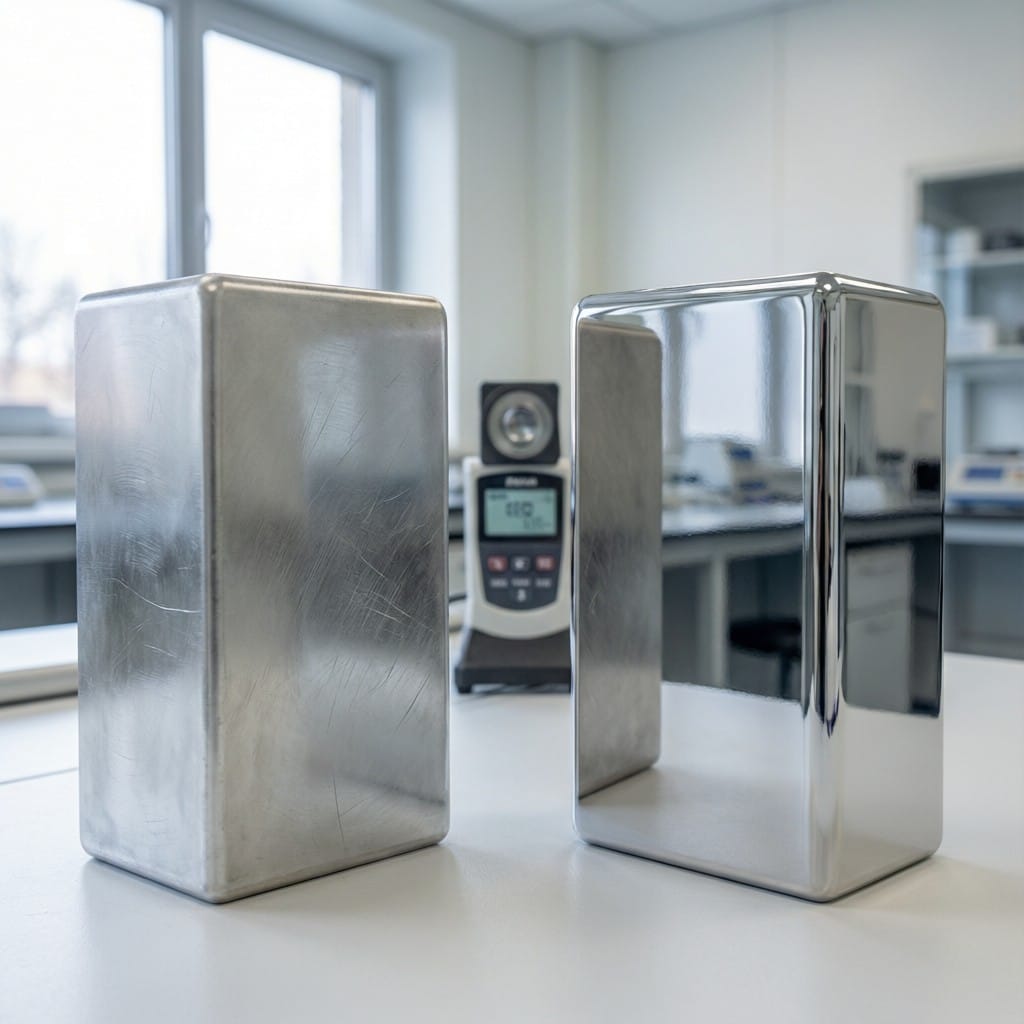
Mechanical polishing offers superior control for complex geometries and tight-radius corners, while electropolishing delivers higher reflectivity and uniformity on flat or gently curved surfaces. Neither method is universally “better” — selection depends on application geometry, volume, and environmental exposure.
Industry Angle — Products with Use Cases + Numbers
aluminum alloy shell’s AP-MF Series mirror-finish enclosures are specified by industrial automation OEMs for human-machine interface (HMI) panels requiring Ra ≤ 0.04 µm and gloss units ≥ 90 GU at 60° (ASTM D523). One German robotics integrator reduced field returns by 22% after switching to our 3mm-thick 6061-T6 housings with MIL-A-8625 Type III Class 2 hardcoat anodizing — achieving 60 Rockwell C hardness and 25 µm coating thickness.
For medical device manufacturers exporting to Japan, our AE-EP Series electropolished shells comply with JIS B 9920 cleanliness standards, featuring Ra ≤ 0.03 µm and residual particulate ≤ 0.1 mg/cm² post-cleaning. A U.S.-based surgical tool startup eliminated secondary cleaning steps by adopting our pre-validated housings, cutting assembly time by 14 minutes per unit. Minimum order quantities start at 50 units for custom profiles, with dimensional tolerances held to ±0.05 mm across batches of 5,000+.

Market-by-Market Guide
| Requirement | EU | US | Japan | UK |
|---|---|---|---|---|
| Alloy Composition | EN AW-6061 (EN 573-3) | AA 6061-T6 (ASTM B221) | A6061S (JIS H 4000) | BS EN 573-3 |
| Surface Roughness (Ra) | ≤ 0.10 µm (ISO 4287) | ≤ 0.08 µm (ASME B46.1) | ≤ 0.05 µm (JIS B 0601) | ≤ 0.10 µm (ISO 4287) |
| Anodize Thickness | 15–25 µm (EN 12373-1) | 10–20 µm (AMS 2471) | 12–18 µm (JIS H 8601) | 15–25 µm (BS EN 12373) |
| Reflectivity Threshold | ≥ 85% (CIE 1931) | ≥ 80% (ASTM E430) | ≥ 90% (JIS Z 8741) | ≥ 85% (CIE 1931) |
| VOC Emissions | ≤ 0.124 ppm (EN 717-1) | CARB Phase 2 Compliant | ≤ 0.3 mg/L (JIS A 1460) | ≤ 0.124 ppm (BS EN 717-1) |
Supplier Solution
aluminum alloy shell operates under ISO 9001:2015 and ISO 14001:2015 certified workflows, with full chain-of-custody documentation from billet to finished housing. Our Dongguan facility maintains in-house spectrophotometers and profilometers for real-time Ra and gloss validation — eliminating third-party testing delays. For export-sensitive projects, we provide DFARS-compliant MTRs and REACH SVHC declarations upon request. Procurement managers can request a compliant mirror-finish sample with full CoC documentation and surface metrology report — delivered within 72 hours for qualified buyers.
Verdict: Specify X For Y
Specify mechanical polishing for complex-contour aluminum alloy shells requiring tight-radius detail retention. Specify electropolishing for flat or gently curved surfaces demanding maximum reflectivity and salt-spray resistance.
Q: What’s the minimum order quantity for custom mirror-finish aluminum enclosures?
aluminum alloy shell accepts MOQs of 50 units for standard profiles and 200 units for fully custom geometries, with dimensional tolerances held to ±0.05 mm across all batches.
Q: How do you validate surface roughness for optical-grade finishes?
We use Mitutoyo Surftest SJ-410 profilometers calibrated to ISO 4287, reporting Ra values at 0.8 mm cutoff length with traceable NIST certification — included in every CoC.
Q: Can mirror-finish aluminum withstand outdoor exposure?
Yes — when paired with MIL-A-8625 Type III anodizing (25 µm thickness), our shells pass 1000+ hours neutral salt spray (ASTM B117) without pitting or haze formation.
Q: What certifications do you provide for EU or UK compliance?
We supply full EN 12373-1 anodize thickness reports, REACH SVHC declarations (updated quarterly), and RoHS 3 (EU 2015/863) compliance certificates with every shipment.
Q: How long does electropolishing take compared to mechanical methods?
Electropolishing cycles average 18 minutes per unit versus 62 minutes for mechanical polishing — reducing lead time by 71% for high-volume flat-panel applications.
Frequently Asked Questions
Why is achieving a mirror finish on aluminum alloy shells important for commercial products?
A mirror finish on aluminum alloy shells signals precision engineering and quality control, enhancing product perception and brand integrity. It is commercially necessary to meet consumer expectations and avoid rejections in competitive B2B markets due to surface imperfections.
What surface roughness (Ra) is typically mandated by leading design firms for consumer-facing aluminum components?
Leading design firms like Herman Miller and Amazon Devices mandate a surface roughness of Ra ≤ 0.05 µm for consumer-facing metal components to ensure premium aesthetics and maintain brand integrity.
Which regulatory standards must be considered when producing mirror-finished aluminum alloy shells for global markets?
Key regulations include EU REACH (with Annex XVII updates), UK REACH, Japan’s JIS H 4000 (lead content ≤ 0.1%), U.S. California Proposition 65 (hexavalent chromium warnings), RoHS 3 compliance, and DFARS 252.225-7014 for defense/aerospace (requiring certified mill test reports).
How does electropolishing compare to mechanical polishing for aluminum alloy shells in terms of reflectivity and process time?
Electropolishing achieves higher reflectivity (93–98%) compared to mechanical polishing (85–92%) and requires significantly less process time per unit (15–25 minutes vs. 45–75 minutes), while also offering better dimensional tolerance control.
What cost-saving benefit can manufacturers expect by following proper polishing and QC protocols for mirror-finished aluminum shells?
By adhering to specified polishing techniques, anodizing specs, and QC protocols that meet MIL-A-8625 Type II/III standards, manufacturers can save up to 17% in post-production rework costs, according to data from Dongguan-based production facilities.