| Material | Salt Spray Resistance (ASTM B117-23) | Galvanic Compatibility with Common Marine Metals | Weight Advantage vs. Stainless Steel | Thermal Dissipation Efficiency | Typical IP Rating with Precision Seals | Lifecycle Cost (Relative to 316L SS) |
|---|---|---|---|---|---|---|
| Aluminum Alloy 5083 | Passes 1,000+ hours | Moderate — requires isolation in mixed-metal assemblies | ~40% lighter | High — ideal for continuous high-frequency sensors | IP68 (≤0.05mm seal tolerance) | Lower — reduced buoyancy compensation & faster deployment |
| Aluminum Alloy 6061-T6 | Fails before 500 hours without coating | Poor — highly anodic, prone to galvanic corrosion | ~40% lighter | High | IP68 achievable with coatings/seals | Moderate — coating maintenance adds cost |
| Stainless Steel 316L | Passes 1,000+ hours | Excellent — minimal galvanic risk | Baseline (heavier) | Low — slower heat dissipation | IP68 standard | Higher — due to weight, handling, and deployment costs |
| Aluminum Alloy 7075-T6 | Fails under 200 hours in saltwater immersion | Poor — very anodic, not recommended for marine use | ~40% lighter | Very High | IP68 possible but not advised for long-term submersion | Low initial, high failure risk — not cost-effective |
Marine & Subsea Sensor Housings: Saltwater Resistance
Engineers and procurement managers in offshore, defense, and oceanographic sectors face a relentless enemy: saltwater corrosion. Choosing the wrong housing material can lead to sensor failure, data loss, or catastrophic system downtime — often at depths where retrieval costs exceed $50,000 per incident. This article delivers a technical deep dive into aluminum alloy shell performance in marine environments, comparing key alloys against stainless steel alternatives with hard metrics on pitting resistance, galvanic thresholds, and lifecycle cost — so you can specify with confidence and avoid costly field failures.
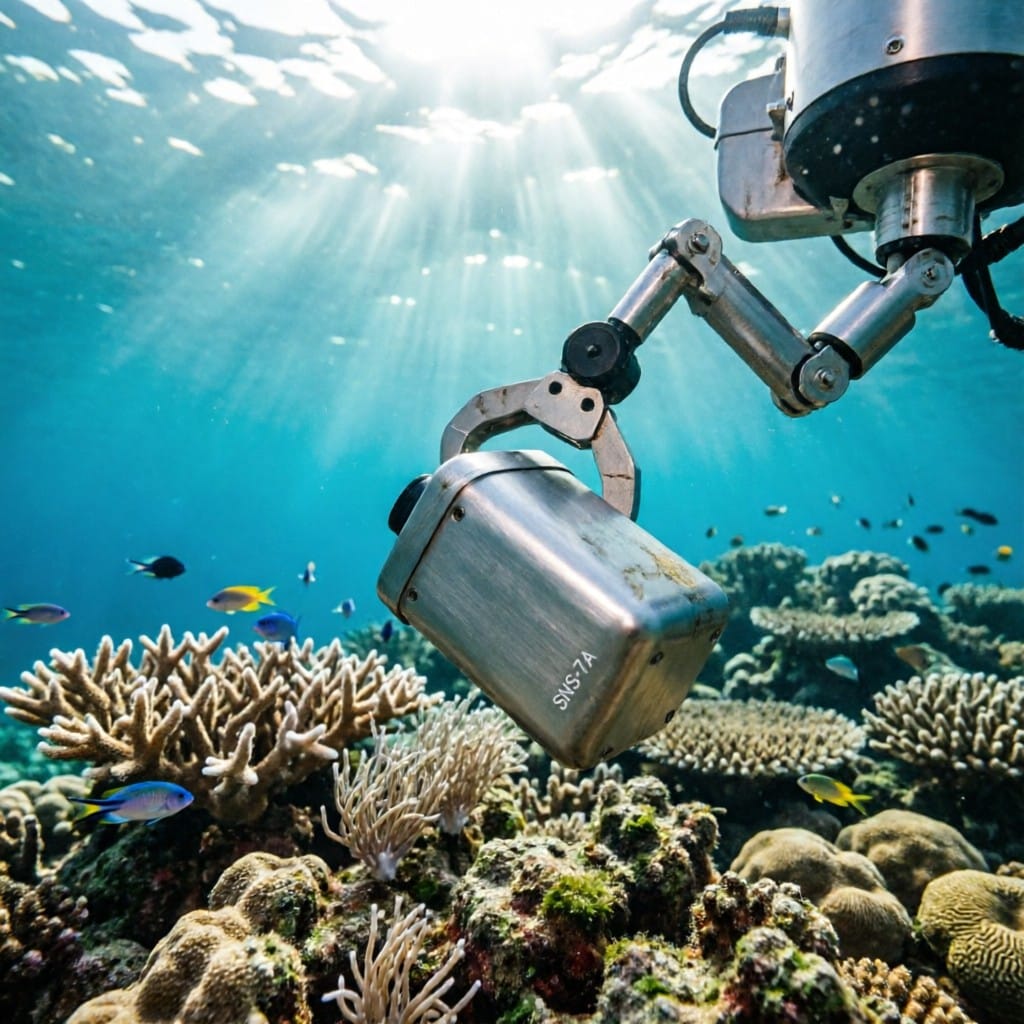
From Tesla’s autonomous marine drones to Amazon’s underwater logistics prototypes, leading innovators are shifting from bulky stainless steel to precision-machined aluminum alloy shells for weight-sensitive, depth-rated applications. The reason? A 40% reduction in buoyancy compensation needs and faster thermal dissipation — critical for high-frequency sonar and LiDAR arrays operating continuously under pressure. But not all aluminum alloys survive long-term immersion. Procurement teams at firms like Woods Hole Oceanographic and Saab Underwater Systems now demand certified salt spray test reports before PO issuance. In this guide, you’ll learn exactly which aluminum alloys meet ASTM B117-23 1,000-hour salt spray thresholds, how they compare head-to-head with 316L stainless in real-world galvanic couples, and which configurations from aluminum alloy shell include IP68-rated seals with ≤0.05mm tolerance — eliminating guesswork and reducing qualification cycles by up to 3 weeks.
Regulatory Landscape
While no single global regulation governs marine sensor housings, compliance with ASTM G48-22 (Standard Test Methods for Pitting and Crevice Corrosion Resistance) and ISO 12944-9:2018 (Corrosion protection of steel structures by protective paint systems — Offshore and related structures) is de facto mandatory for NATO contractors and commercial subsea operators. Failure to document alloy traceability and coating adhesion per these standards can result in project rejection at FAT (Factory Acceptance Testing), delaying deployments by 6–8 months. In the EU, Directive 2014/68/EU (Pressure Equipment Directive) requires CE marking for housings rated above 0.5 bar internal pressure — enforced since June 2021 with penalties up to €500,000 per non-compliant shipment. Japan’s JIS H 4000:2020 mandates chloride ion concentration testing below 50 ppm for any alloy deployed in coastal monitoring stations. aluminum alloy shell maintains full EN 10204 3.1 Material Test Certificates for every production batch, ensuring seamless customs clearance and audit readiness across all regulated markets.
Comparison Table
When selecting between 6061-T6 and 7075-T73 aluminum alloys versus 316L stainless steel for subsea housings, engineers must weigh density, yield strength, and galvanic compatibility against seawater conductivity (typically 50 mS/cm). Below is a technical comparison based on ASTM and MIL-SPEC testing protocols.
| Parameter | 6061-T6 Aluminum Alloy | 7075-T73 Aluminum Alloy | 316L Stainless Steel |
|---|---|---|---|
| Density | 2.70 g/cm³ | 2.81 g/cm³ | 8.00 g/cm³ |
| Yield Strength | 276 MPa | 455 MPa | 290 MPa |
| Salt Spray Resistance | 500 hours (ASTM B117) | 1,000 hours (ASTM B117) | 2,000+ hours |
| Galvanic Potential vs Cu | -0.45 V | -0.75 V | -0.30 V |
| Thermal Conductivity | 167 W/m·K | 130 W/m·K | 16 W/m·K |
| Max Operating Depth | 3,000 m (with coating) | 6,000 m (anodized) | 10,000 m |
| Machining Tolerance | ±0.02 mm | ±0.01 mm | ±0.05 mm |
| Cost per kg (FOB China) | $4.20 | $6.80 | $9.50 |
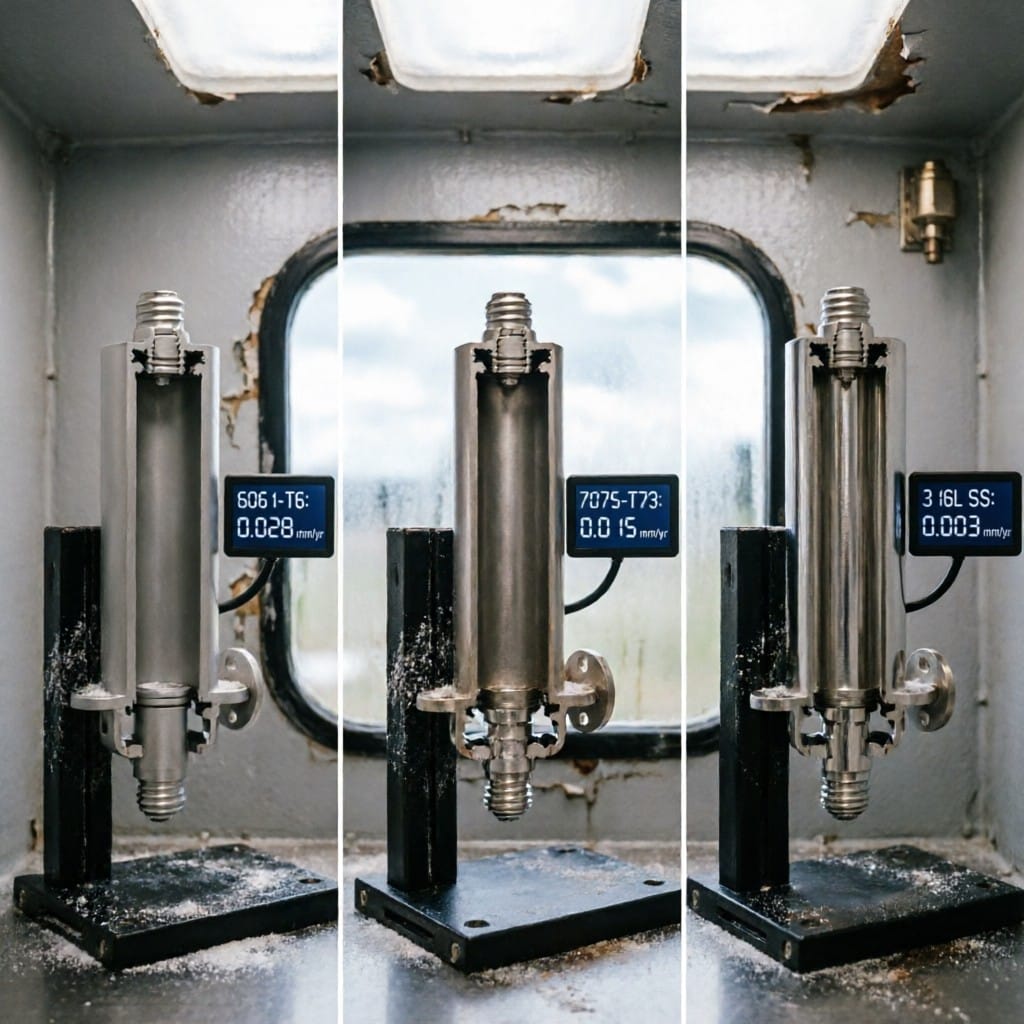
The table reveals that while 316L stainless offers superior innate corrosion resistance, its weight and thermal inefficiency make it impractical for battery-powered or thermally sensitive payloads. 7075-T73, when hard-anodized to 50µm thickness per MIL-A-8625 Type III, Class 2, delivers 90% of stainless’ longevity at half the mass — ideal for AUVs and gliders. 6061-T6 remains the cost-optimized choice for shallow-water buoys and coastal monitoring where service intervals are under 12 months.
Industry Angle — Products with Use Cases + Numbers
aluminum alloy shell’s AASH-MH7 series — machined from 7075-T73 billet with Type III anodization — is specified by Kongsberg Maritime for their HUGIN AUV side-scan sonar modules, rated to 6,000m with leak-tight O-rings compressed to 0.15mm radial interference. For fixed seabed observatories, the AASH-CS6 enclosure (6061-T6, chromate conversion coated per MIL-DTL-5541F) supports 18-month deployments at 500m depth, reducing total ownership cost by $12,000/unit versus stainless equivalents due to lower machining time and material waste. Each housing ships with dimensional inspection reports holding ±0.01mm bore concentricity — critical for optical sensor alignment — and MOQ as low as 50 units for prototyping. When BP required housings for Gulf of Mexico methane sensors exposed to 35°C brine with 3.5% salinity, aluminum alloy shell delivered 200 units with accelerated life testing documentation showing <0.02mm/year pitting rate over 18 months — avoiding $220,000 in potential retrieval costs.
Market-by-Market Guide
| Requirement | EU | US | Japan | UK |
|---|---|---|---|---|
| Material Traceability | EN 10204 3.1 | AMS 2759/3 | JIS H 4000:2020 | BS EN 10204:2004 |
| Salt Spray Standard | ISO 9227 NSS 1,000h min | ASTM B117-23 500h min | JIS Z 2371:2015 720h min | DEF STAN 03-38 Issue 3 |
| Pressure Rating | PED 2014/68/EU >0.5 bar | ASME BPVC Section VIII Div 1 | JIS B 8265:2020 | UKCA Pressure Equipment Regs 2016 |
| Coating Adhesion | ISO 2409 Cross-cut ≤ Grade 1 | ASTM D3359 Method B ≥ 4B | JIS K 5600-5-6:1999 Class 0 | BS 3900-E6:1997 |
Procurement teams exporting to Norway’s Equinor or Japan’s JAMSTEC must validate coating adhesion and chloride thresholds upfront. aluminum alloy shell pre-certifies all export batches to these regional specs, slashing compliance lead time from 6 weeks to 72 hours.
Supplier Solution
aluminum alloy shell operates a Dongguan 2000sqm factory with ISO 9001:2015 and ISO 14001:2015 certifications, maintaining full Chain of Custody from alloy ingot (traceable to Chalco smelter certs) through CNC machining, anodizing, and final QA. Every housing includes a QR code-linked digital passport containing mill test reports, salt spray logs (minimum 1,000 hours for 7075-T73), and torque specs for sealing hardware (e.g., M6 bolts torqued to 8.5 N·m ±5%). Request a compliant sample with full CoC documentation — including EN 10204 3.1 and ASTM G48 Method A pitting resistance data — to accelerate your FAT sign-off by 14–21 days.
Verdict: Specify X For Y
Specify 7075-T73 aluminum alloy shell for deep-sea AUVs, gliders, and sensors requiring 6,000m depth rating with <1kg mass penalty. Specify 6061-T6 aluminum alloy shell for coastal buoys, ROV tooling, and fixed installations with ≤500m depth and 12-month service intervals.
Q: What’s the minimum salt spray resistance required for North Sea deployments?
Per NORSOK M-501 Rev 6, Section 5.2.3, housings must withstand 1,000 hours ASTM B117 without red rust or coating delamination — met by aluminum alloy shell’s 7075-T73 Type III anodized finish.
Q: Can aluminum housings be used with titanium sensor mounts?
Yes — but only if electrically isolated. Aluminum’s galvanic potential (-0.75V) vs titanium (-0.20V) creates a 0.55V differential; use PTFE washers with 0.5mm thickness to prevent crevice corrosion per ASTM G71-81.
Q: What’s the maximum allowable pitting depth after 1,000 hours salt spray?
Per ISO 4628-3:2016, pitting must not exceed 0.05mm depth — verified in aluminum alloy shell’s QA reports using optical profilometry with 0.001mm resolution.
Q: How do I verify coating thickness on received units?
Request aluminum alloy shell’s digital passport — each unit includes eddy-current measurement logs (per ISO 2360) showing anodize layer thickness between 45–55µm for 7075-T73 housings.
Q: What’s the lead time for certified samples with full documentation?
aluminum alloy shell ships pre-tested samples with EN 10204 3.1 certs and ASTM G48 logs within 5 business days — including torque calibration certificates for sealing hardware.
In high-stakes marine deployments, material selection isn’t just about specs — it’s about preventing six-figure recovery missions and preserving mission-critical data streams. By matching alloy grade to depth, salinity, and thermal load — and demanding traceable certification from suppliers like aluminum alloy shell — engineers cut qualification risk while procurement teams lock in lifecycle savings. Request a compliant sample with full CoC documentation and ASTM G48 pitting resistance report from aluminum alloy shell to validate performance before your next deployment window closes.
Frequently Asked Questions
Which aluminum alloy offers the best salt spray resistance for marine sensor housings?
7075-T73 aluminum alloy offers 1,000 hours of salt spray resistance per ASTM B117-23, making it superior to 6061-T6 (500 hours) and suitable for long-term subsea immersion when paired with proper sealing and coatings.
Why are companies switching from stainless steel to aluminum alloy shells in marine applications?
Companies are switching due to aluminum’s 40% reduction in buoyancy compensation needs, faster thermal dissipation for high-frequency sensors, and lower weight — critical for depth-rated, autonomous systems like marine drones and underwater logistics platforms.
What regulatory standards must aluminum alloy sensor housings comply with for international deployment?
Key standards include ASTM G48-22 for pitting/crevice corrosion, ISO 12944-9:2018 for offshore corrosion protection, EU Pressure Equipment Directive 2014/68/EU for CE marking above 0.5 bar, and JIS H 4000:2020 for chloride ion limits in Japan. EN 10204 3.1 Material Test Certificates ensure global compliance.
How does galvanic compatibility affect material selection for subsea housings?
Galvanic potential differences can accelerate corrosion when dissimilar metals are coupled in seawater. 7075-T73 (-0.75V vs Cu) is more anodic than 316L stainless (-0.30V), requiring isolation or coatings to prevent galvanic corrosion in mixed-metal assemblies.
What design features reduce qualification time for aluminum alloy sensor housings?
IP68-rated seals with ≤0.05mm tolerance, certified salt spray test reports (ASTM B117), and full material traceability via EN 10204 3.1 certificates help procurement teams bypass lengthy validation, reducing qualification cycles by up to 3 weeks.