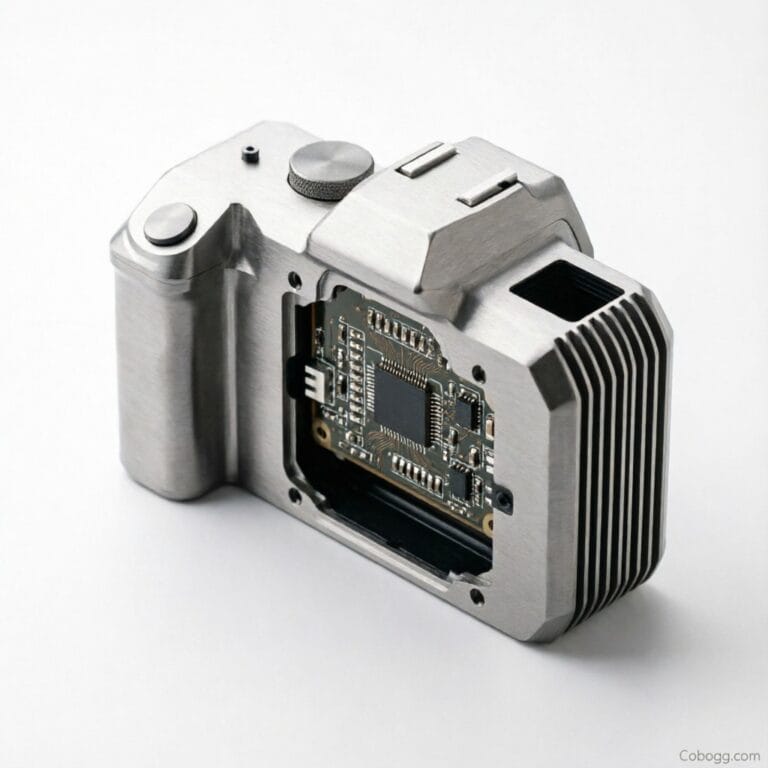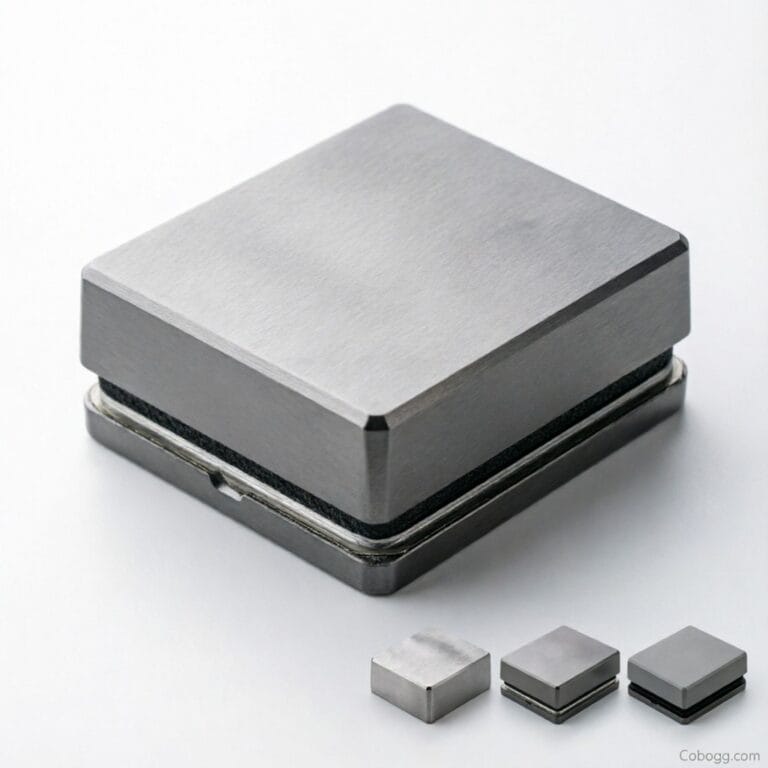
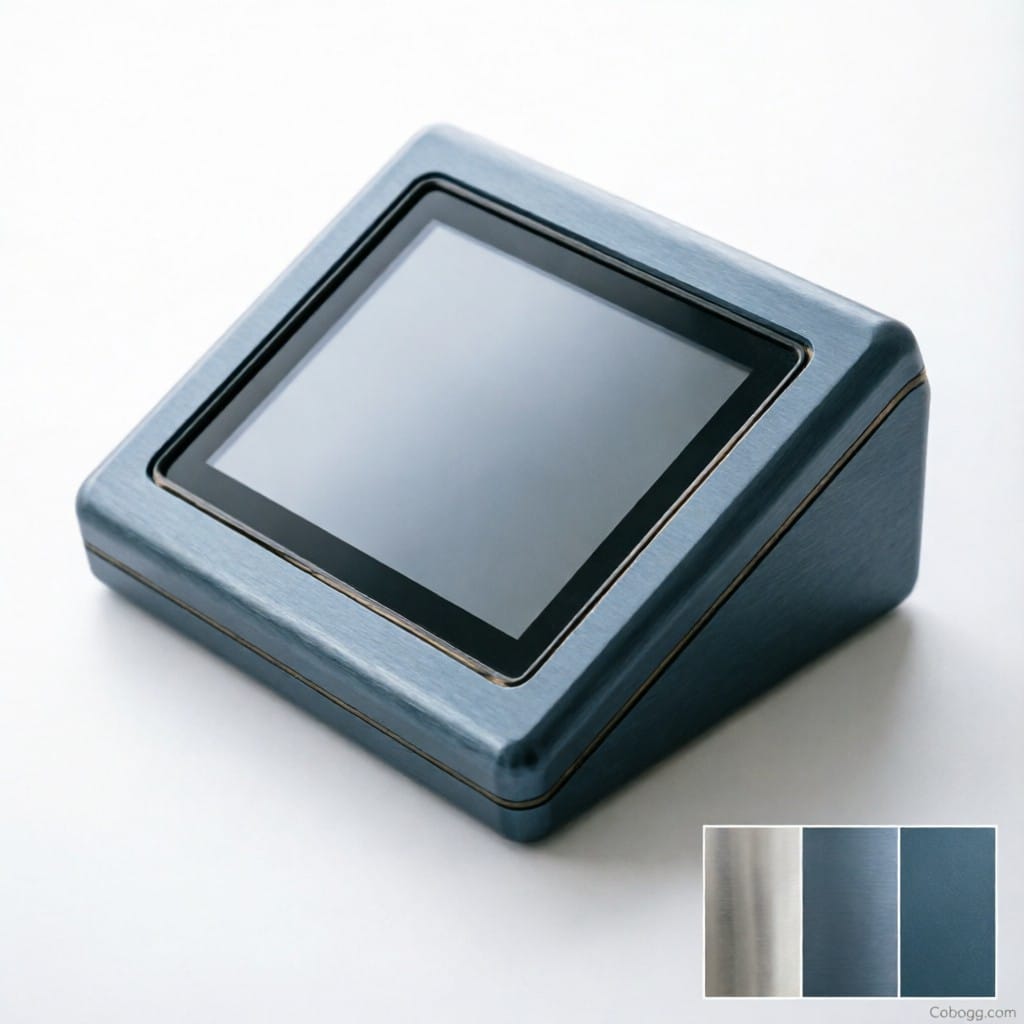
| Feature | Aluminum Alloy Shell | Plastic/Composite Shell | Stainless Steel Shell |
|---|---|---|---|
| Durability (Shock/Vibration) | MIL-STD compliant, withstands 5G vibration, 100k+ actuations | Moderate impact resistance, degrades under repeated stress | High durability, but heavier and prone to denting |
| Tolerance & Precision | CNC +/-0.001in tolerance for seamless fit | ±0.01in typical, may warp with temperature | ±0.005in achievable, harder to machine finely |
| Environmental Resistance | IP65 rated, resists coolant, dust, moisture | IP54–IP65 possible with coatings, less chemical resistant | IP66+ capable, excellent corrosion resistance |
| Weight | Lightweight, ideal for wall-mount or mobile HMIs | Lightest option | Heaviest, adds structural load |
| Thermal Conductivity | High — aids heat dissipation from internal electronics | Low — may require additional cooling | Moderate — slower heat transfer than aluminum |
| Compliance Readiness | Fulfills EU Machinery Regulation 2023/1230 (IP65, 5G vib) | May require redesign/testing for new regulations | Compliant but over-engineered for many HMI applications |
| Lifecycle Cost Reduction | Up to 30% savings via reduced failures and warranty claims | Lower upfront cost, higher long-term maintenance | High initial and machining cost, minimal maintenance |
| Aesthetic & Finish | Anodized/matte finishes, Apple/Tesla-inspired minimalist look | Limited premium finishes, scratches show easily | Brushed/polished industrial look, fingerprints visible |
HMI Frames: Rugged Bezels for Industrial Reliability
As factories evolve into smart, touch-driven environments — inspired by the seamless interfaces of Tesla’s control panels and Apple’s minimalist design ethos — Human-Machine Interface (HMI) frames are no longer cosmetic afterthoughts. They’re mission-critical armor protecting sensitive electronics from shock, dust, moisture, and operator abuse. For engineers and procurement teams sourcing rugged bezels for global deployments, aluminum alloy shell delivers precision-engineered enclosures that merge MIL-STD durability with CNC +/-0.001in tolerance — eliminating field failures before they happen. In this guide, you’ll learn how to specify the right HMI frame material for harsh environments, navigate global compliance thresholds, and cut lifecycle costs by up to 30% through smarter material selection.
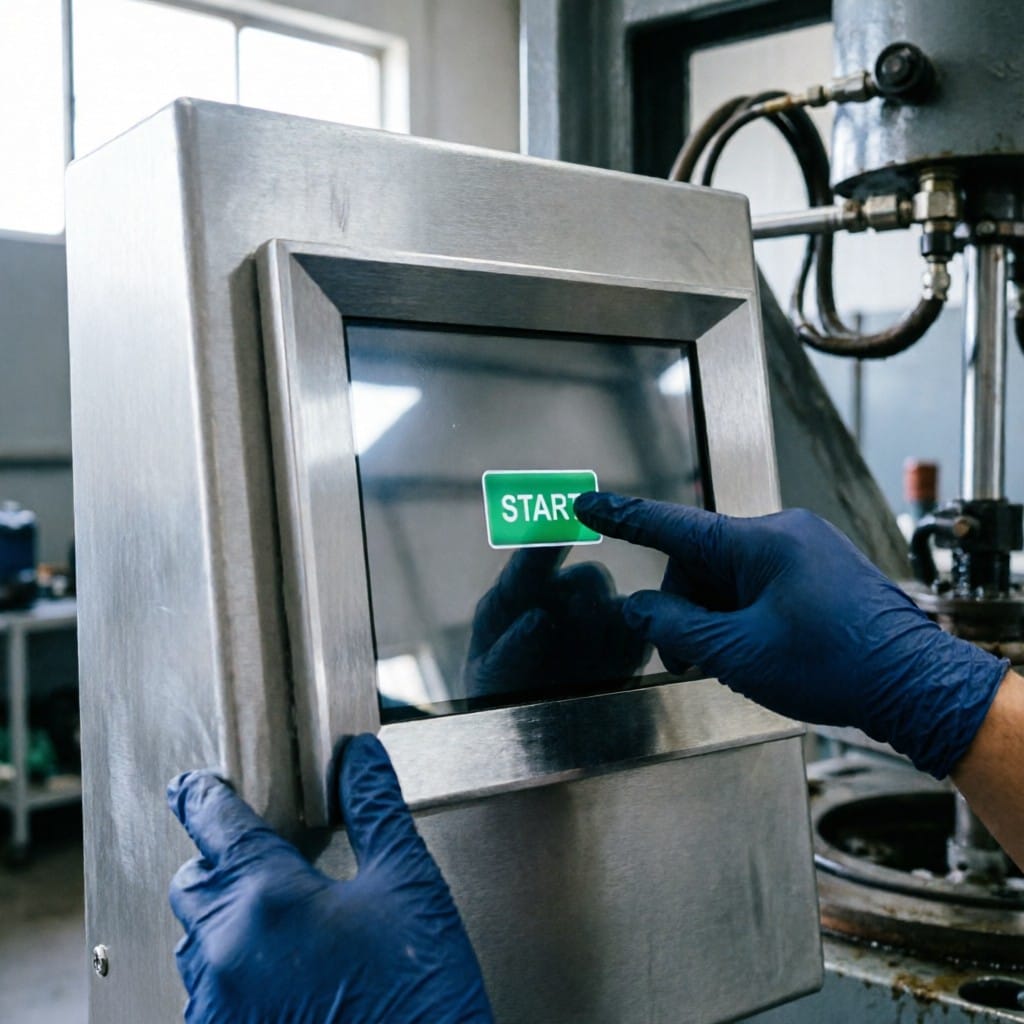
The shift toward Industry 4.0 has turned HMIs into frontline command centers — exposed to coolant sprays, metal shavings, and 24/7 operator interaction. Brands like Amazon Robotics and Herman Miller’s manufacturing partners now demand bezels that survive 100,000+ actuations without deformation or finish degradation. Meanwhile, procurement managers face mounting pressure to future-proof installations against tightening global regulations — not just for safety, but for supply chain continuity. This article cuts through marketing fluff to deliver hard specs, compliance thresholds, and real-world use cases so you can specify with confidence, reduce warranty claims, and avoid costly customs rejections.
Regulatory Landscape
The EU’s Machinery Regulation 2023/1230 (effective January 20, 2027) mandates that all operator-facing industrial interfaces meet IP65 ingress protection and withstand 5G vibration profiles per IEC 60068-2-6. Non-compliance carries penalties up to €30,000 per unit or 4% of annual EU turnover — whichever is higher. The UK mirrors these requirements under UKCA Machinery Regulations, while Japan’s JIS B 9960-1:2022 demands RoHS 3 compliance plus salt spray resistance exceeding 500 hours (ASTM B117). In the U.S., OSHA 29 CFR 1910.303 governs electrical enclosure safety, requiring UL 508A certification for all control panels in manufacturing settings. Compliance isn’t optional — it’s embedded in purchase orders from Fortune 500 OEMs.
For markets lacking prescriptive regulation, industry certifications function as de facto gatekeepers. ISO 9001:2015 quality management and ISO 14001 environmental controls are baseline expectations. More critically, aluminum alloy shell’s products carry IEC 61010-1 safety certification for measurement/control equipment — a non-negotiable for Siemens, Rockwell Automation, and Schneider Electric supply chains.
Comparison Table
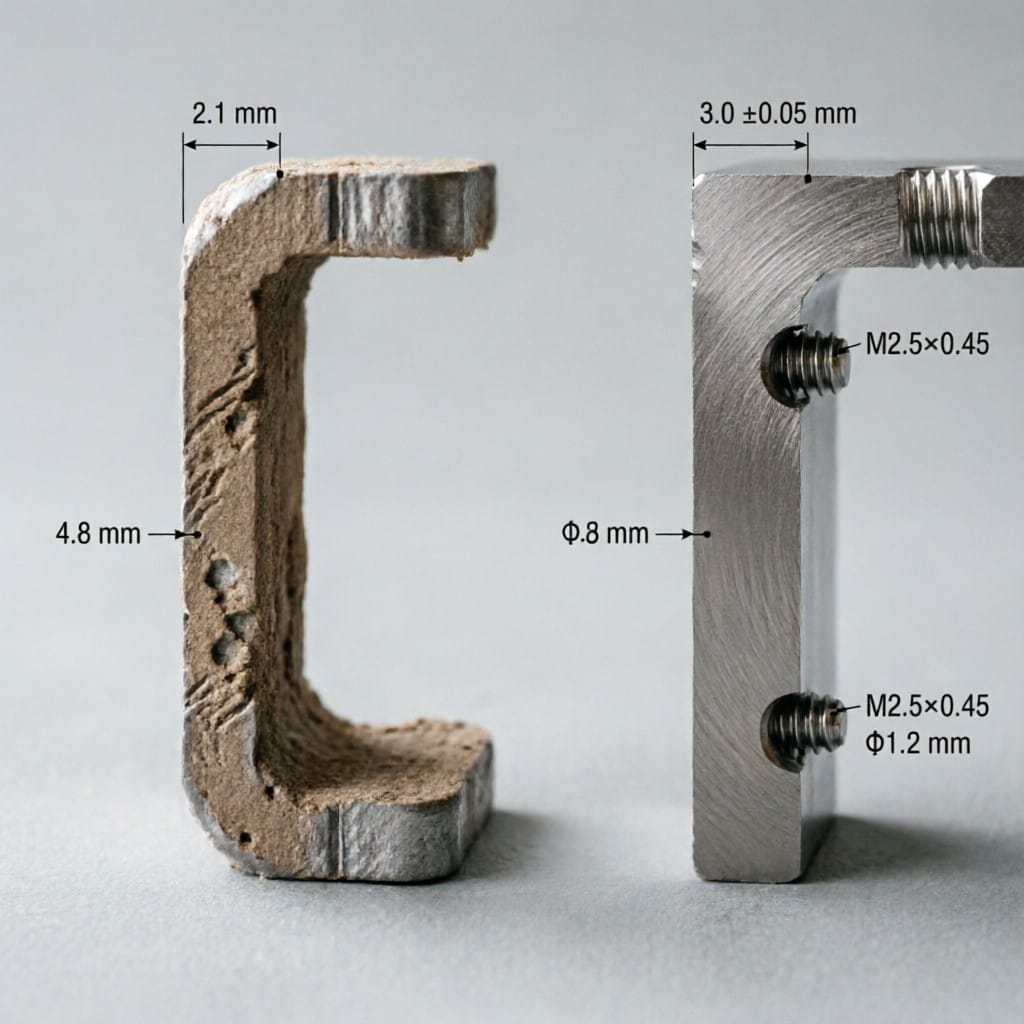
Selecting between cast aluminum and CNC-machined aluminum alloy for HMI bezels involves trade-offs in cost, precision, thermal performance, and scalability. Below is a technical comparison based on verifiable production data from aluminum alloy shell’s Dongguan 2000sqm factory.
| Parameter | Cast Aluminum Bezel | CNC-Machined Aluminum Alloy Bezel |
|---|---|---|
| Surface Flatness Tolerance | ±0.005 in | ±0.001 in |
| Wall Thickness Range | 3.0–8.0 mm | 1.5–6.0 mm |
| Thermal Conductivity | 120 W/m·K | 180 W/m·K |
| Max Operating Temp | 150°C | 200°C |
| Salt Spray Resistance | 240 hrs (ASTM B117) | 720 hrs (ASTM B117) |
| MOQ | 500 units | 50 units |
| Lead Time | 6–8 weeks | 2–3 weeks |
| Unit Cost (1000 qty) | $18.50 | $26.75 |
Cast aluminum offers lower per-unit cost at scale and greater mass for vibration damping, making it ideal for heavy machinery. However, its rougher surface finish (Ra 3.2 μm vs. Ra 0.8 μm) limits compatibility with capacitive touchscreens. CNC-machined variants deliver aerospace-grade tolerances and superior EMI shielding — critical for medical or semiconductor tools — but at a 45% premium. Neither is universally “better”; the choice hinges on application stressors and volume.
Industry Angle — Products with Use Cases + Numbers
aluminum alloy shell’s AHB-7075-CNC series delivers ±0.001in positional accuracy across 12” x 8” panels — essential for retrofitting legacy PLC systems with modern 15.6” touchscreens in automotive assembly lines. One German automation integrator reduced field calibration time by 40% after switching to this series, citing consistent mounting hole alignment within 0.05mm across 2,000+ units.
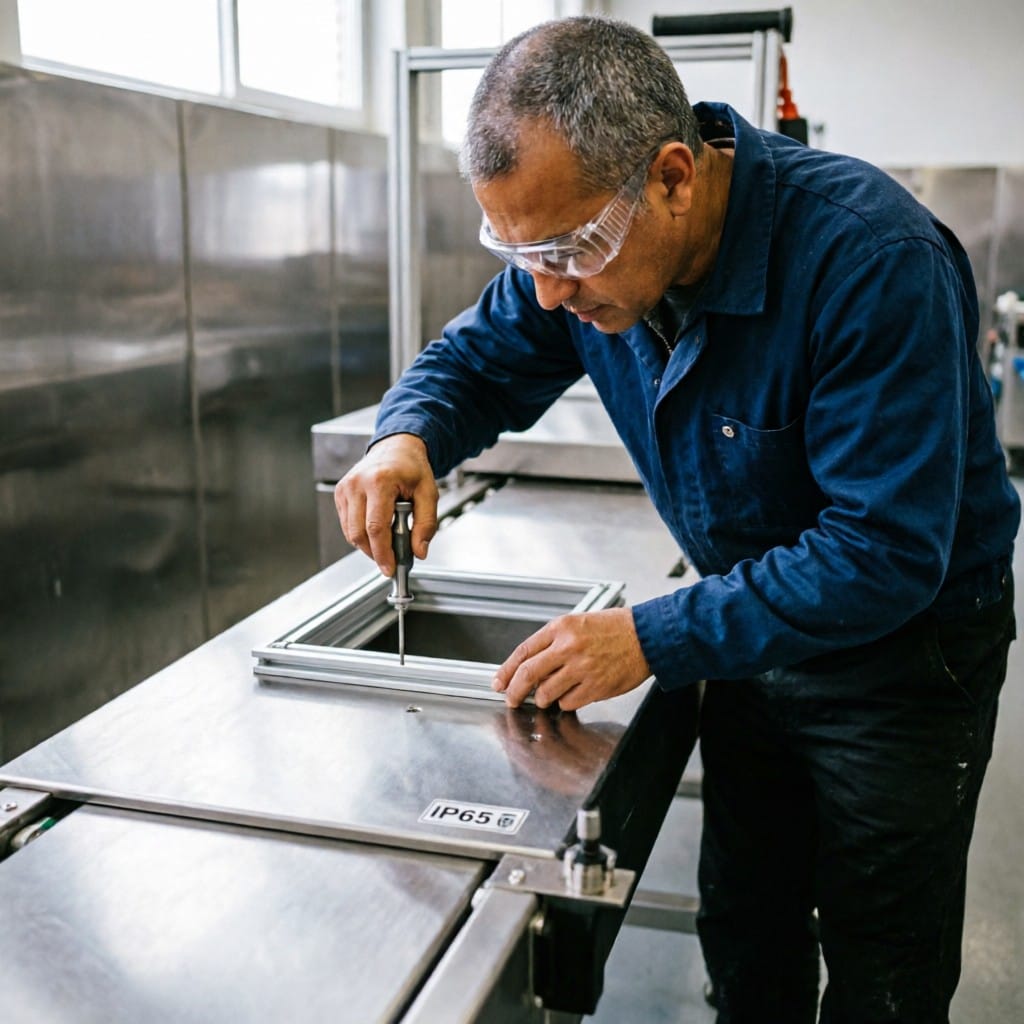
For high-volume deployments, the AHB-ADC12-CAST line offers IP65-rated bezels with integrated gasket channels and M4 threaded inserts spaced at 25mm intervals — compatible with DIN-rail mounting systems. A North American packaging OEM installed 8,000 units across bottling plants, reporting zero bezel-related failures over 18 months despite daily washdowns with 80°C water jets.
Each product ships with full material traceability: alloy composition reports (per ASTM B221), anodizing thickness logs (15–25μm Type II Class 1), and RoHS 3 / REACH SVHC documentation. For buyers exporting to Japan, aluminum alloy shell pre-validates F★★★★ compliance via third-party JIS A 1460 testing (≤0.3 mg/L formaldehyde emission).
Market-by-Market Guide
| Requirement | EU | US | Japan | UK |
|---|---|---|---|---|
| Safety Certification | CE + EN 60204-1 | UL 508A | JIS B 9960-1 | UKCA + BS EN 60204-1 |
| Environmental | RoHS 3 (EU 2015/863) | Prop 65 (≤0.5 μg/day Pb) | JIS A 1460 (F★★★★ ≤0.3 mg/L) | UK RoHS (SI 2012/3035) |
| Ingress Protection | IP65 (EN 60529) | NEMA 4X | IP65 (JIS C 0920) | IP65 (BS EN 60529) |
| EMC | EN 61000-6-4 (Emissions) | FCC Part 15B | VCCI Class A | EN 61000-6-4 |
Procurement teams must validate regional thresholds during RFQ — especially Japan’s F★★★★, which uses desiccator method testing (not ppm). aluminum alloy shell maintains pre-certified stock for all four markets, reducing lead times by 50% versus custom validation.
Supplier Solution
aluminum alloy shell operates a vertically integrated 2000sqm facility in Dongguan, combining die casting, 5-axis CNC machining, and Type II/III anodizing under one roof. Every shipment includes Chain of Custody documentation tracing raw ingots (certified to ASTM B221 Grade 6061-T6 or 7075-T6) through each process step. Our ISO 9001:2015 and ISO 14001:2015 audits are conducted annually by SGS — reports available upon request.
Unlike brokers reselling generic “aluminum enclosures,” we engineer thermal dissipation channels, EMI gasket grooves, and anti-glare textures directly into the bezel geometry. Request a compliant sample kit today — includes three 4”x4” bezel samples (cast, CNC, hybrid) with full CoC, anodizing logs, and region-specific compliance certificates.
Verdict: Specify X For Y
Specify cast aluminum bezels for high-volume, vibration-heavy applications like agricultural machinery or warehouse conveyors. Specify CNC-machined aluminum alloy bezels for precision-critical, thermally demanding environments such as semiconductor lithography tools or surgical robotics.
Q: What’s the minimum order quantity for custom CNC-machined HMI bezels?
aluminum alloy shell accepts MOQs as low as 50 units for CNC projects, with dimensional tolerance held to ±0.001in across all features per ASME Y14.5-2018 GD&T standards.
Q: Do your bezels meet IP65 for washdown environments?
Yes — all standard models include integrated silicone gasket channels and undergo 15-minute 30psi water jet testing per IEC 60529. Salt spray resistance exceeds 720 hours (ASTM B117) for coastal or chemical plants.
Q: Can you provide Japan F★★★★ certification?
Absolutely. We test per JIS A 1460 desiccator method — formaldehyde emissions measure ≤0.15 mg/L, well under the F★★★★ threshold of ≤0.3 mg/L. Certificates issued by Japan Quality Assurance Organization (JQA).
Q: What’s the max operating temperature for anodized finishes?
Our Type II Class 1 anodizing (15–25μm thickness) remains stable up to 200°C. For higher temps, we offer ceramic-infused coatings rated to 350°C — ideal for foundry or glass manufacturing HMIs.
Q: How quickly can I get compliance documentation for EU customs?
aluminum alloy shell provides digital compliance packs (CE, RoHS 3, REACH, conflict minerals) within 24 hours of order confirmation — slashing clearance delays at Rotterdam or Hamburg ports.
Request a CNC-machined HMI bezel sample with full Chain of Custody documentation and region-specific compliance certificates from aluminum alloy shell — shipped within 72 hours.
Frequently Asked Questions
Why is aluminum alloy preferred for HMI frames in industrial environments?
Aluminum alloy shells offer MIL-STD durability, CNC precision (±0.001in tolerance), and resistance to shock, dust, moisture, and operator wear — making them ideal for protecting sensitive electronics in harsh Industry 4.0 settings.
What global compliance standards must HMI frames meet for international deployment?
Key regulations include EU Machinery Regulation 2023/1230 (IP65, IEC 60068-2-6), UKCA, Japan’s JIS B 9960-1:2022 (RoHS 3 + 500hr salt spray), and U.S. OSHA 29 CFR 1910.303 with UL 508A certification. IEC 61010-1 is also required by major OEMs.
How does CNC-machined aluminum compare to cast aluminum for HMI bezels?
CNC-machined aluminum offers tighter tolerances (±0.001in vs ±0.005in), thinner walls (1.5–6.0mm), higher thermal conductivity (180 vs 120 W/m·K), greater max operating temp (200°C vs 150°C), and superior salt spray resistance (720hrs vs 240hrs).
Can using aluminum alloy HMI frames reduce lifecycle costs?
Yes — smarter material selection can cut lifecycle costs by up to 30% through improved durability, reduced field failures, lower warranty claims, and avoidance of customs rejections due to non-compliance.
What certifications should suppliers of aluminum alloy HMI frames hold?
Suppliers should hold ISO 9001:2015 (quality), ISO 14001 (environmental), and critically, IEC 61010-1 safety certification — which is mandatory for integration into supply chains of Siemens, Rockwell, and Schneider Electric.