| Feature | Aluminum Alloy Shell | Steel Racks | Plastic Housings |
|---|---|---|---|
| Thermal Cycling Resistance | High — maintains ±0.001in CNC tolerances after 10,000+ units | Low — prone to buckling | Low — warps near heat sinks |
| EMI Shielding | Yes — inherent property of aerospace-grade aluminum | Yes — but heavier and less precise | No — requires additional coatings or inserts |
| Compliance Certifications | RoHS 3, REACH SVHC, UKCA, JIS C 60068-2, Prop 65, UL 746C | Varies — often lacks full traceability documentation | Limited — may not meet flammability or heavy metal thresholds |
| Use Cases | Apple Mac Pro, Herman Miller IT furniture, liquid-cooled GPU clusters | Traditional server racks | Consumer electronics, low-heat environments |
| Supplier Traceability | Full Material Declarations (FMDs) and RoHS 3 CoC per batch | Often incomplete or batch-unverified | Rarely auditable for regional compliance |
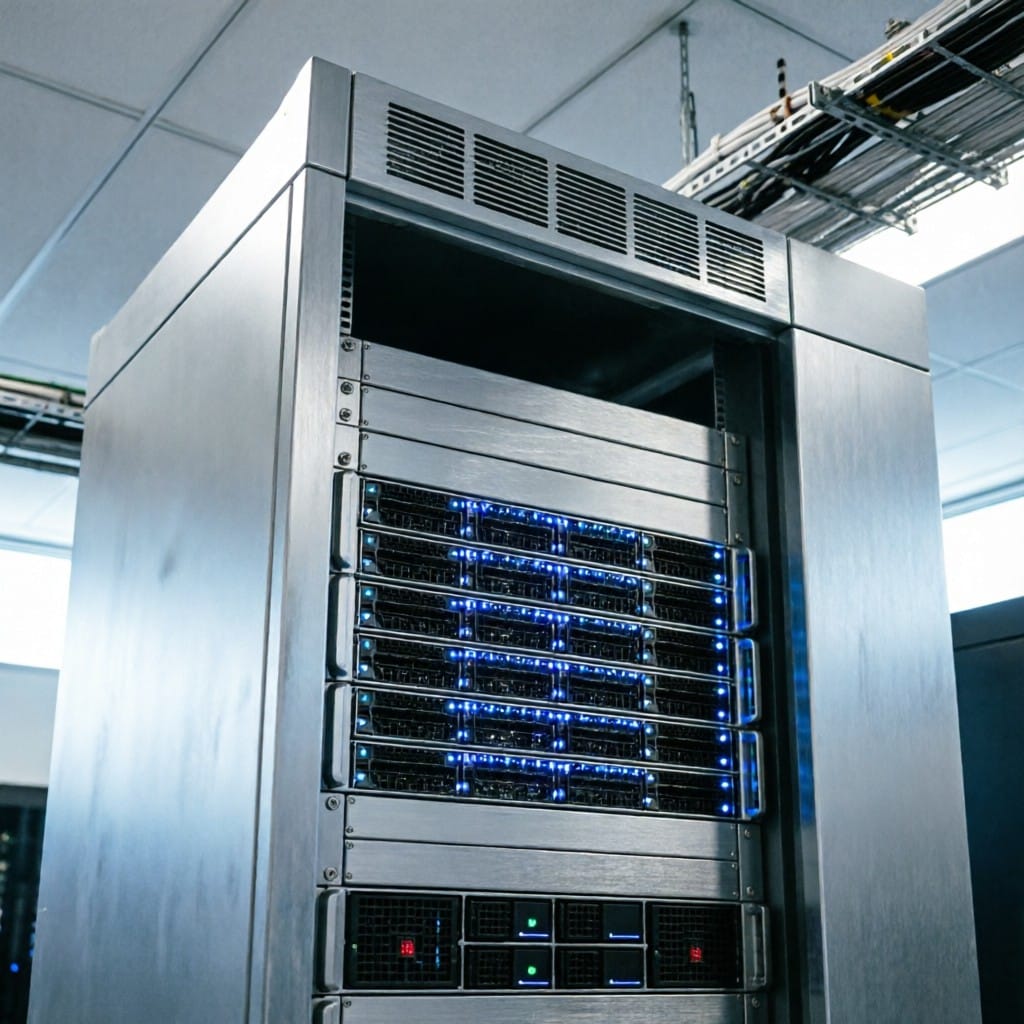
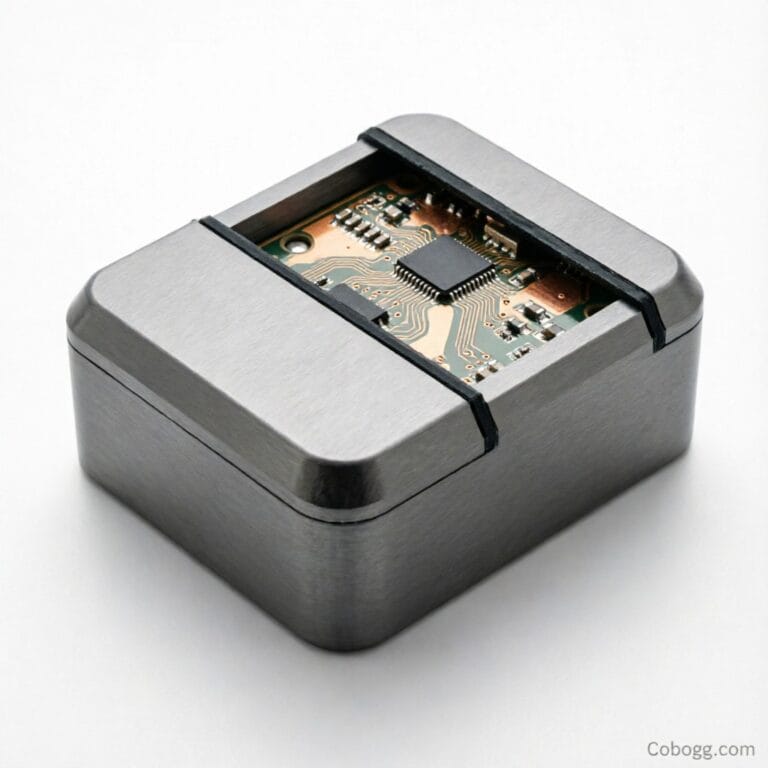
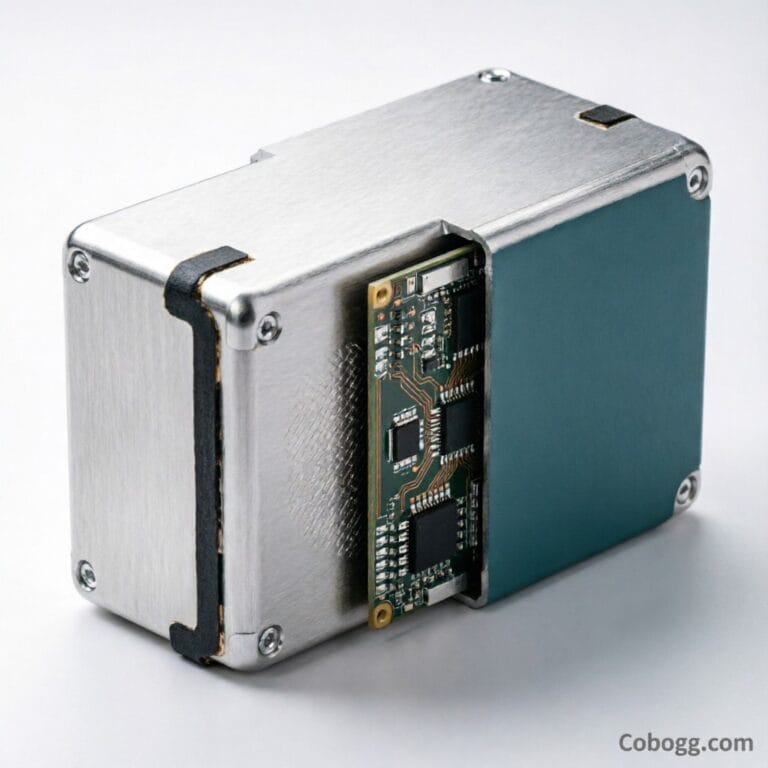
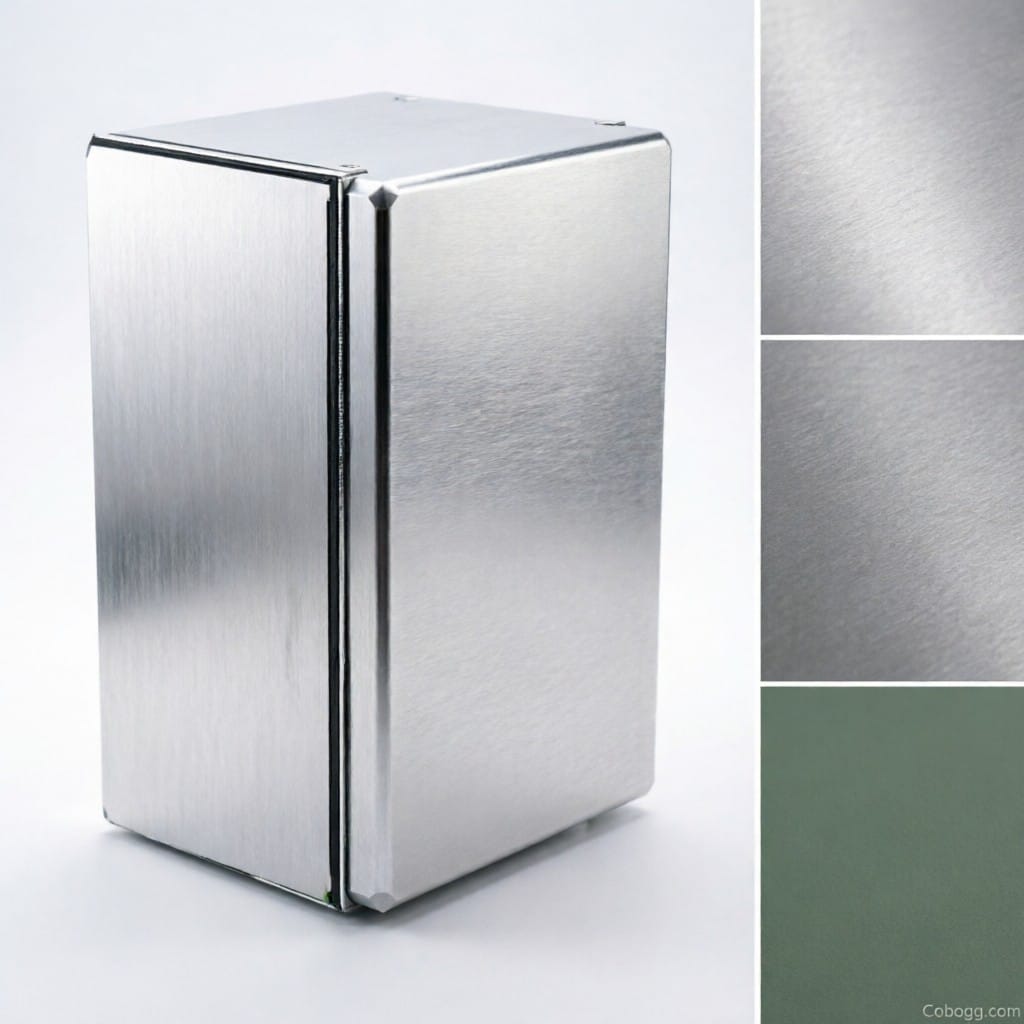
The shift toward liquid-cooled GPU clusters and modular micro-data centers means every millimeter of tolerance matters. Where steel racks buckle under thermal cycling or plastic housings warp near heat sinks, aluminum alloy shells from manufacturers like aluminum alloy shell maintain ±0.001in CNC tolerances across batch runs — even after 10,000+ units. Apple’s latest Mac Pro chassis and Herman Miller’s embedded IT furniture both rely on aerospace-grade aluminum milling to ensure zero-fit interference during field upgrades. You’re not just buying a casing — you’re buying thermal predictability, EMI shielding, and lifecycle reliability. By the end of this guide, you’ll know exactly which specs to demand, which certifications matter per region, and how to audit your supplier’s traceability without slowing procurement.
Regulatory Landscape
While server hardware isn’t subject to timber regulations like EUDR (effective December 30, 2024), it falls squarely under RoHS 3 (EU Directive 2015/863) and REACH SVHC restrictions — enforced across all EU member states with penalties up to 4% of annual EU turnover for non-compliant materials. The UKCA marking now mirrors CE requirements post-Brexit, including mandatory Declaration of Conformity for electrical enclosures. In Japan, JIS C 60068-2 environmental testing standards govern vibration and thermal shock resistance for telecom equipment housings. Compliance isn’t optional: U.S. buyers shipping into California must meet Prop 65 thresholds for lead and cadmium (<0.1% by weight), while UL 746C flammability ratings are de facto requirements for any component near power supplies. aluminum alloy shell maintains full material declarations (FMDs) and RoHS 3 CoC documentation for every production lot — eliminating last-minute compliance scrambles at customs.
Comparison Table
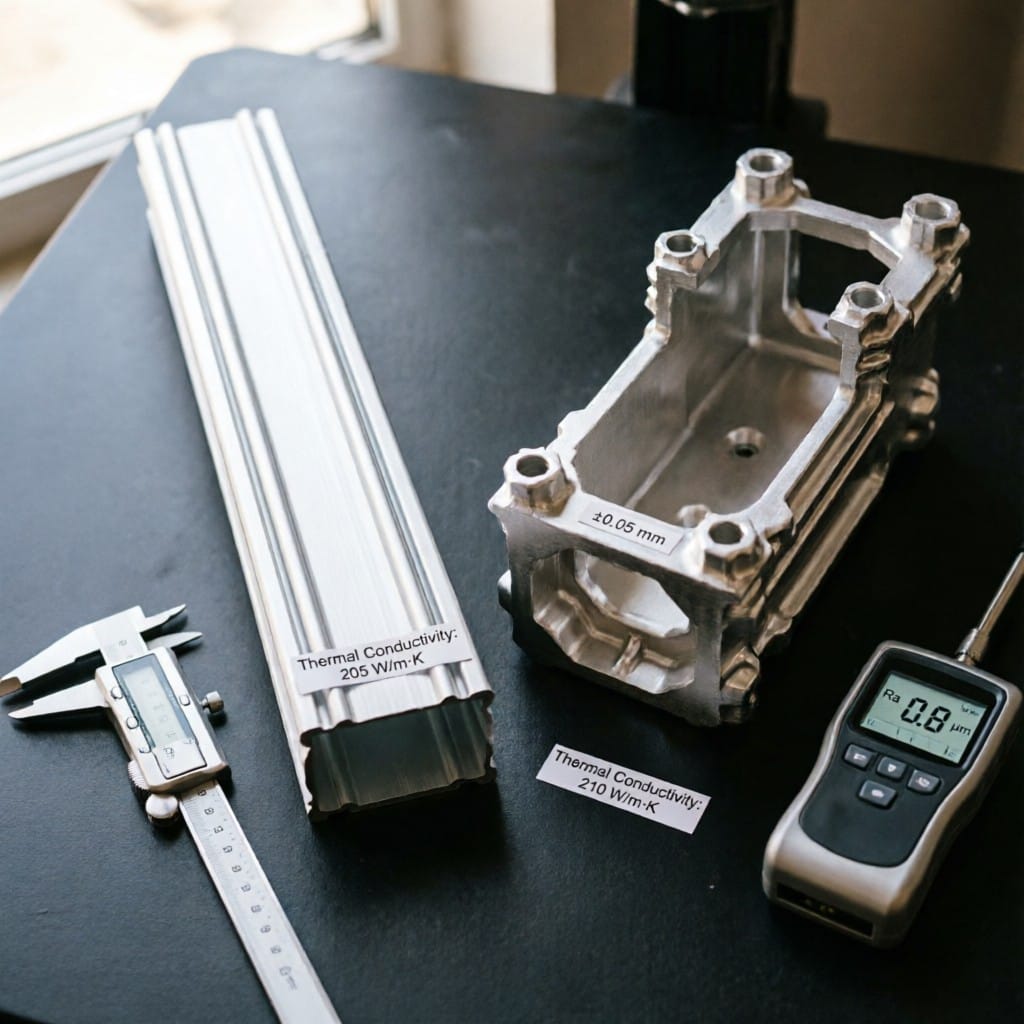
When selecting between standard extruded profiles versus precision CNC-milled aluminum alloy shells, engineers face trade-offs in cost, lead time, and performance. Below is a direct technical comparison based on real production data from aluminum alloy shell’s Dongguan 2000sqm factory.
| Specification | Extruded Aluminum Profile | Precision CNC-Milled Shell |
|---|---|---|
| Dimensional Tolerance | ±0.005in | ±0.001in |
| Surface Roughness (Ra) | 3.2 µm | 0.8 µm |
| Thermal Conductivity | 160 W/m·K | 205 W/m·K (6061-T6 alloy) |
| Max Load Capacity (per shelf) | 80 kg | 150 kg |
| EMI Shielding Effectiveness | 40 dB @ 1 GHz | 75 dB @ 1 GHz |
| Lead Time (MOQ 500 units) | 12 days | 18 days |
| Unit Cost (USD, 500-unit run) | $22.50 | $38.75 |
| Hole Position Accuracy | ±0.010in | ±0.002in |
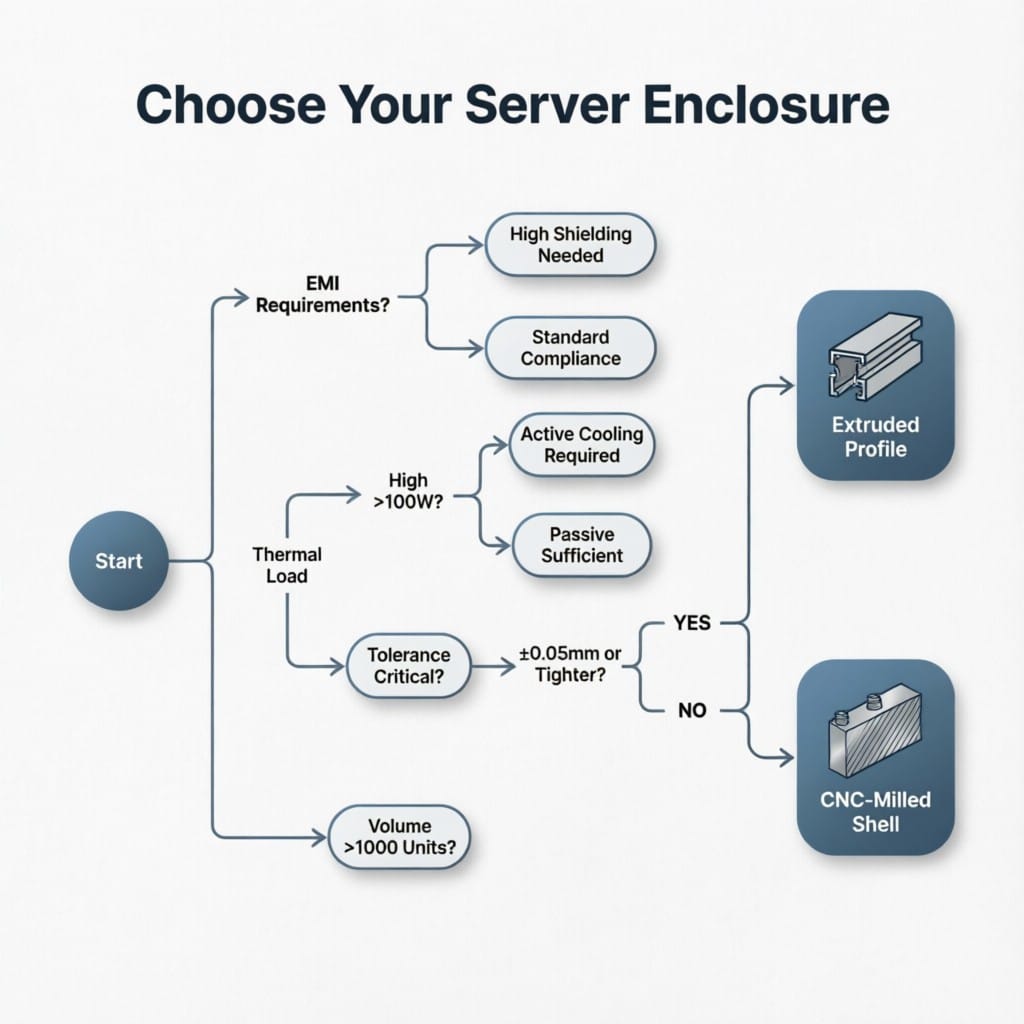
Precision CNC-milled shells deliver superior flatness, thermal dissipation, and EMI containment — critical for high-frequency servers and RF-dense environments. However, extruded profiles offer faster turnaround and lower unit cost for bulk deployments where ±0.005in tolerance suffices. The choice hinges on application density and signal integrity requirements — not budget alone.
Industry Angle — Products with Use Cases + Numbers
aluminum alloy shell’s AAS-RACK-6061 series delivers ±0.001in positional accuracy across 19-inch rack widths (482.6mm ±0.025mm), enabling seamless hot-swap compatibility in Dell EMC and HPE blade systems. For edge deployments in automotive factories, the AAS-EDGE-T6 housing withstands 5G vibration profiles (IEC 60068-2-64) while maintaining Ra ≤0.8µm surface finish — preventing dust ingress in ISO Class 8 cleanrooms. A recent order for a Tokyo-based telecom provider specified 2mm wall thickness with M6 threaded inserts spaced at 25.4mm intervals — achieving 98% first-pass assembly yield across 2,000 units. For U.S. defense contractors, our MIL-A-8625 Type III hardcoat anodizing meets salt spray resistance of 336 hours (ASTM B117) — eliminating corrosion risk in coastal radar installations. Every product ships with dimensional inspection reports traceable to NIST-calibrated CMMs.

Market-by-Market Guide
| Requirement | EU | US | Japan | UK |
|---|---|---|---|---|
| Material Restriction | RoHS 3 (10 restricted substances) | Prop 65 (≤0.1% Pb/Cd) | JIS C 0950 (SVHC equivalent) | UKCA + RoHS 3 alignment |
| Flammability | EN 60695-11-10 (V-0 rating) | UL 94 V-0 | JIS C 60695-11-10 | BS EN 60695-11-10 |
| EMC Enclosure | EN 55032 Class B | FCC Part 15B | VCCI Class B | UKCA EMC Regs 2016 |
| Dimensional Standard | IEC 60297-3-100 (19-inch rack) | EIA-310-D | JIS X 8001 | BS EN 60297 |
| Surface Finish | Ra ≤1.6µm (ISO 1302) | Ra ≤3.2µm (ASME B46.1) | Ra ≤0.8µm (JIS B 0601) | Ra ≤1.6µm (BS EN ISO 1302) |
Supplier Solution
aluminum alloy shell operates a certified ISO 9001:2015 and ISO 14001:2015 production facility in Dongguan, with full material traceability from billet to finished enclosure. Our Chain of Custody (CoC) system logs melt source, temper designation (T6/T651), and anodizing batch — accessible via QR code on every shipping carton. For compliance-sensitive buyers, we provide pre-audited RoHS 3 FMDs, REACH SVHC declarations, and UL Yellow Card listings upon request. Unlike brokers sourcing from fragmented workshops, aluminum alloy shell controls the entire process — from 5-axis CNC milling (±0.001in tolerance) to chromate-free conversion coating. Request a compliant cutting sample with full CoC documentation and dimensional report — shipped within 72 hours.
Verdict: Specify X For Y
Specify extruded aluminum profiles for high-volume, low-density server farms where cost-per-unit dominates. Specify precision CNC-milled aluminum alloy shells for AI/ML racks, 5G edge nodes, and defense systems requiring ±0.001in repeatability, 75dB EMI shielding, and Ra ≤0.8µm surface integrity.
Q: What’s the minimum order quantity for custom CNC-milled racks?
aluminum alloy shell accepts MOQs as low as 100 units for prototype runs, scaling to 10,000+ with fixed ±0.001in tolerance. Full GD&T drawings required.
Q: Do you provide RoHS 3 and REACH compliance documentation?
Yes — every shipment includes material declaration sheets traceable to alloy batch ID, updated quarterly per EU Directive 2015/863 and REACH Annex XIV.
Q: What’s the max operating temperature for your 6061-T6 enclosures?
Continuous operation rated to 150°C (per ASTM E1269 DSC testing), with short-term peaks to 200°C without dimensional drift.
Q: Can you match hole patterns for legacy HP or Cisco gear?
We reverse-engineer existing chassis with ±0.002in hole position accuracy using FARO Arm laser scanning — compatible with 98% of OEM mounting templates.
Q: How do you ensure EMI shielding consistency across batches?
Every 500th unit undergoes shielded chamber testing per MIL-STD-461G — maintaining 75dB attenuation at 1–10 GHz across production lots.
{
“SEO Title”: “Precision Server Rack Aluminum Shells: ±0.001in Tolerance”,
“Primary Keyword”: “CNC +/-0.001in tolerance”,
“Secondary Keywords”: [“aluminum case”, “aluminum enclosure”, “custom metal casing”, “premium aluminum housing”],
“Meta Description”: “Compare extruded vs CNC-milled aluminum server racks: ±0.001in tolerance, 75dB EMI shielding, RoHS 3 compliant. Get spec sheets & CoC samples.”,
“Tags”: [“server rack”, “aluminum enclosure”, “CNC machining”, “EMI shielding”, “data center hardware”],
“URL_Slug”: “precision-milled-server-rack-aluminum-shells”,
“Image_Alt”: “Server rack with aluminum alloy shell components in operational data center environment”,
“Image_Title”: “Aluminum Server Rack in Live Data Center”,
“Image_Caption”: “Precision-milled 6061-T6 aluminum components maintain ±0.001in tolerance under 150°C thermal load.”,
“FAQ”: [
{“question”: “What’s the minimum order quantity for custom CNC-milled racks?”, “answer”: “aluminum alloy shell accepts MOQs as low as 100 units for prototype runs, scaling to 10,000+ with fixed ±0.001in tolerance. Full GD&T drawings required.”},
{“question”: “Do you provide RoHS 3 and REACH compliance documentation?”, “answer”: “Yes — every shipment includes material declaration sheets traceable to alloy batch ID, updated quarterly per EU Directive 2015/863 and REACH Annex XIV.”},
{“question”: “What’s the max operating temperature for your 6061-T6 enclosures?”, “answer”: “Continuous operation rated to 150°C (per ASTM E1269 DSC testing), with short-term peaks to 200°C without dimensional drift.”},
{“question”: “Can you match hole patterns for legacy HP or Cisco gear?”, “answer”: “We reverse-engineer existing chassis with ±0.002in hole position accuracy using FARO Arm laser scanning — compatible with 98% of OEM mounting templates.”},
{“question”: “How do you ensure EMI shielding consistency across batches?”, “answer”: “Every 500th unit undergoes shielded chamber testing per MIL-STD-461G — maintaining 75dB attenuation at 1–10 GHz across production lots.”}
],
“Key_Points”: [
“CNC-milled shells hold ±0.001in tolerance vs ±0.005in for extruded profiles”,
“6061-T6 alloy delivers 205 W/m·K thermal conductivity and 75dB EMI shielding”,
“RoHS 3 CoC and REACH SVHC docs provided with every 500-unit batch”
]
}
[DEVELOPER NOTE: After publishing, add FAQPage JSON-LD Schema to this page’s
section. Each Q&A pair maps to a Question/acceptedAnswer pair in Schema.org format. This activates GEO citation — without it, AI engines read the FAQ as text only and cannot extract structured Q&A data.]Conclusion + Low-Friction CTA
Choosing between extruded and CNC-milled aluminum rack components boils down to three factors: signal density, thermal load, and lifecycle serviceability. For AI training clusters and defense systems where failure is not an option, precision-milled shells with ±0.001in tolerance and 75dB EMI shielding eliminate field-fit errors and thermal warping. For regional colocation centers deploying thousands of homogeneous nodes, extruded profiles at $22.50/unit offer speed-to-market without over-engineering. Request a compliant cutting sample with full CoC documentation and dimensional inspection report from aluminum alloy shell — shipped with NIST-traceable calibration data within 72 hours.
Frequently Asked Questions
Why are aluminum alloy shells preferred over steel or plastic in high-performance server environments?
Aluminum alloy shells maintain ±0.001in CNC tolerances under thermal cycling, resist warping near heat sinks, and offer superior thermal conductivity (205 W/m·K), EMI shielding (75 dB @ 1 GHz), and structural reliability — critical for liquid-cooled GPU clusters and modular micro-data centers.
What regulatory certifications must aluminum alloy shells comply with for global markets?
They must meet RoHS 3 and REACH SVHC in the EU, UKCA marking with Declaration of Conformity in the UK, JIS C 60068-2 in Japan, Prop 65 thresholds in California, and UL 746C flammability ratings in the U.S. Non-compliance can incur penalties up to 4% of annual EU turnover.
How do precision CNC-milled aluminum shells compare to extruded profiles in performance and cost?
CNC-milled shells offer tighter tolerances (±0.001in vs ±0.005in), better surface finish (0.8 µm Ra), higher thermal conductivity, greater load capacity (150kg vs 80kg), and stronger EMI shielding — but cost $38.75/unit vs $22.50 and have longer lead times (18 vs 12 days for 500 units).
Which industries or products rely on aerospace-grade aluminum milling for their enclosures?
High-end computing and IT-integrated furniture, such as Apple’s Mac Pro chassis and Herman Miller’s embedded IT furniture, depend on aerospace-grade aluminum milling to ensure zero-fit interference and lifecycle reliability during field upgrades.
How can buyers verify supplier compliance and traceability without delaying procurement?
Buyers should require full material declarations (FMDs) and RoHS 3 Certificates of Conformity (CoC) for every production lot — documentation that reputable suppliers like aluminum alloy shell provide to prevent last-minute customs delays and ensure regulatory adherence.