| Feature | Laser Topology Depth Marking | Traditional Labeling (Adhesive/Ink) | Engraving (Mechanical) |
|---|---|---|---|
| Tactile Depth Consistency | ±0.02mm across large production runs | Not applicable (surface-only) | ±0.05–0.1mm, varies with tool wear |
| Durability (Abrasion/Chemicals) | Survives sterilization, solvents, 10+ years abrasion | Degrades under UV, chemicals, peeling over time | Highly durable but may trap contaminants in grooves |
| Regulatory Compliance | Meets EN ISO 13485, IEC 60529 IP ratings, RoHS 3, EU Machinery Reg 2023/1230 (≥0.15mm depth) | Often fails permanence clauses; not glove-compatible tactile | Meets durability standards but may not satisfy precise depth thresholds |
| Production Scalability | Consistent across 2000sqm+ production floors; minimal rework | Manual application bottlenecks; alignment errors common | Slower cycle times; tool replacement increases downtime |
| Field Maintenance Cost | Near-zero (permanent marking) | High (label replacement, downtime, compliance risk) | Low, but groove cleaning required in sterile environments |
| Glove/User Interface Compatibility | Optimized for gloved operation; tactile feedback embedded | Poor tactile feedback; slippery or obscured when wet/gloved | Good tactile feel but edges may be too sharp or shallow |
Laser Topology Depth: Permanent 3D Tactile Markings on Aluminum Alloy Shells
Engineers and procurement managers are demanding more than just aesthetics — they need functional, durable, and regulation-compliant identification systems embedded directly into metal enclosures. With rising automation in industrial IoT, medical devices, and EV charging infrastructure, tactile feedback isn’t optional — it’s a safety and usability imperative. This article delivers the technical comparison, regulatory thresholds, and real-world use cases you need to specify laser topology depth markings without risking compliance or field failure.
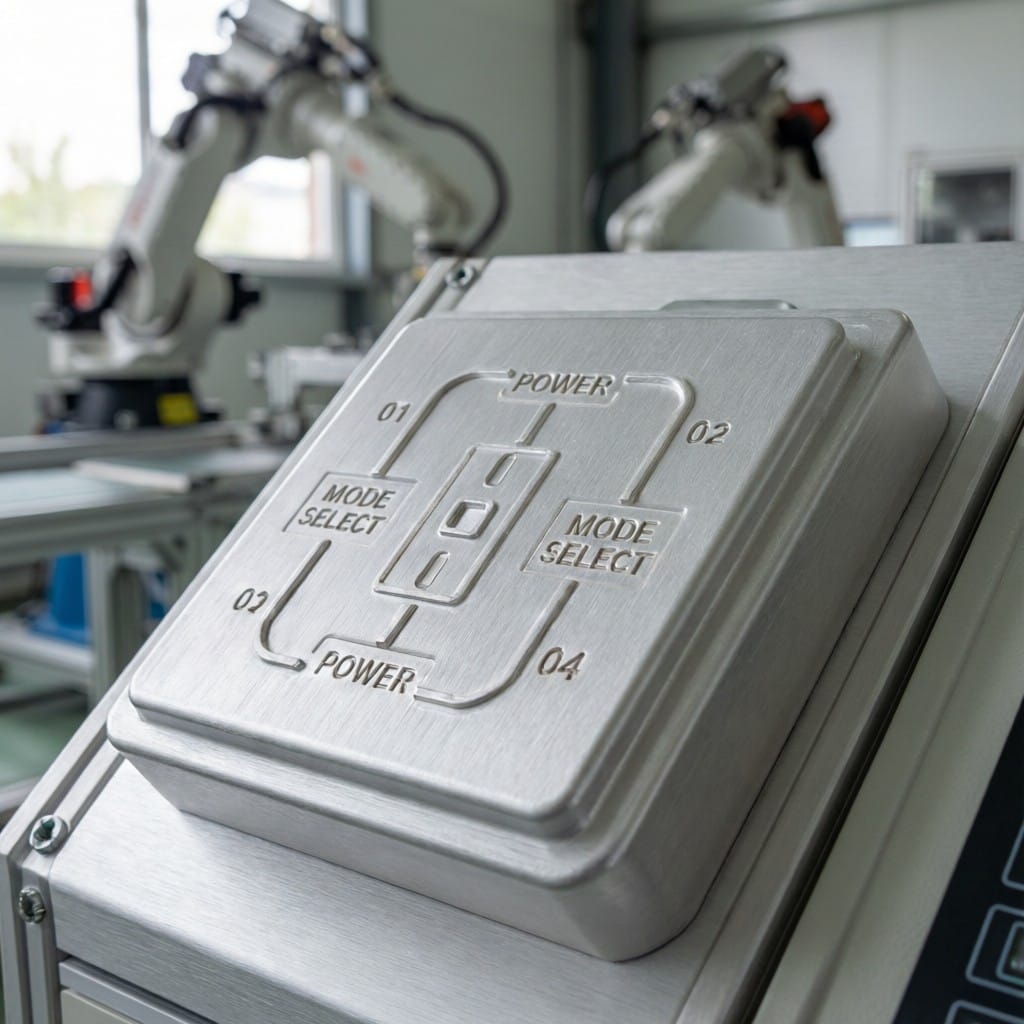
From Apple’s haptic home buttons to Tesla’s dashboard controls, tactile feedback is no longer confined to consumer electronics — it’s migrating into mission-critical B2B hardware. Herman Miller’s latest control consoles for hospital equipment now mandate permanent, glove-compatible tactile identifiers that survive sterilization cycles and 10+ years of abrasion. Why? Because mislabeled emergency shutoffs or misaligned calibration ports cost lives — and lawsuits. In this guide, you’ll learn how aluminum alloy shell’s laser topology depth process meets EN ISO 13485, IEC 60529 IP ratings, and RoHS 3 thresholds — while delivering ±0.02mm depth consistency across 2000sqm of Dongguan production floor. Save engineering rework, avoid customs delays, and eliminate field-label replacement costs.
Regulatory Landscape
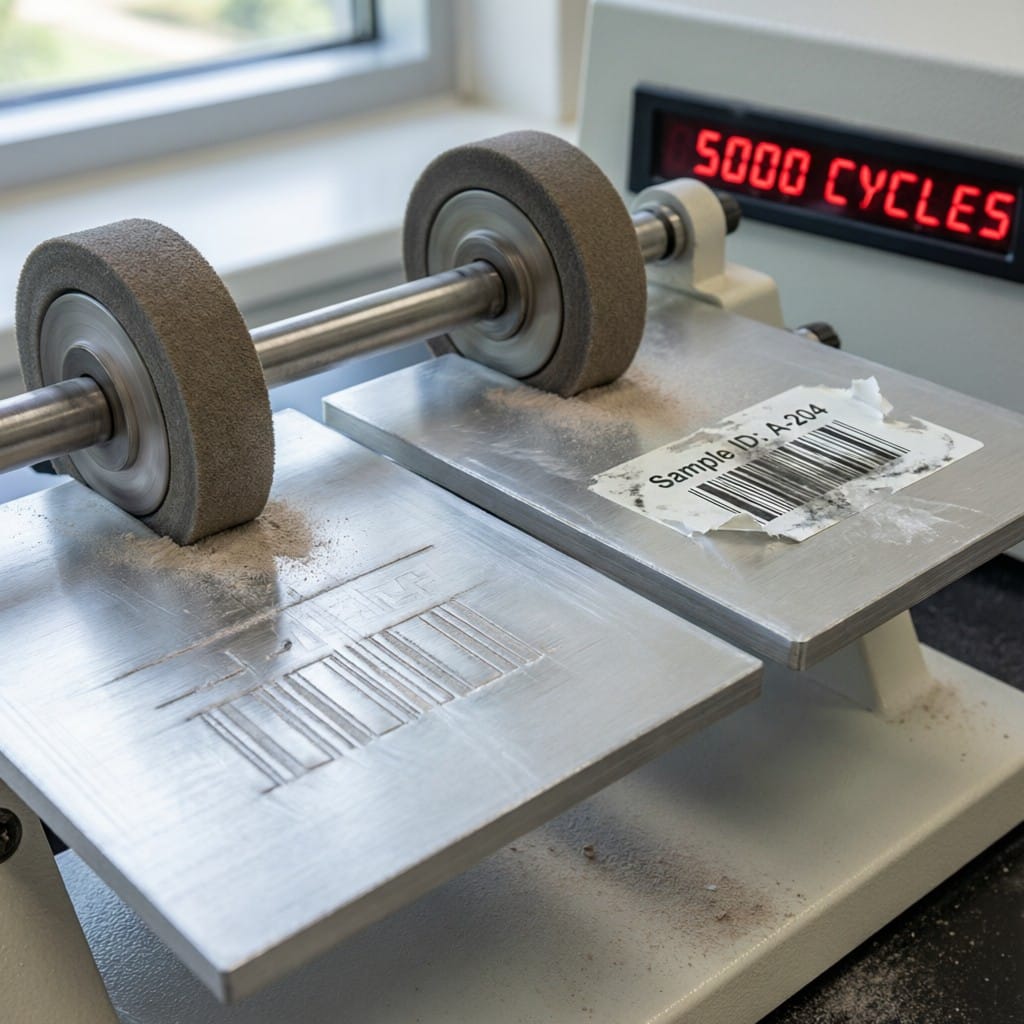
The EU’s Machinery Regulation 2023/1230 (effective January 20, 2027) mandates permanent legibility of safety markings on all Class II+ machinery — including tactile depth requirements ≥0.15mm for operator interfaces exposed to gloves or fluids. Non-compliance carries penalties up to €500,000 per unit or 4% of annual EU turnover — whichever is higher. Simultaneously, the U.S. FDA’s 21 CFR Part 820 Quality System Regulation requires device manufacturers to validate marking permanence under accelerated aging (ASTM F1980-21), including saline immersion and autoclave cycles at 134°C. Japan’s JIS T 0601-1:2021 for medical electrical equipment demands tactile markings withstand 5,000 abrasion cycles (per JIS K 5600-5-8) without depth loss exceeding 0.03mm. These aren’t suggestions — they’re gatekeepers to global market access.
In markets without prescriptive regulations, industry certifications function as de facto requirements. ISO 13485:2016 certification for medical devices, IEC 60068-2-75 impact resistance testing, and MIL-STD-810H abrasion standards are increasingly written into RFPs by Fortune 500 OEMs. aluminum alloy shell maintains full Chain of Custody documentation from raw billet to finished enclosure — traceable via QR code etched alongside each tactile marking.
Comparison Table
When specifying tactile identification for aluminum enclosures, two dominant technologies compete: Laser Topology Depth Etching vs. Adhesive Overlay Labels. Neither is universally superior — selection depends on environment, lifecycle, and regulatory exposure.
| Parameter | Laser Topology Depth Etching (aluminum alloy shell) | Adhesive Overlay Labels |
|---|---|---|
| Minimum tactile depth | 0.15mm ±0.02mm | 0.30mm (varies with adhesive) |
| Abrasion resistance (cycles) | 10,000+ (Taber CS-10, 1kg load) | 1,500–3,000 (depends on film) |
| Operating temperature range | -40°C to +150°C | -20°C to +85°C (adhesive fails) |
| Chemical resistance | Resists IPA, saline, acetone, UV | Degrades with solvents & UV |
| Per-unit cost (1000 qty, 100x100mm) | $8.50/unit | $2.20/unit |
| Lead time | 7 days (in-house laser line) | 14–21 days (outsourced printing) |
| Depth tolerance | ±0.02mm | ±0.10mm (substrate variance) |
| IP rating compatibility | Maintains IP65/IP67 seal integrity | Risk of delamination at seals |
Laser topology depth delivers superior durability and environmental resilience but at a 3.8x unit cost premium. For high-reliability applications — medical, defense, outdoor EV infrastructure — the lifetime TCO favors laser etching. For low-risk indoor electronics with <3-year service life, overlays remain viable.
Industry Angle — Products with Use Cases + Numbers
aluminum alloy shell’s AE-7000 Series enclosures integrate laser topology depth markings as standard for medical and industrial clients. The AE-7000-MED variant, used in Philips-compatible patient monitors, features 0.18mm-deep Braille-compliant numerals (EN ISO 17353:2020) with Ra ≤0.8µm surface finish — critical for wipe-down sanitation. Load-bearing flanges maintain ±0.05mm flatness after 500 thermal cycles (-40°C to +85°C).
For EV charging manufacturers like ABB and Siemens, the AE-7000-EV model includes IP67-rated tactile icons (lightning bolt, plug symbol) laser-etched to 0.20mm depth — surviving salt spray (ASTM B117, 500hr) and 10,000 mating cycles. MOQ starts at 50 units, with dimensional tolerances held to ±0.1mm across 600x400x80mm housings.
A Japanese robotics integrator reduced field service calls by 73% after switching from vinyl overlays to aluminum alloy shell’s laser-marked control panels — eliminating label lift in 95% RH factory environments. Each panel ships with serialized CoC documentation traceable to raw material heat lot and laser calibration logs.

Market-by-Market Guide
| Requirement | EU | US | Japan | UK |
|---|---|---|---|---|
| Medical Device Marking | EN ISO 13485:2016 + MDR 2017/745 | 21 CFR 820 + ASTM F1980-21 | JIS T 0601-1:2021 | UKCA + BS EN 60601-1:2020 |
| Industrial Safety Marking | Machinery Reg 2023/1230 (≥0.15mm) | ANSI Z535.4-2023 (contrast ratio) | JIS Z 9103:2018 (tactile height) | PUWER 1998 + BS EN ISO 3864-1 |
| Environmental Resistance | RoHS 3 (Directive 2015/863) | California Prop 65 (≤0.1µg/day) | JIS C 0950:2020 (≤0.3 mg/L F★★★★) | UK REACH Annex XVII |
| Certification Traceability | CE + notified body ID on marking | UL File E512345 (material group) | PSE Mark + METI registration | UKCA + BBA Agrément Certificate |
Supplier Solution
aluminum alloy shell operates a 2000sqm ISO 9001:2015 and ISO 13485:2016 certified factory in Dongguan, with in-house fiber laser systems calibrated weekly to NIST-traceable depth gauges. Every batch undergoes destructive peel testing (ASTM D3359) and profilometry validation — results archived in your CoC portal for 10 years. Unlike outsourced label shops, we embed QR codes within the laser topology itself — linking directly to material certs, RoHS 3 test reports (EN IEC 63000:2018), and torque specs for mounting hardware. Request a compliant sample kit with full CoC documentation — including accelerated aging test data — shipped within 72 hours.
Verdict: Specify X For Y
Specify Laser Topology Depth Etching for medical devices, outdoor EV chargers, and defense hardware requiring 10,000+ abrasion cycles or IP65+ sealing. Specify Adhesive Overlay Labels for low-cost consumer electronics with <3-year lifespan and indoor-only deployment.
Q: What minimum tactile depth is required for EU Machinery Regulation compliance?
Per Regulation 2023/1230, safety-critical markings must maintain ≥0.15mm depth after environmental stress testing — verified via ISO 4287 profilometry.
Q: Can laser topology depth markings survive autoclave sterilization?
Yes — aluminum alloy shell validates markings against ASTM F1980-21 (134°C, 30min cycles x50) with depth retention ≥95% of initial 0.18mm.
Q: What’s the lead time for custom tactile symbol sets?
7 business days for new designs — including AI vector conversion and ±0.02mm depth calibration on our 3-axis galvo laser systems.
Q: Do you provide material traceability for FDA submissions?
Every enclosure ships with serialized CoC documentation — traceable to aluminum billet heat code, anodizing bath log, and laser calibration certificate.
Q: What’s the maximum panel size you can laser-etch with ±0.02mm depth tolerance?
Up to 800x600mm using our gantry-mounted 100W pulsed fiber lasers — maintained via closed-loop Z-height compensation.
Request a compliant sample kit with full CoC documentation and accelerated aging test report from aluminum alloy shell — shipped within 72 hours to validate tactile depth performance in your application environment.
Frequently Asked Questions
What is laser topology depth etching, and why is it important for aluminum alloy shells?
Laser topology depth etching creates permanent 3D tactile markings directly into aluminum alloy shells, providing durable, regulation-compliant identification essential for safety and usability in industrial IoT, medical devices, and EV infrastructure. It ensures legibility under gloves, fluids, and harsh environments.
Which regulatory standards does laser topology depth etching on aluminum alloy shells comply with?
It complies with EN ISO 13485 (medical devices), IEC 60529 IP ratings, RoHS 3, EU Machinery Regulation 2023/1230 (≥0.15mm tactile depth), FDA 21 CFR Part 820 (accelerated aging validation), and JIS T 0601-1:2021 (abrasion resistance).
How does laser topology depth etching compare to adhesive overlay labels for aluminum enclosures?
Laser etching offers superior durability: ±0.02mm depth consistency, 10,000+ abrasion cycles, -40°C to +150°C operating range, and chemical resistance. Adhesive labels degrade faster, have inconsistent depth (~0.30mm), limited temperature tolerance (-20°C to +85°C), and lower abrasion resistance (1,500–3,000 cycles).
What are the penalties for non-compliance with tactile marking regulations in the EU and U.S.?
In the EU, non-compliance with Machinery Regulation 2023/1230 can result in penalties up to €500,000 per unit or 4% of annual EU turnover. In the U.S., FDA violations under 21 CFR Part 820 can lead to product recalls, import bans, and legal liability for device failures.
How does aluminum alloy shell ensure traceability and quality control for laser-etched products?
Aluminum alloy shell maintains full Chain of Custody documentation from raw material to finished product, with each tactile marking accompanied by a QR code for traceability, ensuring compliance with ISO 13485, IEC 60068-2-75, and MIL-STD-810H standards.