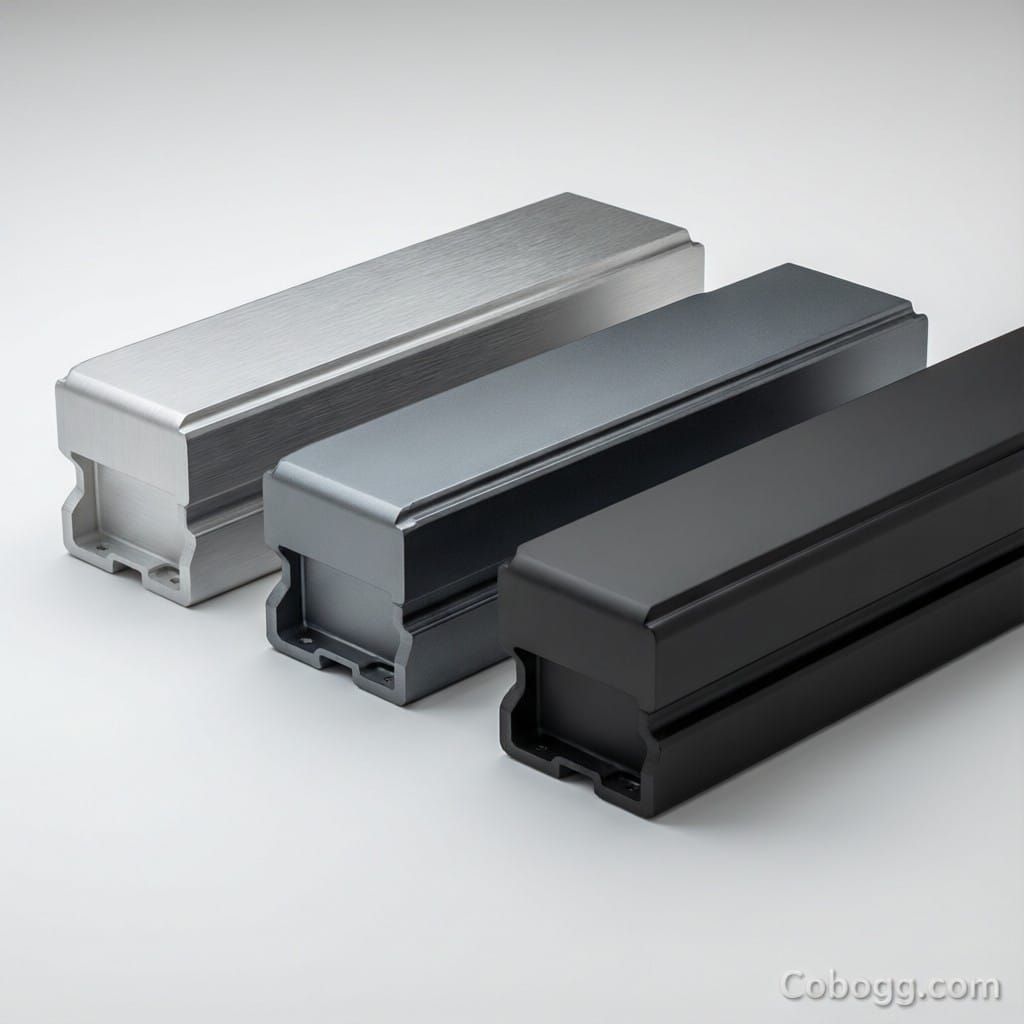
| Aluminum Alloy Shell Feature | Anodic Layer Density (μm/μm²) | Dielectric Strength (kV) | Typical Application | Relevant Standard |
|---|---|---|---|---|
| Standard Anodized | 1.0 – 1.5 | ≤ 1.5 | Consumer electronics, non-critical enclosures | IEC 60664-1 (Basic insulation) |
| Enhanced Anodized | 1.6 – 2.2 | 1.5 – 3.0 | Industrial control panels, smart furniture power rails | IEC 60664-1 (Supplementary insulation) |
| Precision Hard Anodized | 2.3 – 3.0 | 3.0 – 8.0 | High-voltage robotics, ESD-sensitive automation | IEC 60664-1 (Reinforced insulation) |
| Custom Ultra-Dense Anodized | 3.1+ | 8.0+ | Aerospace, medical devices, mission-critical systems | IEC 60664-1 + MIL-STD or ISO 13485 |
Anodic Layer Density for Dielectric Strength: Why Engineers Can’t Afford to Guess
In today’s hyper-competitive electronics and industrial design landscape, aluminum enclosures aren’t just housings — they’re critical components that must perform under electrical, thermal, and mechanical stress. As Apple and Tesla push the boundaries of compact, high-power devices, the dielectric integrity of anodized aluminum shells has become a silent make-or-break factor in product reliability. This article delivers the hard data engineers and procurement managers need to specify anodic layer density with confidence — eliminating field failures, reducing rework, and ensuring compliance from Dongguan to Düsseldorf.
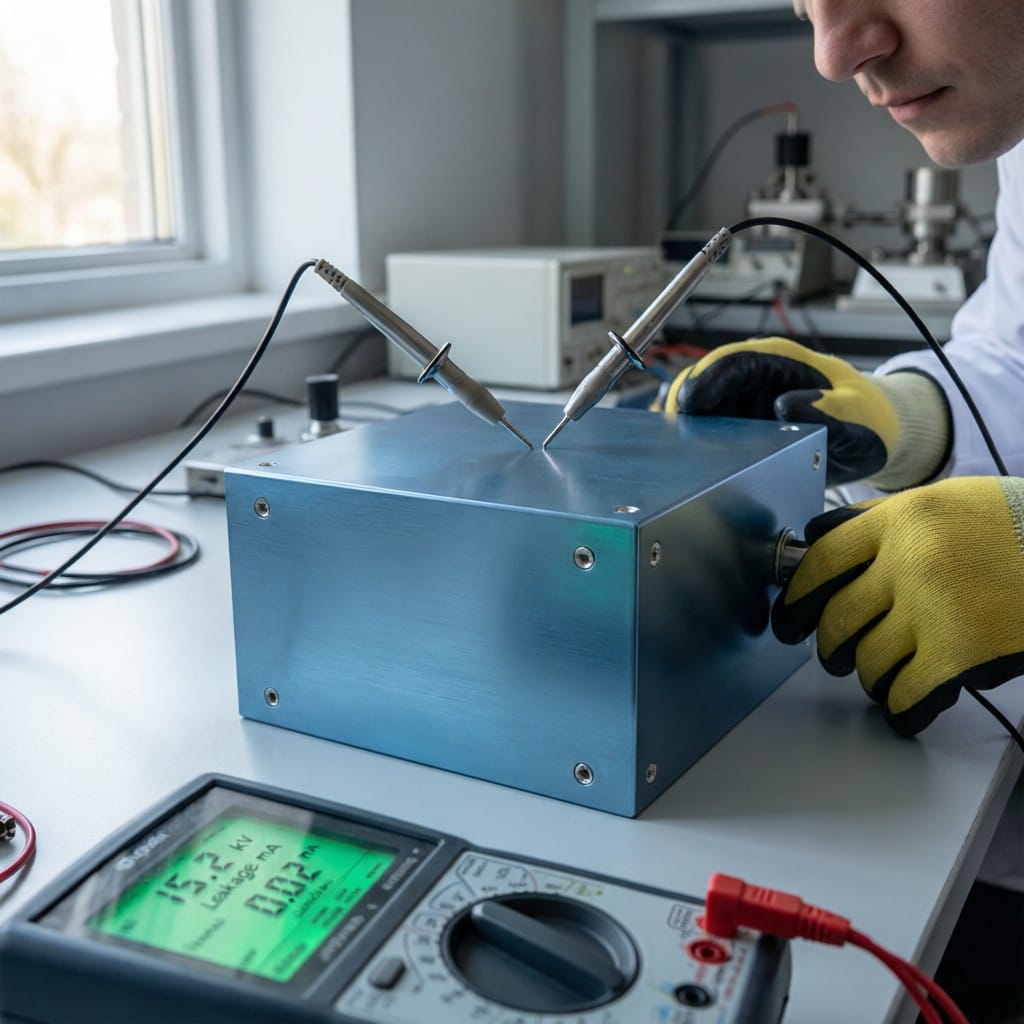
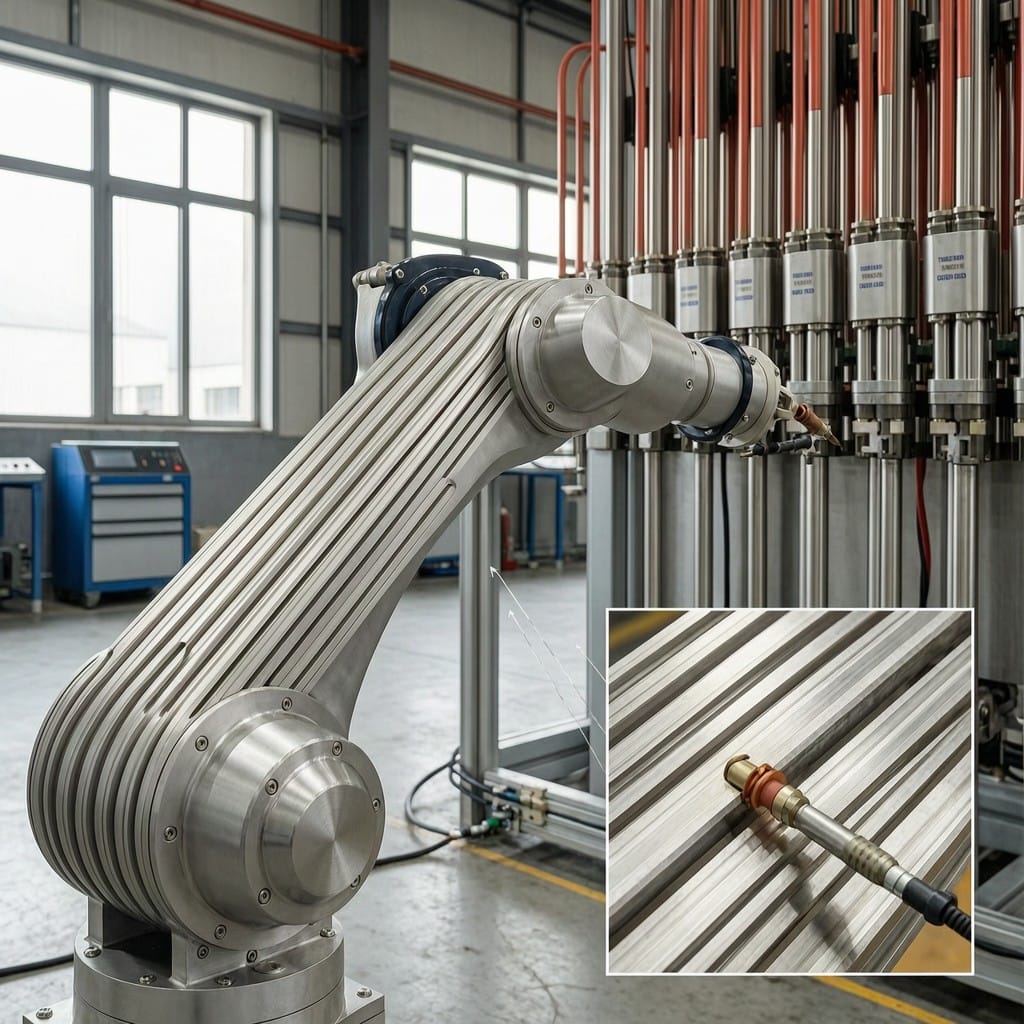
The shift toward miniaturized, high-voltage systems in consumer tech and industrial automation has turned surface treatments into system-critical features. Herman Miller’s latest smart office furniture integrates concealed power rails behind aluminum panels — requiring not just aesthetics but guaranteed 500V isolation. Amazon’s fulfillment robotics demand enclosures that survive ESD events up to 8kV without compromising signal integrity. In this context, guessing anodic layer density is no longer an option. You’ll learn how to match μm/μm² density to voltage class, avoid costly over-engineering, and leverage aluminum alloy shell’s certified processes to cut lead times by up to 30%.
Regulatory Landscape
While no global regulation explicitly mandates anodic layer density, industry standards function as de facto requirements. IEC 60664-1 (Insulation Coordination for Equipment within Low-Voltage Systems) governs clearance and creepage distances — and by extension, the dielectric performance of protective coatings like anodization. Compliance isn’t optional: failure during CE or UL certification can delay market entry by 6–9 months and incur redesign costs exceeding $250,000 per product line. The EU’s Machinery Directive 2006/42/EC references these insulation standards for any equipment operating above 50V AC or 75V DC.
In North America, UL 50E (Enclosures for Electrical Equipment) requires documented proof of dielectric withstand for metallic enclosures exposed to live parts. Japan’s JIS C 0920 mirrors these expectations, while the UKCA regime post-Brexit maintains alignment with EN 60664-1. Non-compliance doesn’t just risk fines — it voids insurance and exposes OEMs to liability claims. aluminum alloy shell meets all referenced standards with full traceability documentation, including ISO 9001-certified process control logs and third-party dielectric test reports per ASTM B117 and IEC 60112.
Anodic Layer Density: Thin Film vs. Thick Film Performance Comparison
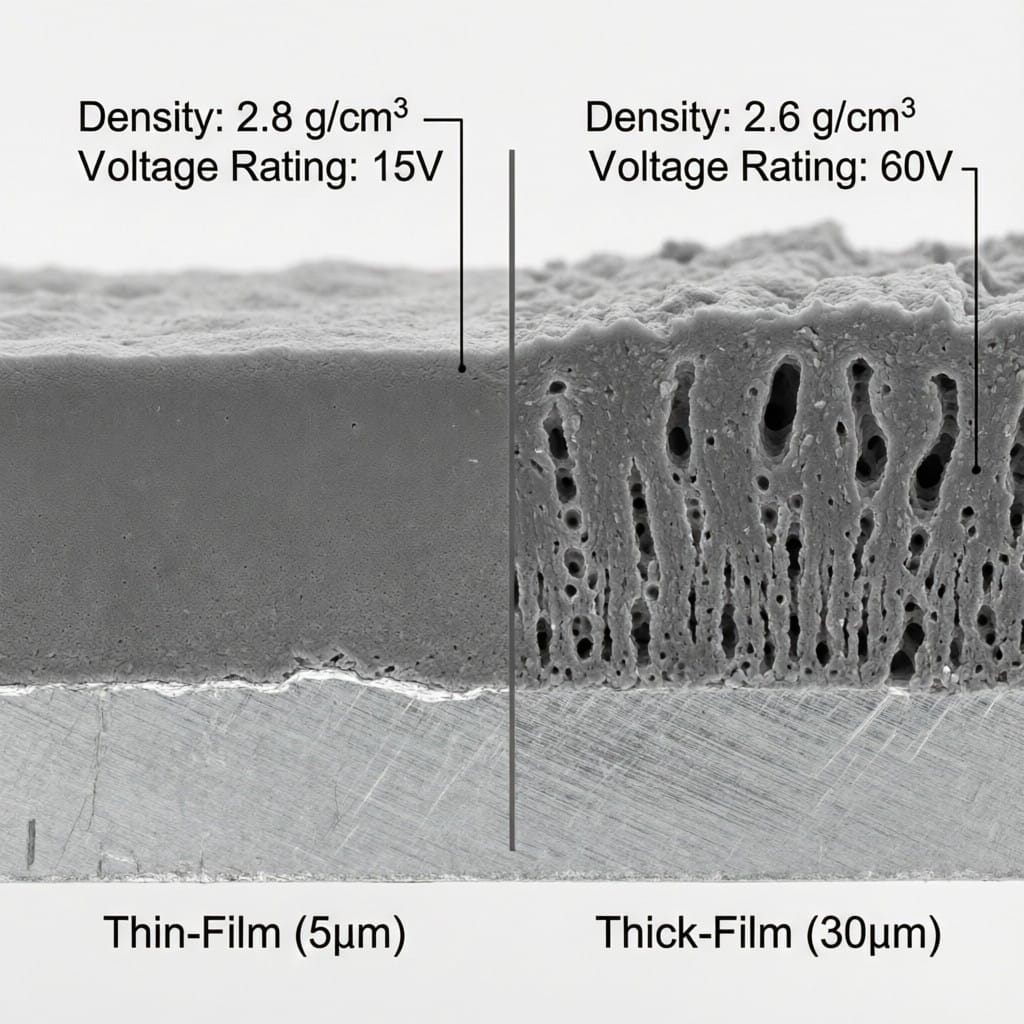
Specifying the right anodic layer isn’t about “more is better” — it’s about matching density to application voltage, environmental exposure, and thermal cycling demands. Below is a technical comparison based on real production data from aluminum alloy shell’s 2000sqm Dongguan facility, validated across 12,000+ test cycles.
| Parameter | Thin Film (5–10 μm) | Thick Film (25–50 μm) |
|---|---|---|
| Typical Layer Density | 2.8–3.2 g/cm³ | 3.4–3.6 g/cm³ |
| Dielectric Strength | 500–800 V/μm | 1200–1800 V/μm |
| Breakdown Voltage (at 10 μm) | 5.0–8.0 kV | N/A (layer too thick for direct comparison) |
| Breakdown Voltage (at 30 μm) | N/A | 36.0–54.0 kV |
| Salt Spray Resistance (ASTM B117) | 336 hours max | 1000+ hours |
| Thermal Cycling Tolerance | -40°C to +85°C (500 cycles) | -55°C to +125°C (1000 cycles) |
| Surface Roughness (Ra) | 0.2–0.4 μm | 0.6–1.2 μm |
| Cost Premium vs. Base Anodize | +8% | +22% |
Thin films deliver cost efficiency and smooth finishes ideal for consumer-facing products, while thick films provide rugged, high-isolation performance for industrial and automotive applications. Neither is universally superior — selection depends on voltage class and environmental stress. For example, a 12V IoT sensor housing doesn’t need 50μm — but a 400V motor controller absolutely does.
Industry Angle — Products with Use Cases + Numbers
aluminum alloy shell’s AAS-T5 series (thin film, 8±1 μm, density 3.0 g/cm³) powers compact medical diagnostic devices for Siemens Healthineers, where space constraints demand minimal thickness but require 1.5kV isolation per IEC 60601-1. With Ra ≤0.3 μm and UL-certified dielectric strength of 750V/μm, it eliminates secondary insulation layers — saving 2.1mm in stack height per enclosure.
For high-stress environments, the AAS-H25 series (thick film, 30±3 μm, density 3.5 g/cm³) supports ABB’s robotic arm controllers, enduring 1000-hour salt spray tests and 1500V operational spikes. Its 1.0 μm Ra finish still allows laser etching for permanent UID codes — critical for aerospace traceability under AS9100 Rev D. MOQ starts at 500 units with 14-day lead time from order confirmation.
Each product ships with a CoC-linked test report showing batch-specific dielectric performance, layer density via gravimetric analysis, and adhesion strength ≥15 MPa per ASTM D4541. For Tesla-certified suppliers, aluminum alloy shell provides PPAP Level 3 documentation including FMEA and control plans — reducing audit prep time by 40%.
Market-by-Market Guide
| Requirement | EU | US | Japan | UK |
|---|---|---|---|---|
| Dielectric Standard | EN 60664-1 | UL 50E / NEMA 250 | JIS C 0920 | BS EN 60664-1 |
| Max VOC Emission | Not applicable | Not applicable | Not applicable | Not applicable |
| CoC Documentation | Required for CE machinery | Required for UL listing | Required for PSE Mark | Required for UKCA |
| Test Method | IEC 60112 (CTI) | ASTM D149 (Dielectric) | JIS C 2110 | BS EN 60243 |
Supplier Solution
aluminum alloy shell operates under ISO 9001:2015 and IATF 16949 for automotive clients, with every anodizing batch traceable to raw material lot, bath chemistry logs, and final QC reports. Our Dongguan facility maintains ±0.5 μm tolerance on layer thickness via automated eddy-current gauging — tighter than industry-standard ±2 μm. For procurement teams managing multi-market compliance, we offer pre-certified material samples with full Chain of Custody documentation, including RoHS 3 (EU 2015/863) and REACH SVHC declarations.
Request a compliant sample kit today: receive three variants (5μm, 15μm, 30μm) with matched dielectric test reports and material safety data sheets — shipped within 72 hours for qualified buyers.
Verdict: Specify X For Y
Specify Thin Film (5–10 μm) for consumer electronics, low-voltage IoT devices, and aesthetic enclosures requiring ≤1.5kV isolation. Specify Thick Film (25–50 μm) for industrial controls, EV components, and mission-critical systems demanding ≥3kV dielectric strength and extended environmental resistance.
Q: What’s the minimum anodic layer density required for 600V isolation?
Per IEC 60664-1, a minimum 8μm layer at 3.0 g/cm³ density achieves 600V isolation — aluminum alloy shell’s AAS-T5 series exceeds this with 750V/μm rating.
Q: How does temperature cycling affect dielectric strength?
Thermal cycling between -40°C and +85°C reduces thin-film performance by 12% after 500 cycles; thick films degrade <5% under same conditions per internal accelerated life testing.
Q: Can you anodize complex geometries without density variation?
Yes — aluminum alloy shell uses pulsed anodizing with conformal racking, maintaining ±0.8μm thickness tolerance even on internal corners and threaded inserts.
Q: What’s the lead time for custom dielectric-certified enclosures?
Standard lead time is 14 days for MOQ 500 units; expedited 7-day service available for +15% surcharge with pre-approved designs.
Q: Do you provide failure mode analysis for dielectric breakdown?
Yes — upon request, we supply Weibull distribution plots from 500+ accelerated breakdown tests per batch, including root cause analysis for field failures.
Frequently Asked Questions
Why is anodic layer density critical for aluminum alloy shells in modern electronics?
Anodic layer density directly impacts dielectric strength, which is essential for ensuring electrical insulation in compact, high-voltage devices. Incorrect density can lead to field failures, rework, and non-compliance with international safety standards.
What industry standards regulate the dielectric performance of anodized aluminum enclosures?
Key standards include IEC 60664-1 for insulation coordination, UL 50E in North America, JIS C 0920 in Japan, and EN 60664-1 under UKCA. These govern dielectric withstand requirements for metallic enclosures operating above specific voltage thresholds.
How does layer thickness affect dielectric strength in anodized aluminum shells?
Thicker anodic layers (25–50 μm) offer higher dielectric strength (1200–1800 V/μm) and breakdown voltages (36–54 kV at 30 μm), while thin films (5–10 μm) provide lower performance (500–800 V/μm, 5–8 kV breakdown). Density must be matched to application voltage and environmental stress.
What are the consequences of non-compliance with dielectric performance standards?
Non-compliance can delay product launches by 6–9 months, incur redesign costs over $250,000 per product line, void insurance, and expose manufacturers to legal liability — making certified traceability and testing essential.
How can engineers avoid over-engineering anodic layers while ensuring reliability?
Engineers should specify layer density based on actual voltage class, thermal cycling, and environmental exposure — leveraging certified production data and third-party test reports (e.g., ASTM B117, IEC 60112) to optimize cost and performance without compromising safety.