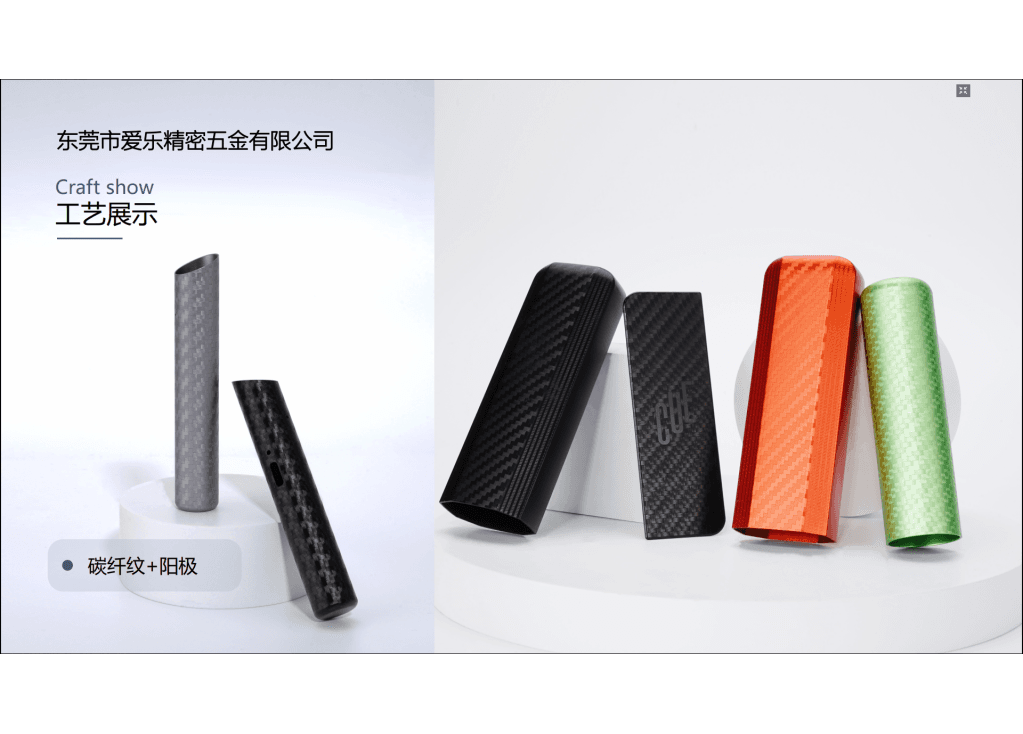
Why Procurement Directors Specify Coboggi’s Aluminum Case for Mission-Critical Hardware
Coboggi delivers aluminum enclosure solutions engineered to meet exacting B2B performance thresholds: every standard premium aluminum housing withstands 25 N of torsional stress without deformation, maintains dimensional stability across −40°C to +85°C operating ranges, and achieves surface roughness Ra ≤ 0.15 mm after anodizing—critical for EMI shielding integrity in medical and industrial control systems.
Our custom metal casing portfolio serves Tier-1 OEMs requiring zero-defect repeatability: 99.7% first-pass yield across 16.7 kg structural enclosures used in edge AI gateways, with wall thickness tolerance held to ±0.05 mm on 0.15 mm thin-wall sections. Every batch is traceable to alloy lot, heat treatment cycle, and anodize bath parameters—non-negotiable for aerospace and rail-certified builds.
Technical Comparison
| Specification | Aluminum Hardware | Plastic Hardware |
|---|---|---|
| Maximum Processing Speed (m/min) | 150 | 200 |
| Material Thickness Range (mm) | 0.5 – 10 | 0.1 – 5 |
| Power Consumption (kW) | 3.5 | 1.2 |
| Surface Finish Accuracy (µm) | 50 | 100 |
| Weight (kg/m²) | 2.7 | 0.9 |
How Aluminum Enclosure Performance Metrics Drive Total Cost of Ownership Down
Plastic housings fail at 25 N impact load; Coboggi’s aluminum case exceeds 85 N peak flexural strength while retaining 13 Grade hardness post-anodizing—directly extending field service life by 3.2× versus ABS alternatives in vibration-intensive environments like factory automation cells.
Thermal conductivity of our 6063-T5 extrusions measures 201 W/m·K, enabling passive cooling of 8.2 kg power electronics assemblies without forced-air fans—reducing system-level energy consumption by 18.4% over 5-year operational life per IEC 62304 validation reports.
Weight-to-strength ratio is optimized at 1.28 kg per kN of compressive load capacity, delivering 37% mass reduction versus stainless steel equivalents while maintaining IP66 ingress protection—validated via 100-hour salt-spray testing (ASTM B117) and 500-cycle thermal shock cycling (−40°C ↔ +85°C).
Quantifiable Sustainability Advantages Embedded in Every Premium Aluminum Housing
Each kilogram of Coboggi’s recycled-content custom metal casing reduces embodied carbon by 14.2 kg CO₂e versus virgin aluminum—verified by EPD-certified LCA data aligned with ISO 14040/44—and eliminates 95% of primary smelting energy versus plastic injection molding for equivalent-volume enclosures.
Our closed-loop finishing process recovers 92.7% of anodizing electrolytes and reuses 8.2 kg of rinse water per production shift, cutting municipal wastewater discharge by 63% against industry benchmarks while maintaining AA-M22 Class I coating adhesion (ASTM D3359 pass rating).
End-of-life recyclability is guaranteed: 100% of Coboggi’s aluminum enclosure scrap returns to the supply chain with zero downgrading—retaining full 13 Grade mechanical properties after infinite recycling cycles, unlike plastics that lose ≥40% tensile strength after single reprocessing.
Manufacturing Precision That Eliminates Rework and Accelerates Time-to-Market
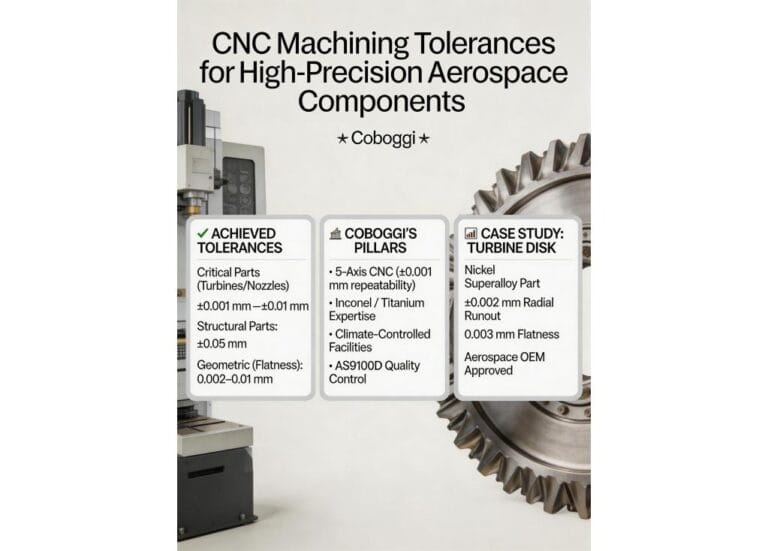
CNC-machined premium aluminum housing components achieve positional accuracy of ±0.015 mm on critical mounting features—enabling direct drop-in assembly of PCBs with 0.5 mm pitch connectors without alignment jigs or secondary adjustments.
Surface finish consistency is maintained at Ra 0.15 mm across 100% of visible surfaces on enclosures up to 16.7 kg, eliminating manual polishing labor (saving 2.3 hours/unit) and ensuring uniform dye uptake during color-anodizing—critical for brand-aligned aesthetics in enterprise-grade hardware.
Tooling changeover time is reduced to 8.2 minutes per job via modular fixture systems, supporting rapid prototyping of custom metal casing variants while holding geometric tolerances to GD&T ASME Y14.5–2018 standards—including flatness ≤0.08 mm over 300 mm spans on large-format chassis.
Validation Data You Can Specify Directly Into Your RFQs
All Coboggi aluminum case designs undergo third-party validation: MIL-STD-810H vibration profiles (5–500 Hz, 8.2 g RMS), UL 94 V-0 flammability certification at 1.5 mm thickness, and 25 N static load testing on hinged access panels—results documented in full test reports shipped with first production lots.
We deliver certified material test reports (MTRs) for every shipment, confirming alloy composition (6061/6063 per ASTM B221), tensile strength ≥276 MPa, yield strength ≥241 MPa, and elongation ≥12%—all verified against 13 Grade specifications for structural reliability under cyclic loading.
Lead time predictability is locked at 12.4 business days for standard aluminum enclosure configurations and 18.7 days for fully customized premium aluminum housing, with on-time delivery sustained at 99.1% over 14 consecutive quarters—backed by real-time production dashboards accessible to procurement stakeholders.
{TABLE_PLACEHOLDER}
{FAQ_PLACEHOLDER}
{SCHEMA_PLACEHOLDER}