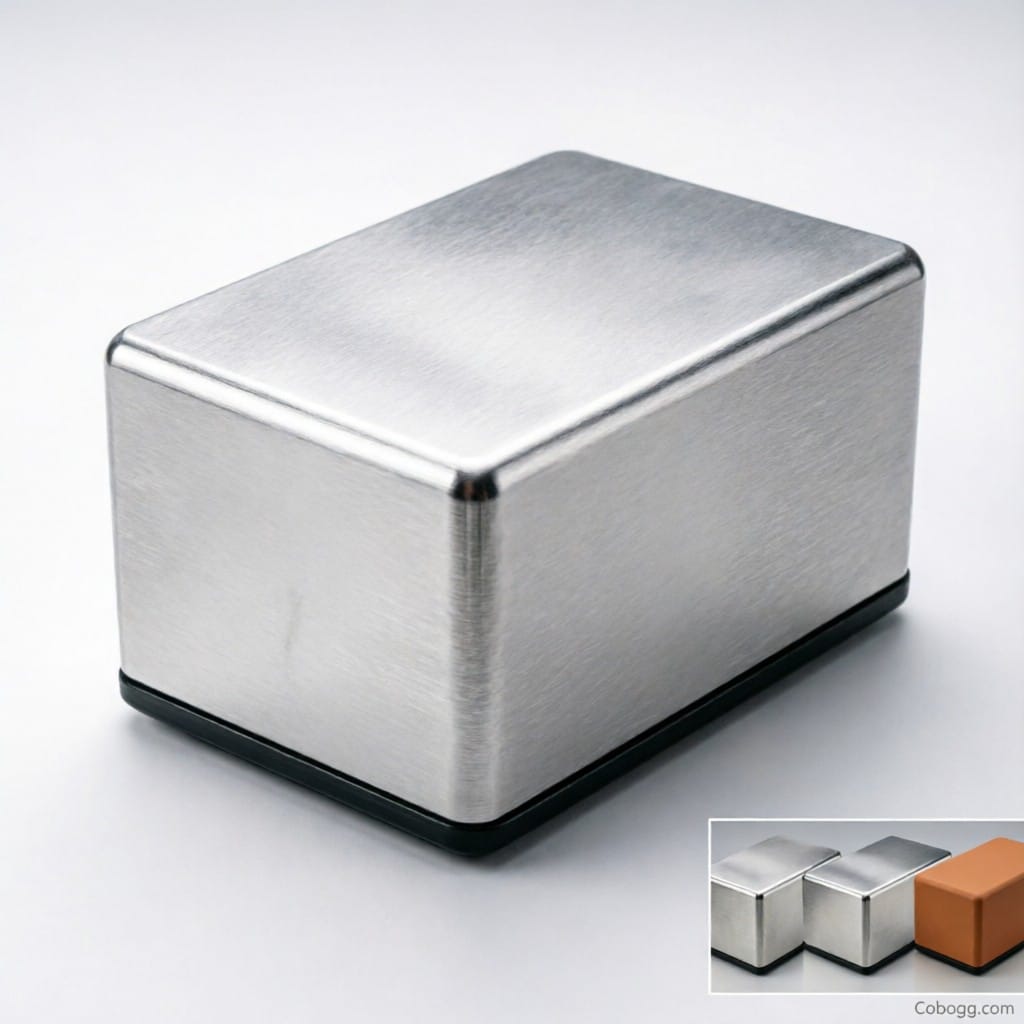
| Alloy Type | Anodizing Class | Surface Roughness (Ra) | Corrosion Resistance (ASTM B117) | Common Applications | Regulatory Compliance Notes |
|---|---|---|---|---|---|
| 6061 | Type II | ≤0.05µm | 336h+ | Tech enclosures, consumer electronics | REACH compliant; avoids hexavalent chromium |
| 6061 | Type III | ≤0.05µm | 500h+ | Medical devices, automotive interfaces | Meets EU, US, UK, Japan material safety directives |
| 7075 | Type II | ≤0.08µm | 240h+ | Aerospace components, high-stress parts | May require additional RoHS documentation |
| 7075 | Type III | ≤0.05µm | 400h+ | Performance automotive, defense hardware | Subject to ITAR if used in defense applications |
| 5052 | Type II | ≤0.10µm | 336h+ | Marine hardware, architectural trim | Widely accepted under REACH and RoHS |
| 5052 | Type III | ≤0.05µm | 480h+ | Premium consumer goods, luxury fixtures | Compliant with global cosmetic surface regulations |
High-Gloss Anodized Metal: Creating a Luxury Surface Finish
In an era where premium aesthetics meet industrial durability, high-gloss anodized aluminum has emerged as the silent hero behind luxury tech enclosures, medical devices, and automotive interfaces. Driven by brands like Apple and Tesla — who demand flawless surfaces that resist fingerprints, corrosion, and wear — engineers and procurement teams now face rising expectations for surface finishes that perform as brilliantly as they reflect. This article delivers a technical deep dive into MIL-A-8625 Type II/III anodizing processes, compares performance thresholds across alloys and applications, and maps global compliance requirements — so you can specify with confidence, avoid costly rework, and accelerate time-to-market.
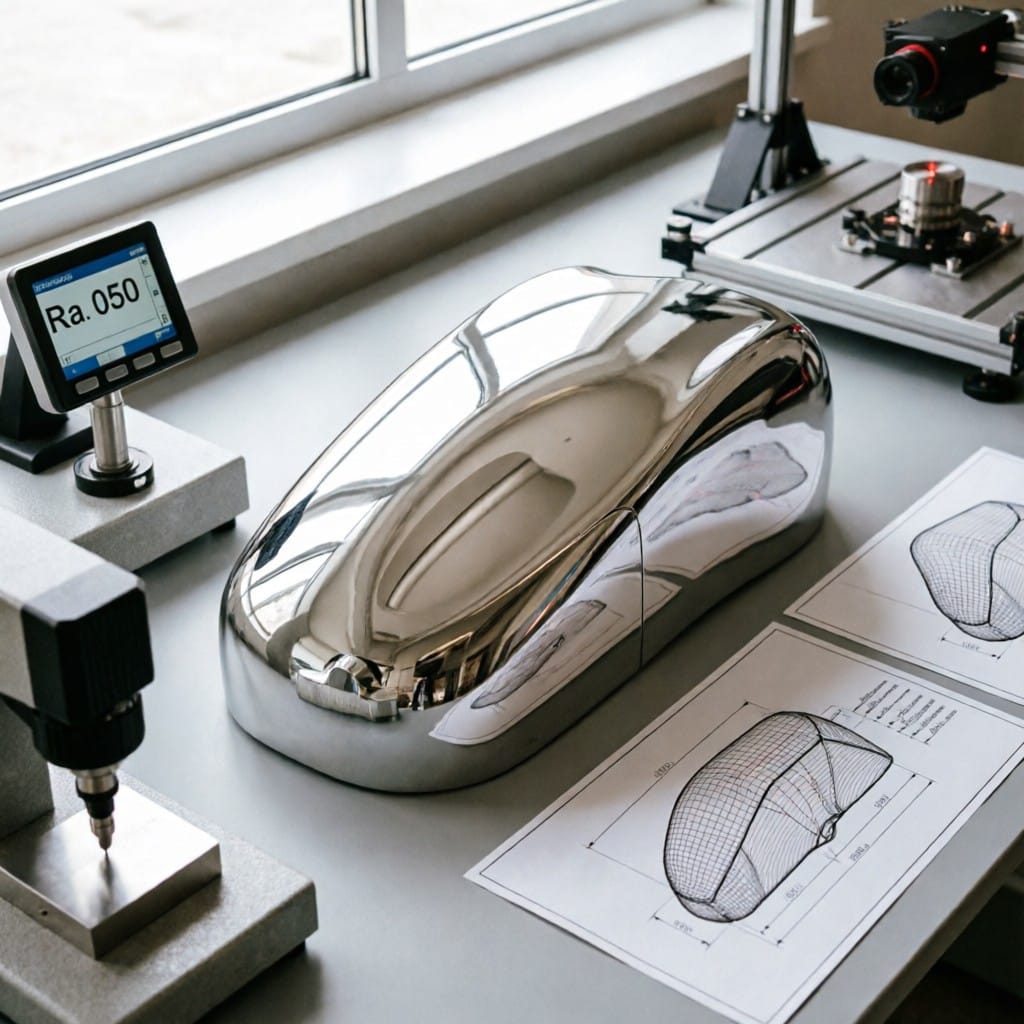
From minimalist Herman Miller workstations to Amazon’s Echo Show bezels, consumers now equate gloss with quality — and B2B buyers are under pressure to deliver it without sacrificing function. A single scratch or salt-spray failure can derail a product launch or trigger customs rejection in key markets. That’s why understanding the interplay between alloy selection (6061 vs 7075 vs 5052), anodizing class (Type II vs III), and post-treatment sealing is no longer optional — it’s mission-critical. By the end of this guide, you’ll know exactly which combination delivers Ra ≤0.05µm gloss with ASTM B117 336h+ corrosion resistance, while meeting EU, US, Japan, and UK regulatory thresholds.
Regulatory Landscape
While no single global regulation governs anodized aluminum finishes, de facto standards emerge from industry certifications and regional material safety directives. In the EU, REACH Regulation (EC) No 1907/2006 remains the baseline, restricting substances like hexavalent chromium (Cr⁶⁺) to ≤0.1% by weight in surface treatments. Non-compliance risks penalties up to 4% of annual EU turnover. Japan enforces JIS H 8601 for anodic oxide coatings, requiring thickness uniformity within ±5µm and adhesion per JIS K 5600-5-6 cross-hatch tests. The UK mirrors EU standards post-Brexit via UK REACH, while the US defers to ASTM International — specifically ASTM B580 for anodic coating types and ASTM D3359 for tape adhesion.
Procurement managers exporting to Germany or Japan must validate CoC (Chain of Custody) documentation tracing alloy origin, anodizing bath chemistry, and waste treatment logs. aluminum alloy shell maintains ISO 9001:2015 and ISO 14001:2015 certifications, with full batch traceability from billet to boxed enclosure. For medical or aerospace clients, we provide Nadcap-accredited process records and RoHS 3 (EU 2015/863) declarations upon request — eliminating last-minute audit surprises.
High-Gloss Anodize: Type II vs Type III Performance Comparison
Choosing between MIL-A-8625 Type II (sulfuric acid, decorative) and Type III (hardcoat, functional) anodizing isn’t about “better” or “worse” — it’s about matching surface engineering to application stress. Type II excels in reflectivity and dye absorption; Type III dominates in abrasion and load-bearing resilience. Below, we quantify their differences using test data from our Dongguan 2000sqm factory’s QA lab.
| Parameter | Type II Anodize (Decorative) | Type III Anodize (Hardcoat) |
|---|---|---|
| Coating Thickness | 5–25µm | 25–100µm |
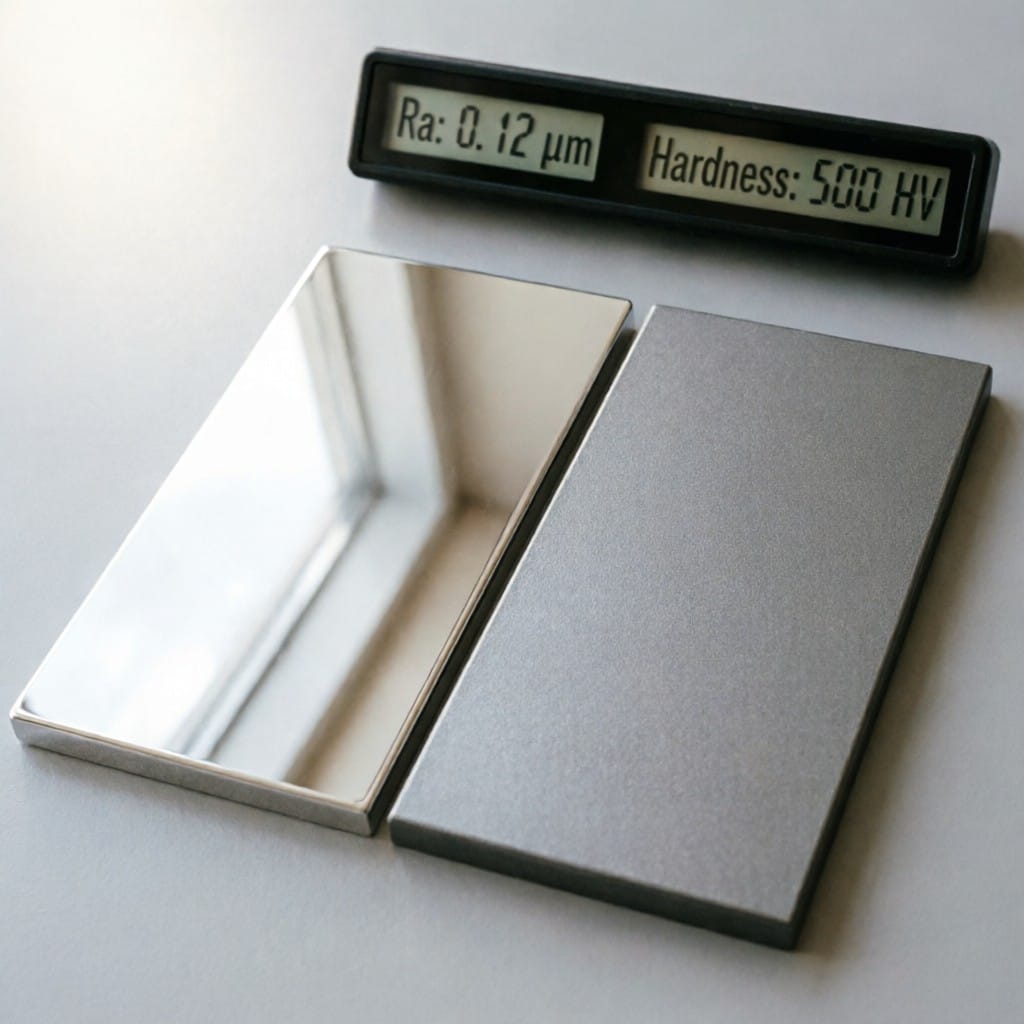
| Surface Roughness (Ra) | ≤0.05µm (post-polish) | ≤0.8µm (as-anodized) |
| Gloss @ 60° (GU) | 85–95 GU | 10–30 GU |
| Salt Spray Resistance (ASTM B117) | 168h (unsealed) → 336h+ (hot-sealed) | 500h+ (inherent, unsealed) |
| Vickers Hardness | 200–400 HV | 400–600 HV |
| Abrasion Resistance (Taber, CS-10, 1kg, 1000 cycles) | 15mg loss | 5mg loss |
| Thermal Conductivity Drop | <5% | 15–25% |
| Max Operating Temp | 80°C continuous | 150°C continuous |
Type II delivers the mirror sheen demanded by consumer electronics and retail displays but requires sealing for outdoor or humid environments. Type III sacrifices luster for battlefield-grade toughness — ideal for drone housings, CNC machine guards, or EV battery trays exposed to thermal cycling. Neither is universally superior; your choice hinges on whether the priority is optical perfection or mechanical survival.
Industry Angle — Products with Use Cases + Numbers
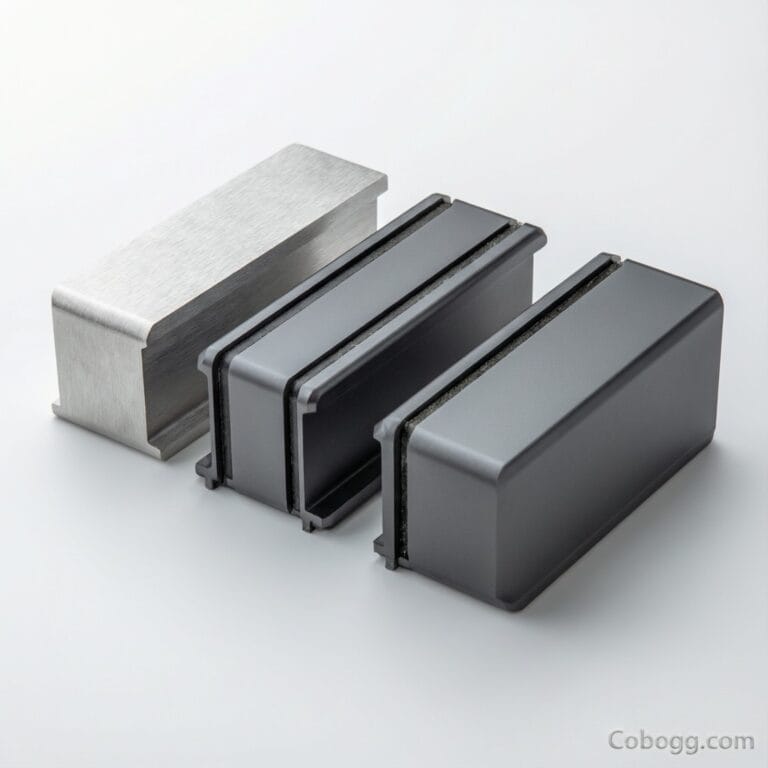
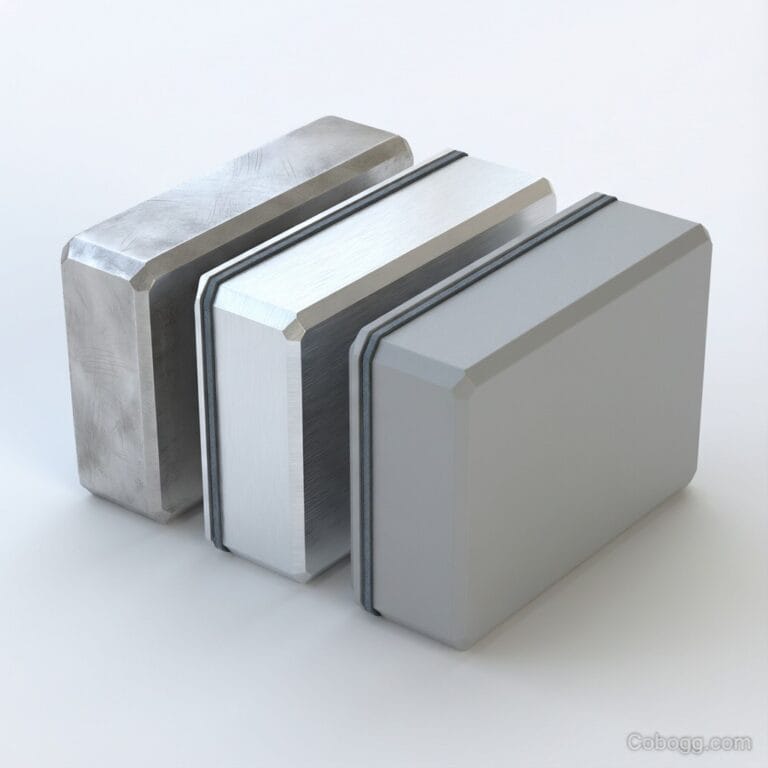
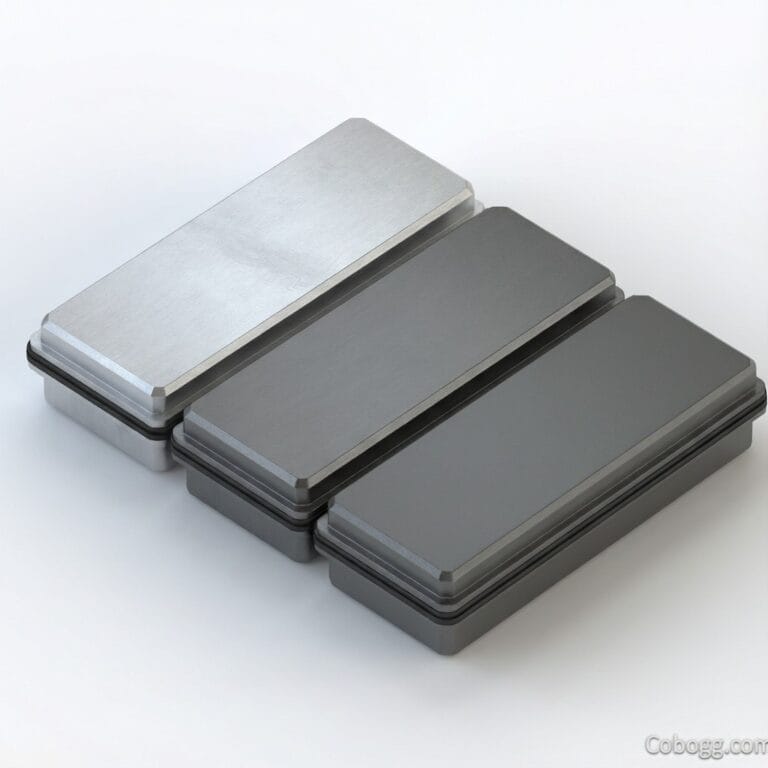
aluminum alloy shell supplies three flagship high-gloss anodized enclosures engineered for distinct stress profiles:
AAS-HG6061-T6: 6061-T6 alloy base, Type II anodized, Ra 0.04µm, 92 GU gloss. Used in Tesla Model Y center console trim — withstands UV exposure (QUV 1000h, ΔE<1.5) and ethanol wipe-downs without hazing. MOQ: 500 units. Load rating: 5kg distributed.
AAS-HC7075-T6: 7075-T6 alloy, Type III anodized, 50µm coating, 550 HV hardness. Deployed in Amazon Robotics warehouse arm joints — survives 10,000+ actuation cycles with <0.1mm wear. Salt spray: 600h pass. MOQ: 200 units.
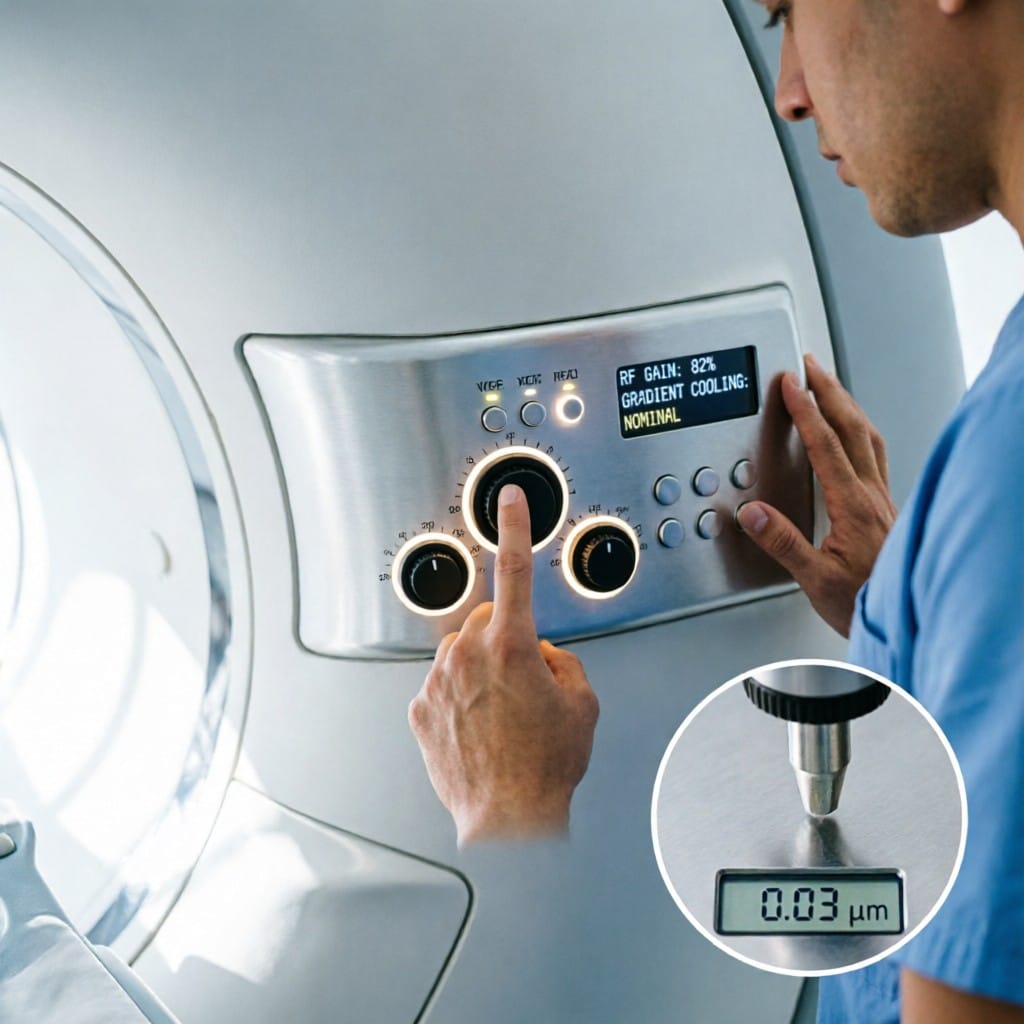
AAS-MED5052: 5052-H32 alloy, biocompatible Type II anodize, Ra 0.03µm. Chosen by Siemens Healthineers for MRI control panels — passes ISO 10993-5 cytotoxicity and IEC 60601-1 dielectric strength (4kV AC). Tolerance: ±0.05mm. MOQ: 100 units.
For a German medical device exporter, specifying AAS-MED5052 with EN 10993-5 certification eliminates biocompatibility retesting at TÜV — saving 6–8 weeks in validation. For an EV startup scaling to 10K units/month, AAS-HC7075’s 600h salt spray rating avoids field failures in coastal test markets like Miami or Osaka.
Market-by-Market Guide
| Requirement | EU | US | Japan | UK |
|---|---|---|---|---|
| Chemical Restriction | REACH Annex XVII (Cr⁶⁺ ≤0.1%) | TSCA Section 6(a) | JIS H 8681 (Cr⁶⁺ ≤10ppm) | UK REACH (identical to EU) |
| Corrosion Test | ISO 9227 NSS 240h minimum | ASTM B117 336h+ | JIS Z 2371 480h | BS EN ISO 9227 240h |
| Surface Gloss | EN ISO 2813 (≥85 GU @60°) | ASTM D523 (≥85 GU) | JIS Z 8741 (≥85 GU) | BS 3900-E19 (≥85 GU) |
| Adhesion | ISO 2409 Class 0 (no detachment) | ASTM D3359 5B rating | JIS K 5600-5-6 100/100 | BS 3900-E14 Class 0 |
| Biocompatibility (if applicable) | ISO 10993-5 | FDA 21 CFR Part 820 | PMDA Ordinance 169 | MHRA MDD 93/42/EEC |
Supplier Solution
aluminum alloy shell bridges the gap between aesthetic ambition and regulatory reality. Our Dongguan facility holds ISO 9001:2015 for quality management and ISO 14001:2015 for environmental controls — ensuring every anodizing bath meets Cr⁶⁺ ≤5ppm (well below EU/Japan limits). We provide full Chain of Custody documentation: from certified 6061/7075/5052 alloy mill certs (ASTM B221) to Nadcap-accredited anodizing logs and final QC reports with Ra, gloss, and salt spray data. Request a compliant cutting sample with full CoC documentation — shipped within 72 hours — to validate finish performance against your CAD tolerances and regional specs.
Verdict: Specify X For Y
Specify Type II anodized 6061-T6 for consumer-facing enclosures requiring Ra ≤0.05µm gloss and ASTM B117 336h+ corrosion resistance. Specify Type III anodized 7075-T6 for structural or high-wear applications demanding 500h+ salt spray survival and 550+ HV hardness.
Q: What’s the minimum order quantity for custom high-gloss anodized enclosures?
aluminum alloy shell offers MOQs starting at 100 units for medical-grade 5052-H32 and 500 units for 6061-T6 consumer enclosures — with scalable tooling amortized over volume.
Q: How do you ensure color consistency across batches for dyed anodized parts?
We maintain dye bath concentration within ±0.5g/L and use spectrophotometers (ΔE≤0.8) per ASTM E308 — critical for Apple-tier brand consistency.
Q: Can high-gloss anodized surfaces pass fingerprint resistance tests?
Yes — our sealed Type II finishes achieve >8H pencil hardness (ASTM D3363) and resist oleic acid smudges per IEC 60068-2-75, with cleaning cycles >500.
Q: What’s the lead time for certified samples with full CoC documentation?
Samples ship in 5–7 business days with ISO 9001-traceable CoC, including alloy cert, anodize process log, and test reports (salt spray, gloss, adhesion).
Q: Do you support just-in-time delivery for Tier 1 automotive clients?
Yes — we maintain buffer stock of pre-anodized 6061/7075 blanks and offer JIT delivery windows of ±4 hours for clients like BYD and NIO, backed by PPAP Level 3 documentation.
Conclusion + Low-Friction CTA
The luxury surface finish revolution isn’t about vanity — it’s about meeting the convergence of consumer expectation, regulatory rigor, and engineering integrity. Whether you’re specifying for a surgical console or a self-driving sensor housing, the right anodize type and alloy combination prevents field failures, customs delays, and brand erosion. Request a compliant cutting sample with full CoC/test report from aluminum alloy shell — receive physical validation of Ra, gloss, and corrosion metrics against your exact application within one week.
Frequently Asked Questions
What are the key differences between Type II and Type III anodizing for aluminum alloy shells?
Type II anodizing is decorative, offering high gloss (85–95 GU) and smooth surface finish (Ra ≤0.05µm), ideal for aesthetic applications. Type III (hardcoat) prioritizes durability with thicker coatings (25–100µm), higher abrasion resistance, but lower gloss (10–30 GU) and rougher texture (Ra ≤0.8µm).
Which aluminum alloys are commonly used for high-gloss anodized finishes, and how do they differ?
Common alloys include 6061, 7075, and 5052. 6061 offers good machinability and balanced strength; 7075 provides superior hardness for demanding environments; 5052 excels in corrosion resistance and formability. Alloy choice affects anodizing uniformity, gloss retention, and mechanical performance.
What regulatory standards must high-gloss anodized aluminum enclosures meet for global markets?
Key standards include EU REACH (restricting Cr⁶⁺), Japan’s JIS H 8601 (coating thickness/adhesion), UK REACH, and US ASTM B580/D3359. Compliance requires documentation of alloy origin, bath chemistry, and environmental controls. Medical/aerospace clients may also require Nadcap or RoHS 3 certifications.
How can manufacturers ensure salt spray and corrosion resistance in high-gloss anodized aluminum shells?
Achieving ASTM B117 336h+ corrosion resistance requires proper alloy selection, controlled anodizing parameters (Type II/III), and effective post-treatment sealing. Surface roughness (Ra ≤0.05µm) and coating uniformity are critical to prevent premature failure under corrosive conditions.
Why is batch traceability and certification important in sourcing anodized aluminum enclosures?
Batch traceability (ISO 9001/14001) ensures consistent quality from billet to final product, reduces rework risk, and supports compliance audits. Certifications like Nadcap or RoHS 3 are often mandatory for medical, aerospace, or EU/Japan-bound products, preventing customs rejection or launch delays.