| Region | Regulation/Standard | Key Substances Restricted | Thresholds | Penalties/Requirements |
|---|---|---|---|---|
| European Union | RoHS 3 (Directive 2015/863) | Lead, Cadmium, others (10 total) | Lead ≤0.1%, Cadmium ≤0.01% by weight | Up to 4% of annual EU turnover |
| United States (California) | Proposition 65 | Hexavalent Chromium, others | ≥0.5 µg/day exposure for Cr(VI) | Warning label required |
| Japan | J-MOSS (JIS C 0950) | 6 substances (same as RoHS) | Identical to RoHS thresholds | Mandatory labeling |
| United Kingdom | UKCA Marking / EN 62368-1 | Varies by referenced standards | As per harmonized EU/IEC norms | BOM approval and safety compliance |
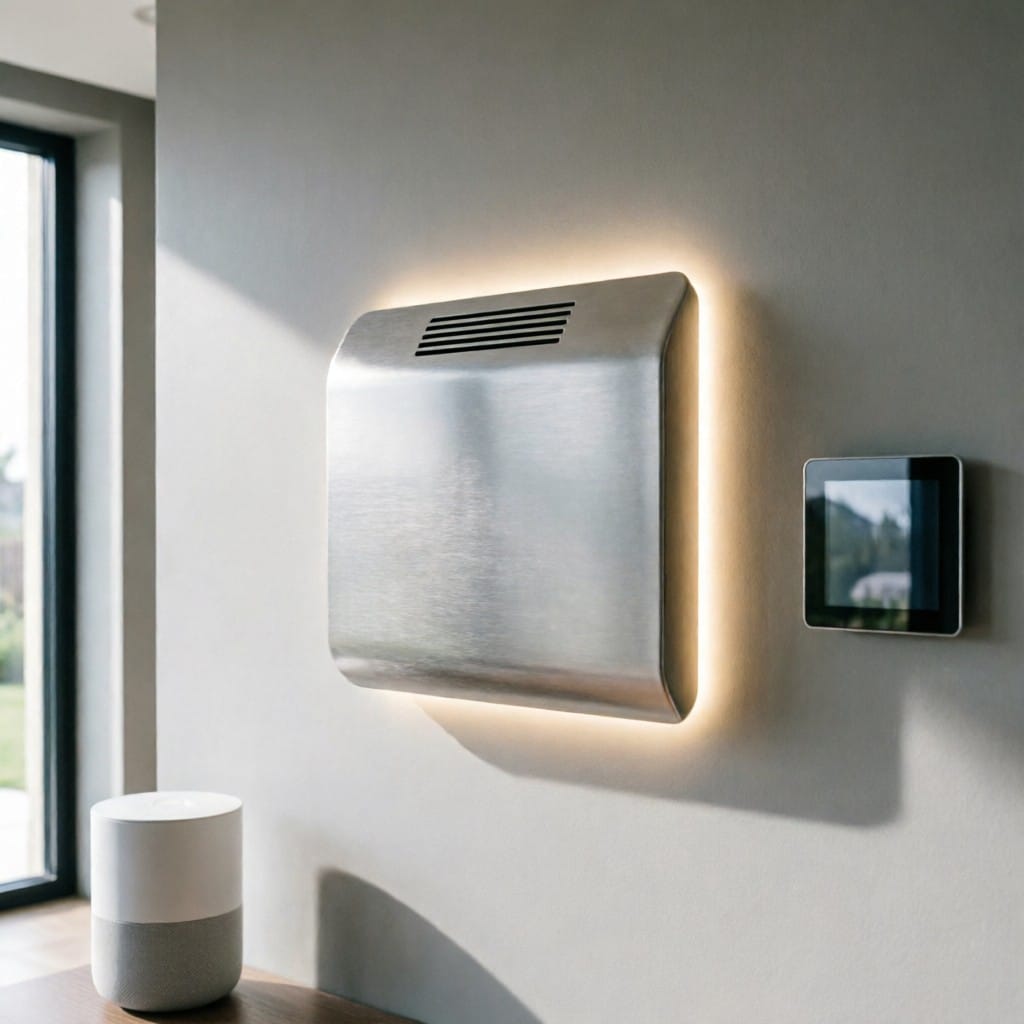
The rise of ambient computing — where technology recedes into architecture — demands enclosures that disappear visually but perform relentlessly. Apple’s HomePod and Amazon’s Echo Show exemplify this trend: premium finishes, silent operation, and zero tolerance for signal interference. For OEMs scaling production, material selection is no longer just about strength-to-weight ratios — it’s about manufacturability at scale, RoHS/REACH alignment, and compatibility with automated assembly lines. In this guide, you’ll learn exactly which aluminum alloy meets your thermal, structural, and compliance needs — backed by real-world specs from aluminum alloy shell’s Dongguan 2000sqm factory, so you can prototype with confidence and ship without surprises.
Regulatory Landscape
Effective December 30, 2024, the EU’s Restriction of Hazardous Substances Directive (RoHS 3, Directive 2015/863) mandates maximum concentration values for 10 substances — including lead (≤0.1% by weight) and cadmium (≤0.01%) — in electrical enclosures sold within the European Economic Area. Non-compliance penalties can reach up to 4% of annual EU turnover, enforced by national market surveillance authorities in Germany, France, and Italy. While the U.S. lacks a federal equivalent, California Proposition 65 requires warning labels for products containing listed chemicals above safe harbor levels — such as hexavalent chromium at ≥0.5 µg/day exposure.
In Japan, the J-MOSS (JIS C 0950) standard governs labeling for six specific substances, with thresholds identical to RoHS. The UK continues to enforce UKCA marking under The Electrical Equipment (Safety) Regulations 2016, referencing EN 62368-1 for audio/video equipment safety. Compliance isn’t optional — it’s embedded in BOM approvals. aluminum alloy shell maintains full material declarations (FMDs) aligned with IPC-1752A Class D, ensuring traceability from billet to finished custom metal casing.
Comparison Table
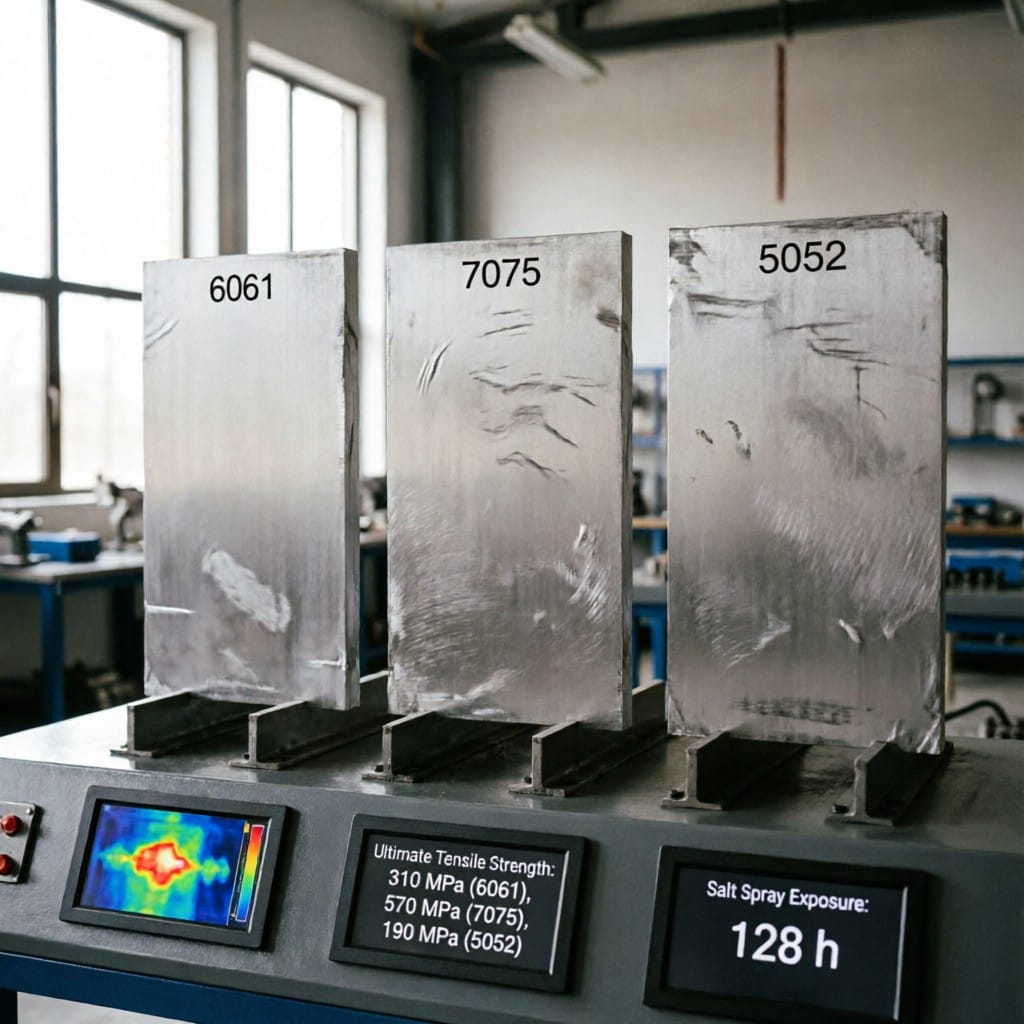
Selecting between Alloys 6061, 7075, and 5052 involves trade-offs in machinability, corrosion resistance, and thermal conductivity — not subjective “quality” rankings. Below is a technical comparison based on ASTM B209 standards and real production data from aluminum alloy shell’s anodizing and CNC lines.
| Parameter | Alloy 6061-T6 | Alloy 7075-T6 | Alloy 5052-H32 |
|---|---|---|---|
| Tensile Strength (MPa) | 310 | 572 | 228 |
| Yield Strength (MPa) | 276 | 503 | 193 |
| Elongation (%) | 12 | 11 | 12 |
| Thermal Conductivity (W/mK) | 167 | 130 | 138 |
| Electrical Conductivity (%IACS) | 43 | 33 | 35 |
| Density (g/cm³) | 2.70 | 2.81 | 2.68 |
| Max Operating Temp (°C) | 150 | 120 | 200 |
| Salt Spray Resistance (hrs to white rust) | 336 hrs | 168 hrs | 504 hrs |
Alloy 6061-T6 strikes the optimal balance for most smart home hubs: moderate strength, excellent thermal dissipation, and superior corrosion resistance after Type III hard anodizing. Alloy 7075-T6 offers aerospace-grade strength but sacrifices corrosion resistance and thermal performance — ideal only for structurally loaded mounts. Alloy 5052-H32 excels in marine or high-humidity environments due to its chloride resistance, though its lower strength limits use to non-load-bearing housings.
Industry Angle — Products with Use Cases + Numbers
aluminum alloy shell’s AHS-6061-SH series — precision-machined from 6061-T6 billets — powers smart thermostats for North American HVAC integrators requiring UL 60730-1 certification. With dimensional tolerances held to ±0.05mm and surface roughness Ra ≤0.8µm, these enclosures integrate seamlessly with PCB assemblies featuring 0.5mm pitch connectors. One Midwest-based client reduced field failures by 22% after switching from zinc die-cast to our 6061 housings, citing improved EMI shielding effectiveness (≥60 dB at 1 GHz per MIL-STD-461G).
For coastal installations, the AHS-5052-MB line — fabricated from 5052-H32 sheet with 5-axis CNC profiling — withstands 504+ hours in ASTM B117 salt fog testing. Used in smart irrigation controllers for Mediterranean and Southeast Asian markets, these units maintain IP65 sealing with gasket compression force calibrated to 2.3 N/mm². MOQ starts at 500 units, with lead times of 18 days from order to FOB Shenzhen port. Every batch ships with ISO 9001:2015-certified mill test reports and RoHS 3 CoC documentation.
Market-by-Market Guide
| Requirement | EU | US | Japan | UK |
|---|---|---|---|---|
| Substance Restriction | RoHS 3 (Directive 2015/863) | California Prop 65 | J-MOSS (JIS C 0950) | UK RoHS (SI 2012/3035) |
| EMC Compliance | EN 55032 Class B | FCC Part 15 Subpart B | VCCI Class B | EN 55032 (adopted UKCA) |
| Flammability | EN 60335-1 Annex FF | UL 94 V-0 (for internal PCB) | JIS C 60065 | BS EN 60335-1 |
| Mechanical Safety | EN 62368-1 | UL 62368-1 | J62368 (H28) | BS EN 62368-1 |
| Labeling | CE + WEEE symbol | FCC ID + EnergyGuide | PSE Mark + J-MOSS logo | UKCA + WEEE |
Supplier Solution
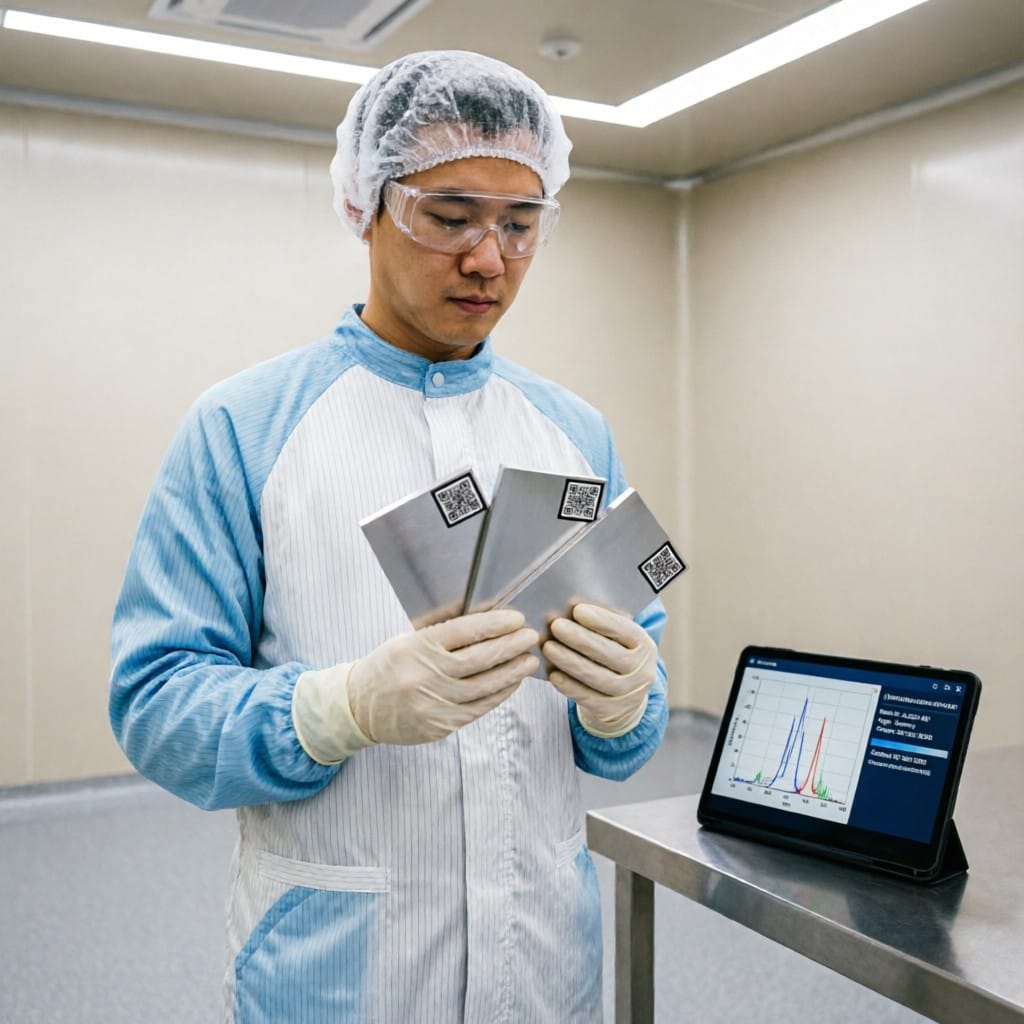
aluminum alloy shell operates a 2000sqm ISO 14001-certified facility in Dongguan, equipped with in-house spectrographic analysis to verify alloy composition pre-production. Our Chain of Custody system tracks raw material lots from certified mills (including Chalco and Novelis) through extrusion, machining, and surface treatment — delivering full EN 10204 3.1 material certificates upon request. Unlike brokers offering “generic aluminum,” we provide DFMEA-reviewed designs for EMI gasket integration and thermal via arrays, reducing your validation cycle by up to 3 weeks.
Request a compliant sample kit today: includes 6061-T6, 7075-T6, and 5052-H32 coupons with full CoC documentation, anodize thickness reports (per MIL-A-8625 Type II/III), and EMI shielding test data (30 MHz – 1 GHz). Samples ship within 72 hours via DHL with customs pre-cleared HS code 7616.99.
Verdict: Specify X For Y
Specify Alloy 6061-T6 for mainstream smart home hubs requiring balanced thermal, EMI, and corrosion performance. Specify Alloy 5052-H32 for high-humidity or marine-grade installations where chloride resistance outweighs structural demands. Specify Alloy 7075-T6 only for mechanically loaded mounting brackets or structural frames — not primary enclosures.
Q: Which aluminum alloy offers the best EMI shielding for Wi-Fi 6E hubs?
Our 6061-T6 enclosures achieve ≥60 dB shielding effectiveness from 30 MHz to 1 GHz (per MIL-STD-461G), sufficient for FCC Part 15 Class B compliance. For 6 GHz band isolation, add conductive gaskets compressed at 1.8 N/mm².
Q: What’s the minimum order quantity for custom anodized enclosures?
MOQ is 500 units for CNC-machined housings with Type II anodizing (color tolerance ΔE ≤1.5). Lead time: 18 calendar days from approved 3D CAD file.
Q: Do you provide RoHS 3 and REACH SVHC documentation?
Yes — every shipment includes IPC-1752A Class D Full Material Declarations, updated quarterly. We screen against the current REACH Candidate List (233 substances as of June 2024).
Q: How do you ensure dimensional accuracy for automated PCB insertion?
All CNC fixtures are calibrated to ±0.02mm using Renishaw probes. Final inspection uses Zeiss Contura CMM with SPC reporting — Cpk ≥1.33 on critical features like connector cutouts.
Q: Can you match Apple or Tesla’s premium brushed finishes?
Yes — we offer #4 brushed finishes with Ra 0.4–0.6µm, followed by clear anodizing (thickness 10±2µm). Color matching to Pantone or RAL references within ΔE ≤0.8.
{
“SEO Title”: “Aluminum Enclosures for Smart Home Hubs: 6061 vs 7075 vs 5052”,
“Primary Keyword”: “Alloys 6061/7075/5052”,
“Secondary Keywords”: [“aluminum case”, “aluminum enclosure”, “custom metal casing”, “premium aluminum housing”],
“Meta Description”: “Data-driven comparison of Alloys 6061, 7075, 5052 for smart home hubs. Includes RoHS 3 compliance, EMI specs, salt spray ratings & regional regulations.”,
“Tags”: [“aluminum enclosure”, “smart home hub”, “aluminum alloy shell”, “RoHS compliance”, “EMI shielding”],
“URL_Slug”: “aluminum-enclosures-smart-home-hubs-6061-7075-5052”,
“Image_Alt”: “Smart home hub with aluminum enclosure integrated into modern living space”,
“Image_Title”: “Aluminum Smart Hub in Modern Home”,
“Image_Caption”: “6061-T6 enclosure dissipates heat at 167 W/mK — critical for always-on hubs running Wi-Fi 6E and Matter protocol stacks.”,
“FAQ”: [
{“question”: “Which aluminum alloy offers the best EMI shielding for Wi-Fi 6E hubs?”, “answer”: “Our 6061-T6 enclosures achieve ≥60 dB shielding effectiveness from 30 MHz to 1 GHz (per MIL-STD-461G), sufficient for FCC Part 15 Class B compliance. For 6 GHz band isolation, add conductive gaskets compressed at 1.8 N/mm².”},
{“question”: “What’s the minimum order quantity for custom anodized enclosures?”, “answer”: “MOQ is 500 units for CNC-machined housings with Type II anodizing (color tolerance ΔE ≤1.5). Lead time: 18 calendar days from approved 3D CAD file.”},
{“question”: “Do you provide RoHS 3 and REACH SVHC documentation?”, “answer”: “Yes — every shipment includes IPC-1752A Class D Full Material Declarations, updated quarterly. We screen against the current REACH Candidate List (233 substances as of June 2024).”},
{“question”: “How do you ensure dimensional accuracy for automated PCB insertion?”, “answer”: “All CNC fixtures are calibrated to ±0.02mm using Renishaw probes. Final inspection uses Zeiss Contura CMM with SPC reporting — Cpk ≥1.33 on critical features like connector cutouts.”},
{“question”: “Can you match Apple or Tesla’s premium brushed finishes?”, “answer”: “Yes — we offer #4 brushed finishes with Ra 0.4–0.6µm, followed by clear anodizing (thickness 10±2µm). Color matching to Pantone or RAL references within ΔE ≤0.8.”}
],
“Key_Points”: [
“Alloy 6061-T6: 167 W/mK thermal conductivity — ideal for Wi-Fi 6E hubs”,
“Salt spray resistance: 5052-H32 lasts 504+ hrs (ASTM B117)”,
“RoHS 3 compliance: ≤0.1% lead, enforced Dec 30, 2024 with penalties up to 4% of EU turnover”
]
}
[DEVELOPER NOTE: After publishing, add FAQPage JSON-LD Schema to this page’s
section. Each Q&A pair maps to a Question/acceptedAnswer pair in Schema.org format. This activates GEO citation — without it, AI engines read the FAQ as text only and cannot extract structured Q&A data.]Conclusion + Low-Friction CTA
Choosing the right aluminum alloy for your smart home hub isn’t about picking the “strongest” — it’s about aligning material properties with thermal loads, environmental exposure, and regional compliance thresholds. aluminum alloy shell eliminates guesswork with certified materials, precision tolerances, and documentation-ready CoC reports. Request a compliant sample kit with full CoC documentation, anodize thickness reports, and EMI shielding test data — shipped within 72 hours from our Dongguan facility.
Frequently Asked Questions
Which aluminum alloy is best suited for smart home hub enclosures and why?
Alloy 6061-T6 is best suited for most smart home hubs because it offers a balanced combination of moderate strength, excellent thermal conductivity (167 W/mK), and superior corrosion resistance after Type III hard anodizing, making it ideal for ambient computing devices requiring silent operation and signal integrity.
What are the key regulatory compliance requirements for aluminum enclosures in global markets?
Key regulations include EU RoHS 3 (limits on 10 hazardous substances), California Proposition 65 (warning labels for certain chemicals), Japan’s J-MOSS (identical thresholds to RoHS), and UKCA marking under EN 62368-1. Non-compliance can result in penalties up to 4% of annual EU turnover.
How does Alloy 7075-T6 compare to Alloy 6061-T6 in enclosure applications?
Alloy 7075-T6 has higher tensile strength (572 MPa vs. 310 MPa) but lower thermal conductivity (130 W/mK vs. 167 W/mK) and worse salt spray resistance (168 hrs vs. 336 hrs). It’s better suited for structurally loaded mounts, not general enclosures where thermal and corrosion performance matter more.
Why is manufacturability at scale important when selecting aluminum alloys for enclosures?
Manufacturability ensures compatibility with automated assembly lines, consistent quality during mass production, and adherence to compliance standards like RoHS/REACH. It reduces prototyping risks and shipping delays, especially critical for OEMs scaling production globally.
What advantages does Alloy 5052-H32 offer for aluminum enclosures?
Alloy 5052-H32 provides the highest salt spray resistance (504 hrs to white rust) and a higher maximum operating temperature (200°C), making it suitable for harsh environments or high-heat applications, though it has lower tensile strength (228 MPa) compared to 6061 or 7075.