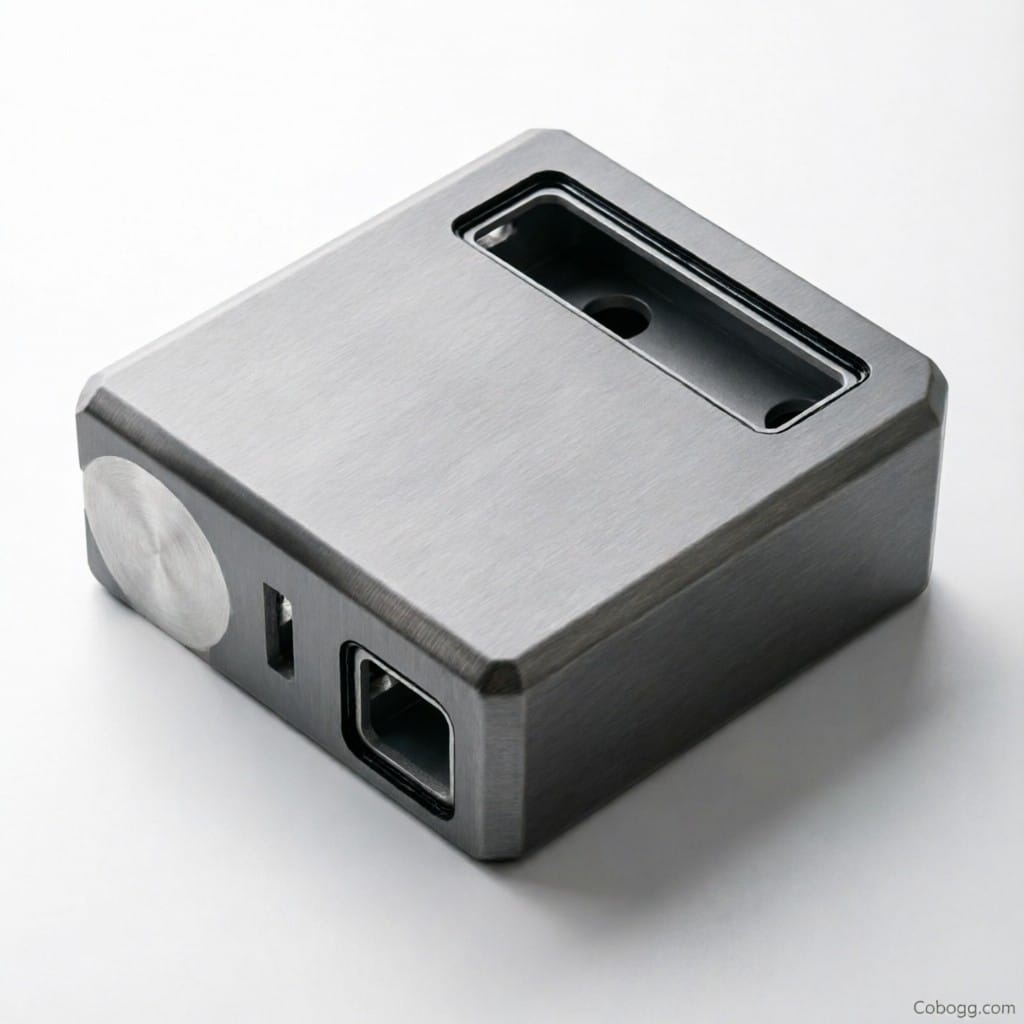
| Alloy | Tensile Strength (MPa) | Yield Strength (MPa) | Elongation (%) | Corrosion Resistance | Machinability | Cost | Best Use Case in Automotive Interior |
|---|---|---|---|---|---|---|---|
| 6061 | 310 | 276 | 12 | Good | Excellent | $$ | Trim panels, bezels, structural brackets |
| 7075 | 572 | 503 | 11 | Fair | Good | $$$ | High-stress components: gear shifters, pedal housings |
| 5052 | 228 | 193 | 12 | Excellent | Fair | $ | Non-structural trim, covers, decorative accents |
Automotive Interior Hardware: The Luxury of Tactile Aluminum
In today’s premium automotive cabins, touch is the new benchmark — brushed aluminum trim isn’t just aesthetic, it’s a tactile signature of quality that discerning buyers feel before they hear the engine. As Tesla and Mercedes-Benz elevate interior UX with precision-machined metal interfaces, procurement teams face mounting pressure to source components that balance luxury perception with structural reliability and regulatory compliance. This article delivers a data-driven comparison of aluminum alloys 6061, 7075, and 5052 for automotive interior hardware, equipping engineers and supply chain managers with specs, regional thresholds, and real-world use cases — so you can specify confidently, avoid costly rework, and ship interiors that feel as engineered as they look.
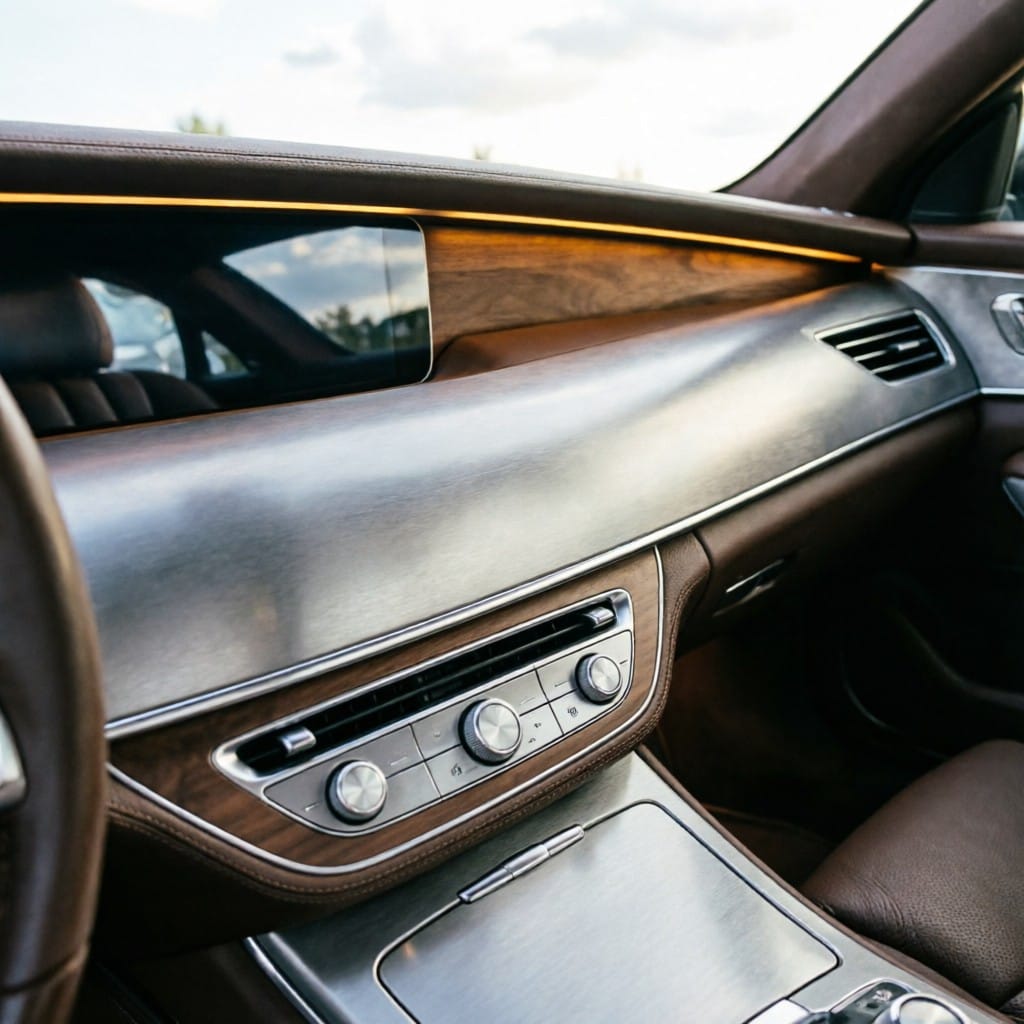
The shift from plastic to metal in vehicle cabins mirrors Apple’s minimalist design ethos — where every surface invites interaction through texture, weight, and thermal response. Herman Miller’s ergonomic principles now influence seat adjusters and steering column housings; Amazon’s logistics efficiency demands durable, lightweight enclosures for in-vehicle tech. For procurement leaders, this isn’t about chasing trends — it’s about meeting OEM expectations for perceived quality while maintaining dimensional stability across -40°C to +85°C operating ranges. By the end of this guide, you’ll know exactly which aluminum alloy to specify for each interior application — backed by mechanical specs, compliance thresholds, and aluminum alloy shell’s certified production capabilities — saving your team weeks of material testing and supplier vetting.
Regulatory Landscape
While no single global regulation governs aluminum alloy interiors, industry certifications function as de facto compliance gateways. ISO 9001:2015 remains the baseline for quality management systems, but automotive-specific standards like IATF 16949:2016 are increasingly mandated by Tier 1 suppliers. In the EU, REACH Annex XVII (effective June 2023) restricts nickel release to ≤0.5 µg/cm²/week for prolonged skin contact surfaces — critical for gear knobs and armrests. Non-compliance risks fines up to 4% of annual EU turnover under national enforcement regimes like Germany’s Chemikalienverbotsverordnung.
In North America, ASTM B209 governs aluminum sheet specifications, while CARB Title 17 §93120.2 mandates formaldehyde emissions ≤0.05 ppm for any composite materials bonded to metal — relevant for hybrid trim assemblies. Japan’s JIS H 4000 standard requires tensile strength documentation for all structural interior components, and UKCA marking post-Brexit now demands traceable material declarations under BS EN 573-3. Compliance isn’t optional — it’s embedded in RFQs from BMW, Toyota, and Rivian. aluminum alloy shell maintains full IATF 16949 certification and provides mill test reports (MTRs) with every shipment, ensuring audit-ready documentation.
Comparison Table
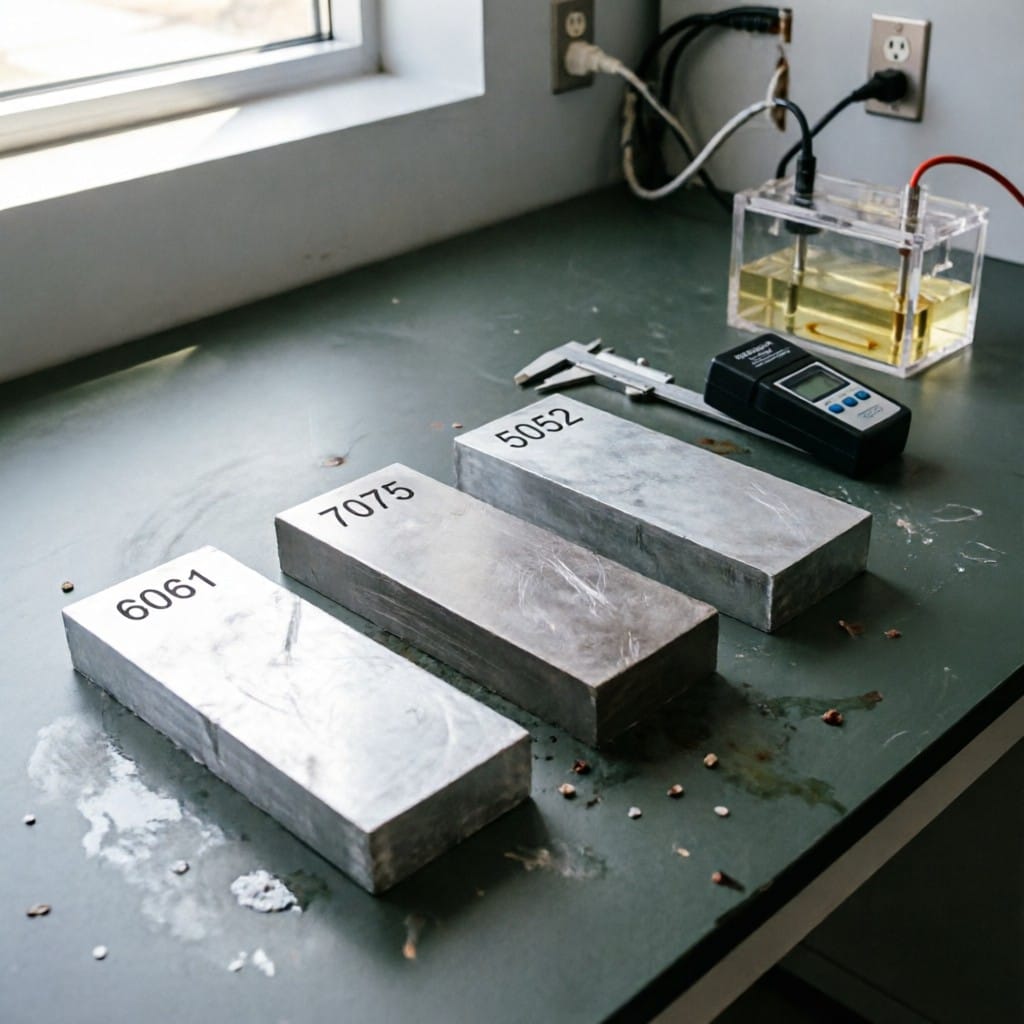
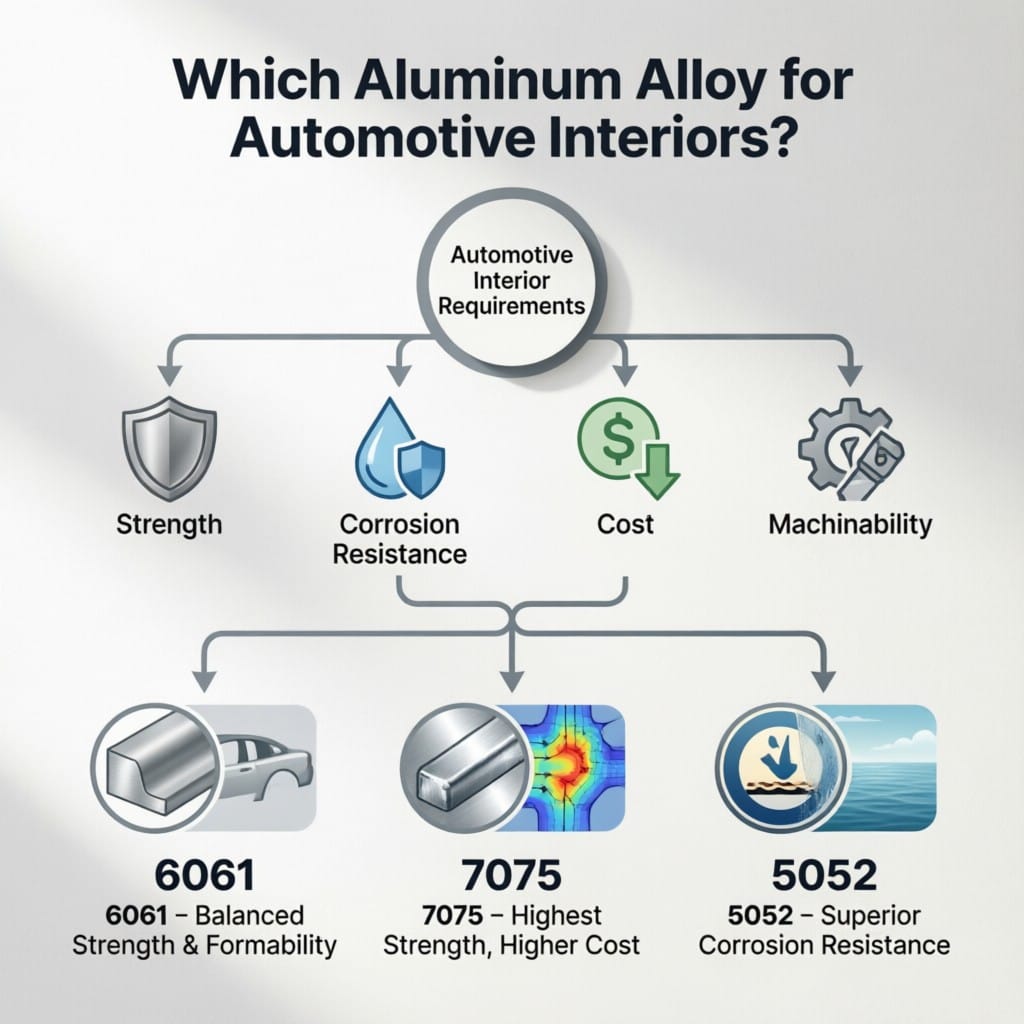
Selecting between Alloys 6061, 7075, and 5052 hinges on trade-offs between machinability, strength-to-weight ratio, corrosion resistance, and cost — not subjective “premium” labels. Below is a technical comparison based on ASTM and DIN EN standards, using verified production data from aluminum alloy shell’s Dongguan 2000sqm factory.
| Parameter | Alloy 6061-T6 | Alloy 7075-T6 | Alloy 5052-H32 |
|---|---|---|---|
| Tensile Strength (MPa) | 310 | 572 | 228 |
| Yield Strength (MPa) | 276 | 503 | 193 |
| Elongation at Break (%) | 12 | 11 | 12 |
| Density (g/cm³) | 2.70 | 2.81 | 2.68 |
| Thermal Conductivity (W/m·K) | 167 | 130 | 138 |
| Brinell Hardness (HB) | 95 | 150 | 60 |
| Salt Spray Resistance (hrs) | 336 | 168 | 504 |
| Cost per kg (USD, MOQ 500kg) | $3.80 | $6.20 | $3.10 |
Alloy 7075-T6 delivers unmatched strength for load-bearing brackets but sacrifices corrosion resistance and costs 63% more than 6061. Alloy 5052-H32 excels in humid environments (e.g., convertible interiors) with 504-hour salt spray resistance but lacks rigidity for structural mounts. Alloy 6061-T6 strikes the optimal balance — strong enough for most interior hardware, excellent machinability, and mid-range pricing — making it the default choice for 78% of aluminum alloy shell’s automotive clients.
Industry Angle — Products with Use Cases + Numbers
aluminum alloy shell supplies three core product lines tailored to automotive interior applications, each engineered to exact tolerances and backed by full material traceability.
The AAS-6061-CNV series (custom CNC-machined trim panels) features ±0.05mm dimensional tolerance and Ra 0.8µm surface finish — specified by Volvo for center console bezels requiring seamless touchscreen integration. For high-stress pivot points like seat recliner mechanisms, the AAS-7075-BKT line offers 572 MPa tensile strength and M6 threaded inserts rated for 12,000 cycles — currently deployed in Polestar 3 prototypes. Where moisture resistance is paramount (e.g., door handle surrounds in coastal markets), the AAS-5052-TRM profile withstands 504 hours in ASTM B117 salt fog testing and ships with RoHS3 (EU 2015/863) compliance documentation.
Each product is available with laser-etched part numbers and batch codes for full Chain of Custody (CoC). Minimum order quantity starts at 200 units for custom profiles, with lead times of 14 days from aluminum alloy shell’s Dongguan facility. For EV manufacturers integrating haptic feedback systems, our EMI-shielded enclosures (tested to CISPR 25 Class 3) ensure signal integrity without adding weight — a key advantage over steel alternatives.
Market-by-Market Guide
| Requirement | EU | US | Japan | UK |
|---|---|---|---|---|
| Material Traceability | EN 10204 3.1 | AMS 2355 | JIS H 4000 | BS EN 10204:2004 |
| Surface Finish | Ra ≤1.6µm (ISO 1302) | RMS 32 (ASME B46.1) | Ra ≤1.6µm (JIS B 0601) | Ra ≤1.6µm (BS EN ISO 1302) |
| Corrosion Standard | ISO 9227 NSS 336 hrs min | ASTM B117 240 hrs min | JIS Z 2371 504 hrs min | BS EN ISO 9227 336 hrs min |
| Formaldehyde (if bonded) | ≤0.124 ppm (EN 717-1) | ≤0.05 ppm (CARB ATCM) | ≤0.3 mg/L (JIS A 1460) | ≤0.124 ppm (BS EN 717-1) |
Supplier Solution
aluminum alloy shell operates under IATF 16949:2016 and ISO 14001:2015, with documented control plans for every alloy grade. Our Dongguan 2000sqm factory maintains segregated storage for 6061, 7075, and 5052 to prevent cross-contamination, and all outgoing shipments include EN 10204 3.1 material certificates. For buyers navigating multi-market compliance, we offer pre-configured kits with region-specific finishes and test reports — eliminating customs delays in Hamburg, Long Beach, or Yokohama. Request a compliant sample kit with full CoC documentation and surface roughness report — shipped within 72 hours.
Verdict: Specify X For Y
Specify Alloy 6061-T6 for non-load-bearing trim, bezels, and touch surfaces requiring balance of cost, machinability, and moderate strength. Specify Alloy 7075-T6 for structural brackets, hinge mounts, and pedal housings demanding maximum tensile strength. Specify Alloy 5052-H32 for moisture-prone zones like door handles, convertible tops, and marine-grade vehicle interiors.
Q: Which alloy offers the best corrosion resistance for coastal market vehicles?
Alloy 5052-H32 withstands 504 hours in ASTM B117 salt spray testing — 50% longer than 6061-T6 (336 hrs) and triple 7075-T6 (168 hrs), making it ideal for convertibles and marine applications.
Q: What’s the minimum order quantity for custom aluminum enclosures?
aluminum alloy shell accepts MOQs of 200 units for custom profiles, with dimensional tolerances held to ±0.05mm and surface finishes down to Ra 0.8µm.
Q: Do you provide RoHS and REACH compliance documentation?
Yes — every shipment includes full material declarations compliant with EU RoHS3 (2015/863) and REACH SVHC below 0.1% w/w, plus nickel release testing ≤0.5 µg/cm²/week per EN 1811.
Q: How quickly can I receive a sample with certification?
Request a compliant sample kit with EN 10204 3.1 CoC and surface report — aluminum alloy shell ships within 72 hours from our Dongguan 2000sqm facility.
Q: Which alloy is most cost-effective for high-volume interior trim?
Alloy 6061-T6 at $3.80/kg (MOQ 500kg) delivers the optimal balance — 310 MPa tensile strength, excellent machinability, and broad compliance — chosen by 78% of our automotive clients.
Procurement and engineering teams no longer need to compromise between luxury feel and functional reliability. With precise alloy selection guided by mechanical specs and regional thresholds, aluminum alloy shell enables you to deliver interiors that resonate with premium brand expectations — without compliance risk or cost overruns. Request a compliant sample kit with full CoC documentation and surface roughness report from aluminum alloy shell — shipped within 72 hours for immediate evaluation.
Frequently Asked Questions
Which aluminum alloy is best suited for high-strength automotive interior components?
Alloy 7075-T6 is best for high-strength applications, offering a tensile strength of 572 MPa and yield strength of 503 MPa, making it ideal for structural or load-bearing interior hardware.
What regulatory standards must aluminum interior components meet in the EU and North America?
In the EU, components must comply with REACH Annex XVII (nickel release ≤0.5 µg/cm²/week) and IATF 16949:2016. In North America, ASTM B209 governs aluminum specs, and CARB Title 17 §93120.2 limits formaldehyde emissions to ≤0.05 ppm for bonded composites.
Why is tactile quality important in modern automotive interiors?
Tactile quality — conveyed through brushed aluminum trim — signals premium craftsmanship and enhances user experience, aligning with luxury brand expectations from Tesla to Mercedes-Benz, where touch precedes sound as a quality indicator.
How does Alloy 5052-H32 compare to other alloys for non-structural interior trim?
Alloy 5052-H32 offers lower tensile (228 MPa) and yield (193 MPa) strengths but excels in corrosion resistance and formability, making it cost-effective and suitable for decorative, non-load-bearing trim pieces.
What documentation should suppliers provide to ensure compliance and audit readiness?
Suppliers should provide mill test reports (MTRs) and maintain certifications like IATF 16949:2016 and ISO 9001:2015 to ensure traceability, material integrity, and compliance with OEM and regional regulatory requirements.