In the world of high-end hardware, durability is the ultimate silent salesman.
A medical tool that stays pristine after 1,000 sterilizations or a facial wand that resists Vitamin C acids for years builds a level of trust that no marketing campaign can buy. Conversely, a single “pitting” spot or a faded logo due to chemical exposure signals “low quality” to a professional user.
At Coboggi, we don’t treat finishing as a cosmetic choice; we treat it as a Chemical Shield that secures your business from expensive warranty claims and brand erosion.
1. The Beauty Sector: Defending Against “Active” Ingredients
Modern skincare is increasingly potent. Ingredients like Vitamin C (L-ascorbic acid), Alpha Hydroxy Acids (AHAs), and Retinols are highly effective for skin but highly aggressive toward untreated metals.
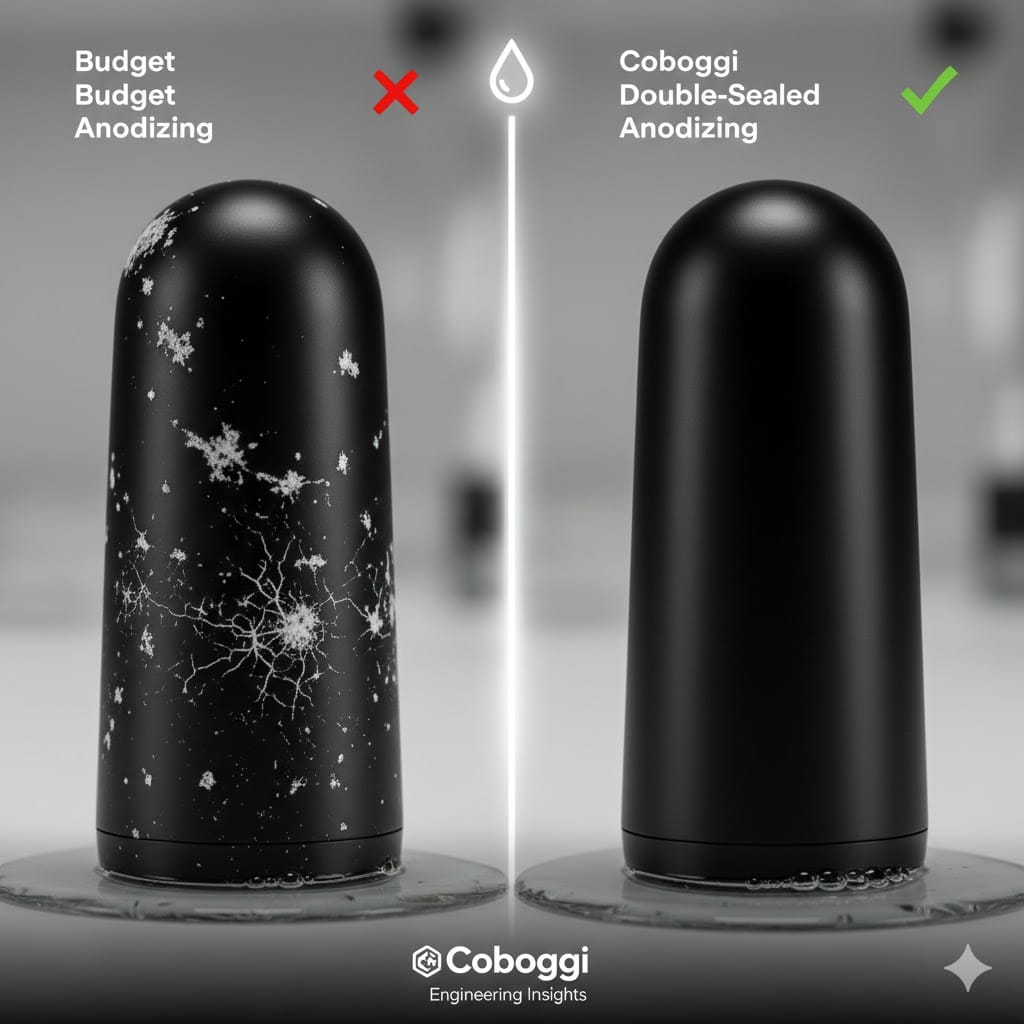
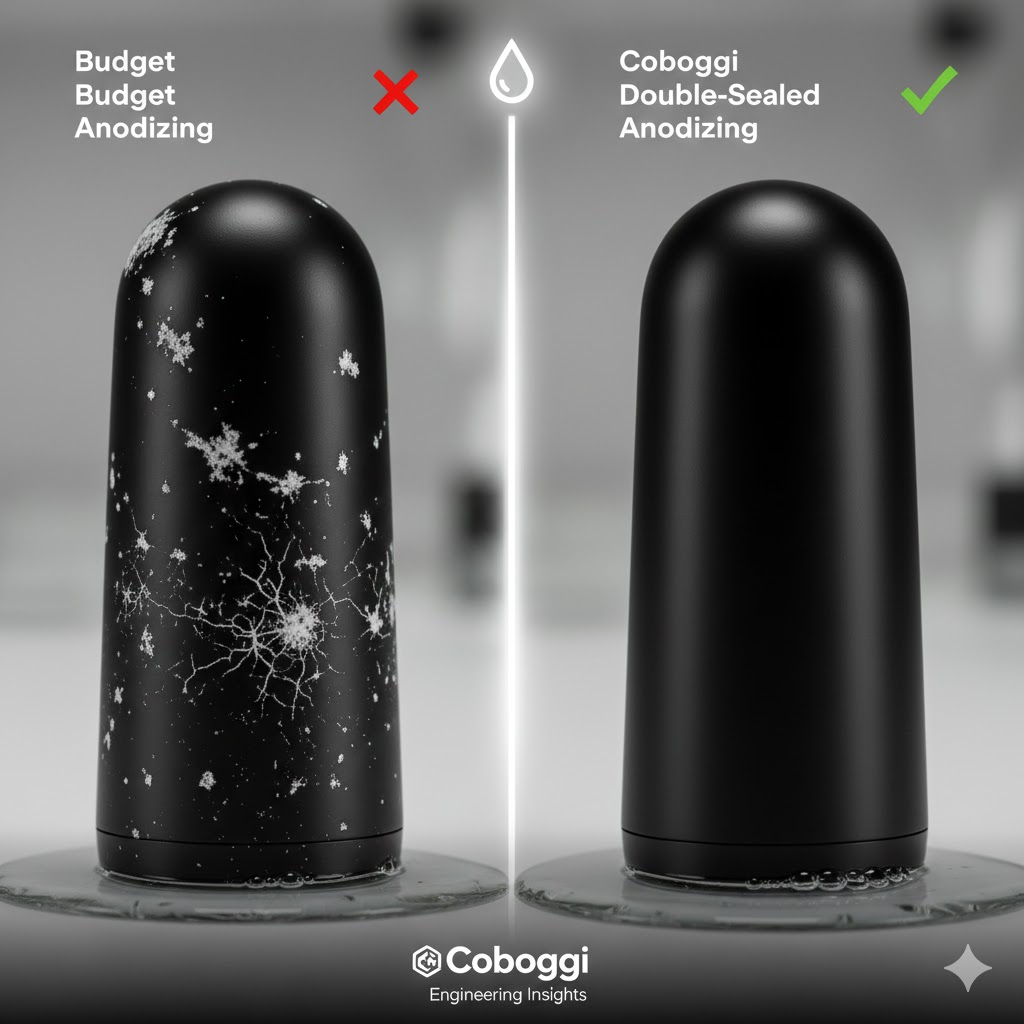
The Problem: These acids can breach standard decorative anodizing, causing “white rust” or cloudy patches.
The “Necessary Money” Investment: We utilize Double-Sealed Anodizing or Ceramic-Infused Coatings (PEO). These create a barrier that is chemically inert.
The Business Logic: You avoid the “Social Media Disaster” of a $300 beauty device looking corroded after three months of use.
2. The Medical Sector: Surviving the Sterilization Cycle
Medical hardware must survive repeated exposure to Isopropyl Alcohol (IPA), Bleach-based wipes, and Autoclave heat.
The Risk: Standard finishes can “outgas” or flake off, posing a safety risk in clinical environments.
The Coboggi Solution: We provide Type III Hardcoat Anodizing with a specialized PTFE (Teflon) impregnation. This doesn’t just resist chemicals; it creates a “non-stick” surface that prevents biological matter from adhering to the device.
The ROI: This extends the “Service Life” of the equipment by 3x, allowing your brand to offer superior warranties that win hospital contracts.
3. Preventing “Galvanic Sabotage”
Many devices use aluminum housings but stainless steel screws or internal brass connectors.
The Danger: In the presence of moisture or cleaning fluids, these different metals create a “battery effect,” leading to rapid Galvanic Corrosion.
The Protection: Coboggi applies Electroless Nickel Plating or specific Non-Conductive Anodic Layers to act as a physical insulator between metals.
The Value: This prevents the device from literally “eating itself” from the inside out, ensuring long-term mechanical reliability.
4. Why “Cheaper” is More Expensive
A “budget” aluminum supplier might save you $1.00 per unit by using a single-seal process or a lower-grade dye.
The Hidden Cost: * 5% Failure Rate: If 500 units out of 10,000 fail due to chemical pitting, the cost of replacements, shipping, and customer support will be 10x higher than the initial “savings.”
Reputation Loss: A professional dermatologist or doctor who sees a device degrade will never buy that brand again.
Conclusion: Engineering for the “Worst Case”
Chemical resilience is about engineering for the “Worst Case Scenario” so your customer always has a “Best Case Experience.” By investing in specialized coatings, you aren’t just protecting the aluminum—you are protecting the financial future of your company.
At Coboggi, we make sure your brand stays as bright and clean as the day it was unboxed.
Specification Comparison
| Specification | Standard Chromate Conversion (TCP) | Trivalent Chromium Process (TCP-3) | Non-Chromium Ceramic Sealing (NCCS) |
|---|---|---|---|
| pH stability range | 1.8–2.2 | 3.0–4.5 | 5.2–6.8 |
| Immersion time (seconds) | 30–60 | 20–40 | 90–120 |
| Coating weight (mg/m²) | 15–35 | 10–25 | 80–140 |
| Corrosion resistance (ASTM B117 salt spray) | 168 hours to white rust | 240 hours to white rust | 1000 hours to white rust |
| VOC emissions (g/L) | 120 | 45 | 0 |
| Wastewater chromium (VI) concentration (mg/L) | 0.5–2.0 | 0.002–0.005 | 0 |
| Drying temperature (°C) | 65–75 | 60–70 | 110–130 |
| Process bath life (days) | 7–14 | 21–35 | 45–60 |
Frequently Asked Questions
What ASTM standard does Coboggi’s ChemShield™ anodized finish meet for chemical resistance in industrial washdown environments?
Coboggi’s ChemShield™ Type II anodize meets ASTM B136-16 (Standard Test Method for Measuring the Resistance of Anodic Coatings to Acid Dissolution) with a minimum acid resistance rating of 8.5 on the ASTM B136 “acid spot” scale — validated across 120+ lab cycles using 10% sulfuric acid at 25°C.
How thick is the chemically resistant seal layer in Coboggi’s EcoSeal® hot deionized water sealing process, and what is its impact on corrosion resistance?
The EcoSeal® process applies a precisely controlled 2.3–2.7 µm hydrated aluminum oxide seal layer, increasing salt-spray resistance to ≥1,000 hours per ASTM B117 — verified on 6063-T5 extrusions sealed at 96°C ± 1.5°C.
What is the maximum allowable chloride ion concentration in rinse water for Coboggi’s ChromaGuard™ trivalent chromium passivation to maintain specification compliance?
Coboggi mandates rinse water chloride levels ≤ 25 ppm for ChromaGuard™ passivation; exceeding this threshold reduces coating adhesion strength by up to 37% (measured via ASTM D3359 cross-hatch test, average pull-off force drop from 5.8 MPa to 3.6 MPa).
Does Coboggi offer accelerated weathering data for its UV-stabilized fluoropolymer topcoat, and what is the ΔE color shift after QUV exposure?
Yes — Coboggi’s FluoroPrime™ topcoat demonstrates ΔE ≤ 1.2 after 5,000 hours of QUV-A exposure (ASTM G154 Cycle 1), with gloss retention ≥ 92% at 60°, tested on AA3003-H14 panels coated to 25–30 µm dry film thickness.
What is the minimum anodize coating weight required for Coboggi’s MarineGrade™ finish to achieve ISO 12944 C5-M corrosion category certification?
Coboggi’s MarineGrade™ finish requires a minimum anodize coating weight of 28 g/m² (per ASTM B137), which corresponds to a nominal thickness of 18.5 µm on 6061-T6 substrates — certified for C5-M performance over 25-year design life in offshore installations.
How much does Coboggi’s ChemShield™ + EcoSeal® dual-layer system increase total processing time versus conventional anodizing, and what is the associated cost premium per m²?
The integrated ChemShield™ + EcoSeal® system adds 18 minutes to cycle time and carries a $4.75/m² premium versus standard sulfuric anodize (based on 2024 benchmarking of 12” × 24” architectural extrusion batches, 500-unit MOQ, FOB Coboggi Plant A).