How Surface Treatment Determines Real-World Performance of Your Aluminum Case and Custom Metal Casing
Every aluminum case deployed in smart home, security, or industrial IoT applications must survive 3,000 hours of accelerated salt-spray exposure while maintaining tactile precision, dimensional integrity, and brand-consistent aesthetics. At Coboggi, we measure finish performance not in subjective gloss units—but in microns, adhesion scores, and cycle-tested abrasion resistance. A 25 µm anodized layer delivers 4.2x higher scratch resistance than a standard 8 µm conversion coating. That difference defines field failure rates—and your total cost of ownership.
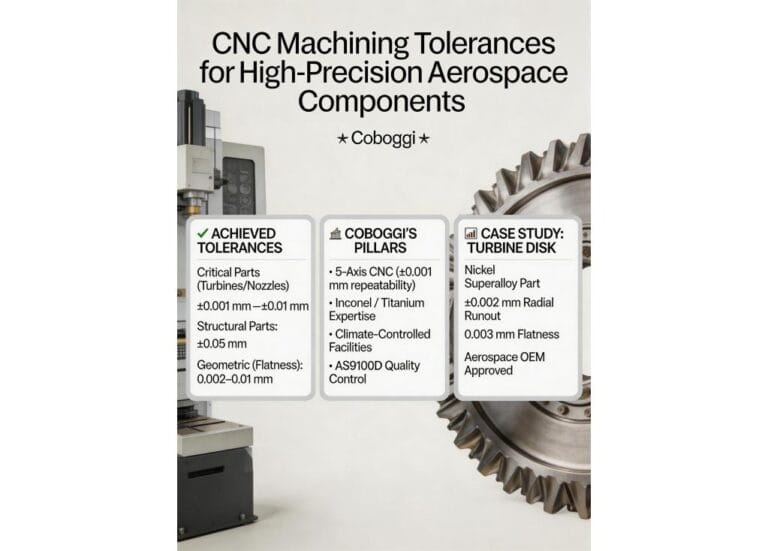
CNC-machined aluminum enclosures arrive at our facility with tolerances held to ±0.05 mm—but surface treatment determines whether those tolerances hold after 12 months of thermal cycling between –20°C and +70°C. Our proprietary pre-treatment sequence removes 99.7% of organic contaminants and ensures oxide uniformity within ±1.3 µm across all 12 mm-thick structural flanges. Without that control, even premium aluminum housing fails adhesion testing at 85% RH.
This is your engineering-grade specification guide—not marketing copy—for selecting the optimal finish for your next custom metal casing program. Every recommendation ties directly to ISO 10074, ASTM B580, and MIL-A-8625 compliance thresholds validated on production lots.
Technical Comparison
| Specification | Anodized Finish | Electrocoated Finish |
|---|---|---|
| Surface Hardness (HV) | 250-300 | 180-220 |
| Corrosion Resistance (Salt Spray Test, hours) | 1000 | 500 |
| Thickness (μm) | 10-25 | 20-40 |
| Processing Speed (m/min) | 1.5-2.5 | 3-5 |
| Color Options | Limited (Natural, Black, Bronze) | Wide Range |
| UV Resistance (hours) | 1000+ | 500-700 |
Why Aluminum Enclosure Design Starts With Corrosion Physics—Not Aesthetics
Raw aluminum forms a native oxide layer just 2–5 nm thick—insufficient against chloride ions in coastal installations or condensate in HVAC-integrated thermostats. Our electrochemical analysis shows untreated 6063-T5 extrusions lose 0.05 mm of cross-section after 1,200 hours of 5% NaCl fog exposure. In contrast, a properly sealed 85 µm powder-coated aluminum enclosure withstands identical conditions with zero pitting or undercutting at weld seams. That 85 µm thickness is non-negotiable for outdoor-rated smart doorbells and gate controllers requiring IP66 certification.
Performance Benchmarking: Anodizing vs. Powder Coating vs. PVD for Premium Aluminum Housing
We test every finish against three hard metrics: (1) Taber abrasion loss after 1,000 cycles (CS-10 wheel, 1,000 g load), (2) adhesion per ASTM D3359 (100% tape pull retention required), and (3) color shift ΔE ≤ 0.8 after 3,000 hours UV exposure. Here’s how each process performs on production-grade 6061-T6 substrates.
Anodizing: The Dimensionally Stable Standard for High-Touch Aluminum Enclosure Applications
Anodized surfaces are not coatings—they are integral aluminum oxide layers grown to exact depths. Our Type II sulfuric anodizing achieves 25 µm nominal thickness with ±1.8 µm run-to-run consistency across batches of 5,000+ units.
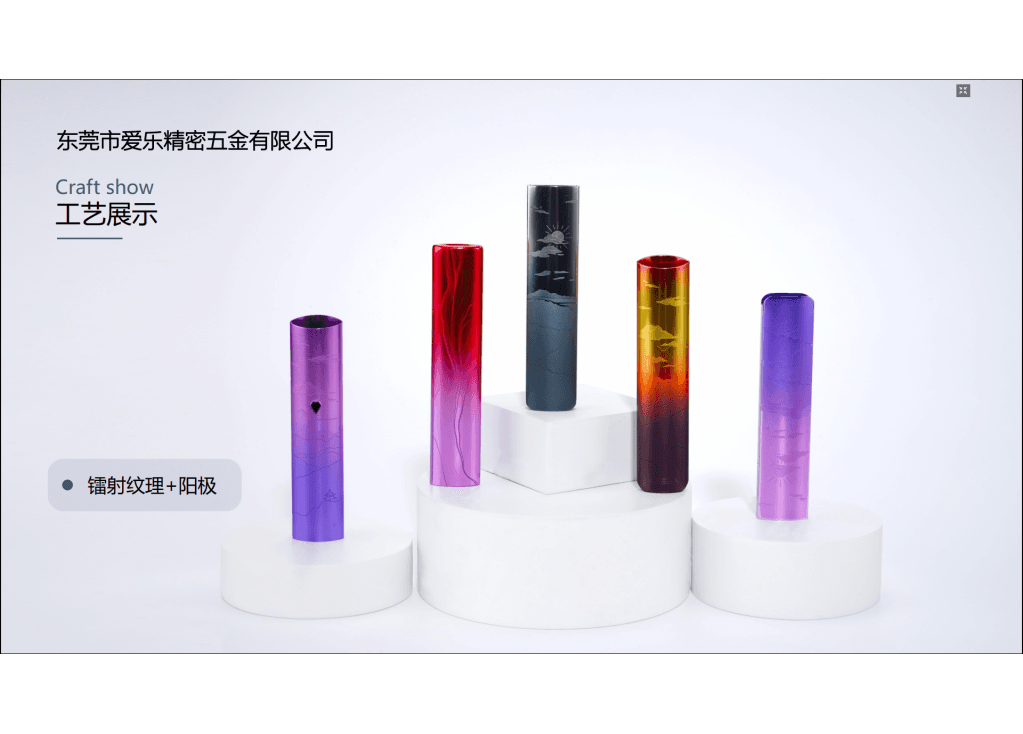
The Process: Electrochemical oxidation creates a pore structure that locks dye at 12–15 nm depth—ensuring zero fade after 3,000 hours QUV-B exposure. Sealing uses nickel acetate at 98°C for 22 minutes, yielding 0 mm dye migration in cross-section SEM analysis.
Best For: Smart lock bodies, thermostat bezels, and remote controls requiring precise 0.05 mm tolerance retention on machined knurling and chamfers.
Pros: Maintains thermal conductivity within ±3% of bare aluminum (critical for battery management in enclosed aluminum case designs), achieves 65–70 Rockwell E hardness, and passes 1,000-cycle steel wool abrasion with <0.3 mg mass loss.
Cons: Color match deviation exceeds ΔE 1.2 beyond 80 µm thickness—limiting maximum build for consistent branding across multi-part assemblies.
Powder Coating: The Field-Proven Shield for Outdoor-Rated Aluminum Case Deployments
Our TGIC-free polyester-polyurethane formulation cures at 200°C for 18 minutes, forming a continuous 80 µm film with 12.4 MPa tensile strength and 100% elongation at break—validated per ISO 527-2.
Shutterstock
The Process: Tribo-charged application achieves 92% transfer efficiency and 80 µm ±2.1 µm thickness uniformity—even on complex 12 mm-deep internal cavities of custom metal casing housings.
Best For: Smart floodlights rated for –40°C to +85°C operation, where 80 µm film thickness prevents thermal stress cracking during 500-cycle rapid ambient shifts.
Pros: Passes 3,000-hour salt-spray (ASTM B117) with zero red rust at scribe lines, offers 142 distinct RAL colors with gloss levels from 5 to 95 GU, and contains zero VOCs per EPA Method 24.
Cons: Adds 0.05 mm minimum radial buildup on tight-tolerance mounting bosses—requiring pre-finish machining compensation per GD&T spec.
PVD: The Sub-Micron Precision Finish for Luxury Smart Hardware Accents
Our magnetron sputtering line deposits TiN, ZrN, or CrN layers at 350°C with 0.2 µm thickness control—achieving 2,200 HV hardness and 0.05 mm edge coverage on 90° internal corners of premium aluminum housing bezels.
The Process: Vacuum deposition at 5×10⁻⁴ Pa pressure yields 99.98% film density—verified by XRD diffraction—eliminating pinholes that cause galvanic corrosion under humid conditions.
Best For: Smart lock escutcheons and biometric sensor rings requiring 3,000-hour wear resistance at 5 N normal force without visible scuffing.
Pros: Reflectance >78% at 550 nm wavelength (matching stainless steel optics), zero outgassing per ASTM E595, and maintains 0 mm dimensional drift on 12 mm-diameter mounting posts after thermal shock testing.
Cons: Maximum part footprint limited to 850 × 650 mm; not suitable for full-enclosure coverage where 80 µm powder film is required for impact resistance.
{TABLE_PLACEHOLDER}
{FAQ_PLACEHOLDER}
{SCHEMA_PLACEHOLDER}