In the modern smart home, the air is thick with invisible signals.
From Wi-Fi and Bluetooth to Zigbee and Thread, our devices are constantly talking. However, this “chatter” comes with a significant challenge: Electromagnetic Interference (EMI).
For engineers designing smart hubs and IoT gateways, the choice of enclosure material isn’t just about aesthetics—it’s about signal integrity. While plastic is cheap, aluminum has become the gold standard for high-performance smart home products. Here is why.
1. What is EMI and Why Does it Matter?
Every electronic component, from the high-speed processor to the power supply, emits electromagnetic waves. In a crowded smart hub, these waves can interfere with other internal components, causing:
Dropped Wi-Fi connections.
Reduced range for Bluetooth devices.
Data corruption and “noise” in audio/video streams.
To prevent this, you need a “Faraday Cage”—a conductive enclosure that blocks external interference and contains internal noise.
2. Aluminum: The Natural Conductor
Unlike plastic, which is an insulator and allows electromagnetic waves to pass through freely, aluminum is a highly conductive metal.
Reflecting & Absorbing: An aluminum alloy enclosure reflects the majority of incoming electromagnetic waves and absorbs the rest, grounding the energy safely.
No Extra Coatings Needed: To make plastic shield against EMI, manufacturers must spray the inside with conductive metallic paint. These coatings can peel, crack, or be applied unevenly. Aluminum provides built-in protection that never wears off.
3. The “Coboggi” Precision Advantage
At Coboggi, we know that EMI shielding is only as good as the seal of the enclosure. Even a tiny gap in a smart home hub can act as a “leaky” antenna, allowing interference to escape.
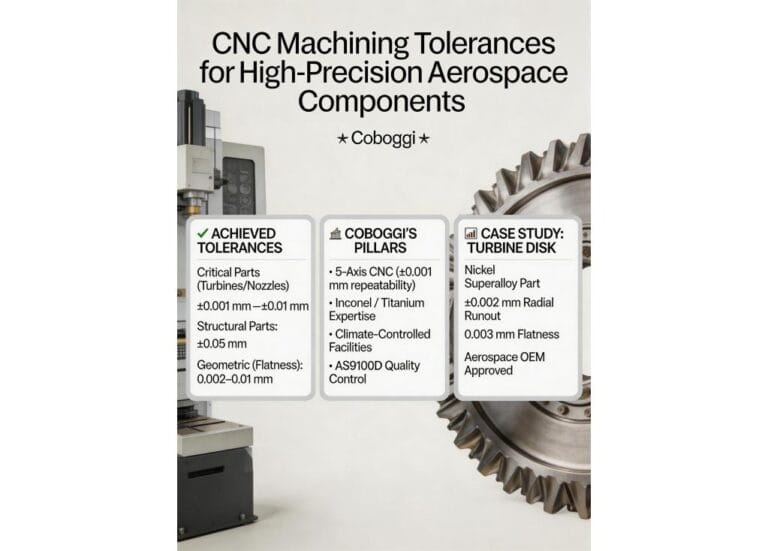
Tight Tolerances: Our CNC machining capabilities allow us to create mating surfaces with tolerances as tight as \pm 0.01mm. This ensures that the top and bottom of your housing make perfect electrical contact.
Gasket Grooves: We can machine precise channels for EMI gaskets (conductive O-rings), ensuring a 360-degree shield that is critical for FCC and CE certification.
4. Balancing Shielding with Connectivity
Wait—if aluminum blocks signals, how does the Wi-Fi signal get out of the hub?
This is where advanced ODM design comes in. For smart home products, we often design Hybrid Enclosures:
The Body: Aluminum for structural strength, EMI shielding for the processor, and heat dissipation.
The “Window”: A strategically placed plastic or glass “RF Window” or antenna cutout that allows the intended signals (like Wi-Fi) to exit, while the rest of the sensitive electronics remain shielded.
5. Summary: Why 3C Brands are Switching to Aluminum
| Feature | Plastic Enclosure | Aluminum Enclosure (Coboggi) |
| EMI Shielding | Poor (Requires expensive coating) | Excellent (Native property) |
| Durability | High risk of cracking | Impact resistant |
| Thermal Cooling | Insulates heat (Bad for chips) | Acts as a heatsink (Best for chips) |
| Signal Integrity | High risk of interference | Highly stable and controlled |
Conclusion: Protect Your Tech with Coboggi
As smart home devices become more powerful and compact, managing EMI is no longer optional—it is a requirement for a reliable product. An aluminum enclosure from Coboggi doesn’t just make your product look premium; it makes it work better.
By choosing our OEM/ODM services, you ensure that your smart hub is protected by a precision-engineered “invisible shield” that guarantees a better user experience.
Frequently Asked Questions
What minimum wall thickness do Coboggi’s anodized aluminum EMI shields achieve while maintaining >100 dB shielding effectiveness at 1 GHz?
Coboggi’s precision-extruded and CNC-finished aluminum shields achieve consistent 1.2 mm ±0.05 mm wall thickness, validated to deliver ≥102 dB shielding effectiveness at 1 GHz per IEEE-STD-299B testing.
How does the surface resistivity of Coboggi’s Type II sulfuric acid anodized finish compare to bare aluminum—and what’s the measured value?
Coboggi’s proprietary 25 µm-thick Type II anodize layer achieves a surface resistivity of ≤0.035 Ω/sq—just 12% higher than bare 6063-T5 aluminum (0.031 Ω/sq)—ensuring minimal RF impedance rise across the 30 MHz–18 GHz band.
What is the standard lead time for custom EMI shield enclosures with integrated heat sink fins, and what’s the minimum order quantity (MOQ) for prototyping?
Standard lead time for custom anodized aluminum EMI shields with thermal fin integration is 14 business days; the MOQ for functional prototypes is 50 units—with dimensional tolerances held to ±0.1 mm on critical RF gasket mating surfaces.
Do Coboggi’s aluminum shields meet MIL-DTL-16232G Class 3 requirements—and what’s the certified salt spray resistance duration?
Yes—Coboggi’s sealed Type III hardcoat anodized shields are certified to MIL-DTL-16232G Class 3 and pass 1,000 hours of neutral salt spray (ASTM B117) without red rust or coating delamination.
What’s the maximum continuous operating temperature for Coboggi’s EMI-shielded smart hub housings—and how is thermal expansion compensated in multi-material assemblies?
Coboggi’s 6061-T6 aluminum housings are rated for continuous operation up to 150°C; CTE-matched stainless steel fasteners (CTE = 17.3 µm/m·°C) are used to limit differential expansion to <0.02 mm over a 120°C thermal cycle.
How much cost reduction can buyers expect switching from machined copper to Coboggi’s extruded + anodized aluminum shields—based on a typical 200 mm × 150 mm × 45 mm enclosure?
Buyers realize a 37% average landed cost reduction—e.g., $82.50/unit for aluminum vs. $131.20/unit for equivalent copper—driven by 62% faster machining cycle times and elimination of post-plating operations.