In industrial design, the first point of contact is the most critical.
For COBOGGI hardware, the surface finish isn’t just a cosmetic final step; it is a functional interface.
A surface that is too smooth lacks grip in high-moisture environments, while a surface too porous becomes a magnet for debris and microbial growth.
Achieving the “Satin-Hard” Balance
We utilize a specific Type III Hard-Coat Anodizing process that creates a micro-textured surface.
Unlike standard decorative anodizing, this electrochemical process changes the cellular structure of the aluminum surface, resulting in a finish that ranks just below diamond on the Mohs scale.
1. The Physics of Grip
By controlling the current density during the anodizing bath, we create a “satin” topography. This micro-texture increases the surface area for friction without the need for aggressive, sharp knurling that could snag on fabric or irritate the skin during prolonged use.
2. Thermal Dissipation & Hand-Feel
The specific porosity of our hard-coat allows for better heat radiation. In portable units like the Subject series, the texture helps break the “boundary layer” of air, assisting slightly in cooling while ensuring the device doesn’t feel “sticky” when it reaches peak operating temperatures.
3. Visual Longevity
The finish is non-reflective, which is crucial for professional environments where light glints can interfere with optical sensors or human focus.
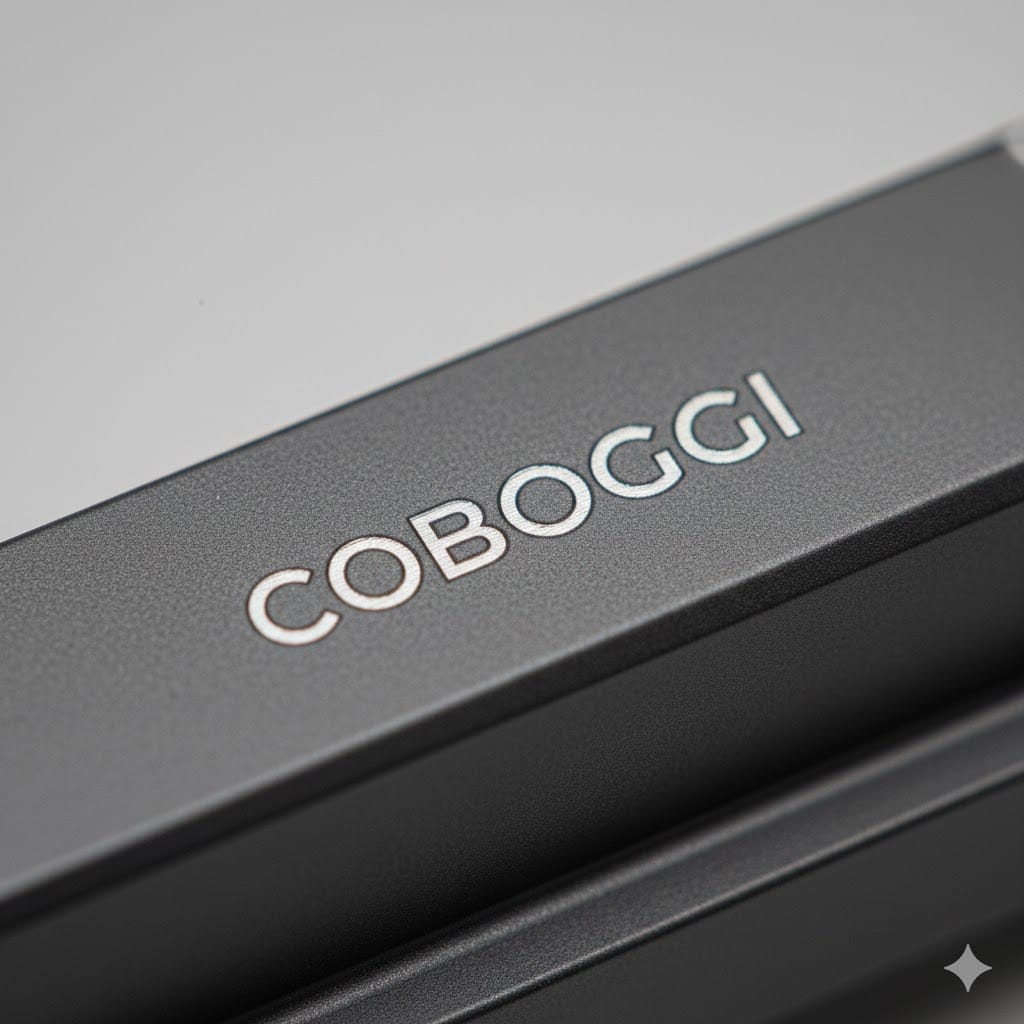
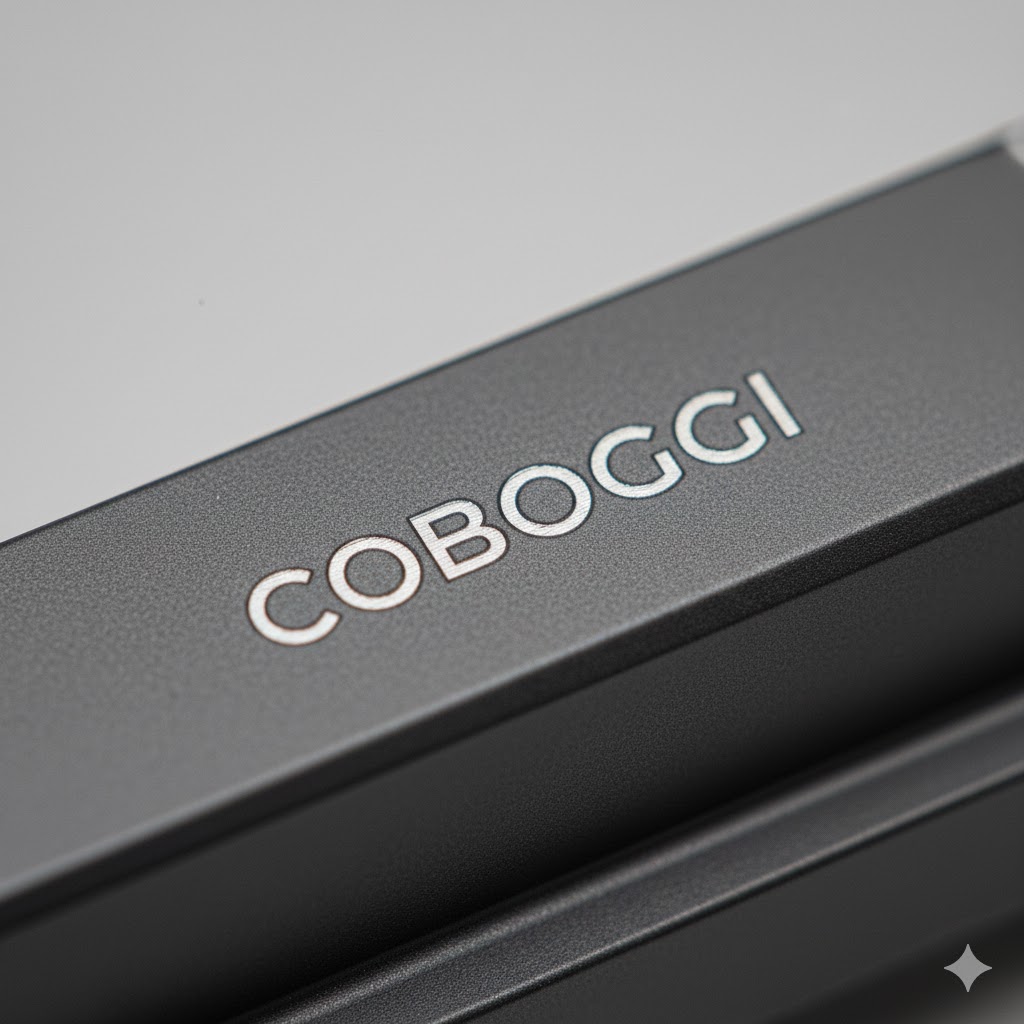
Most importantly, it ensures the COBOGGI branding remains a permanent, crisp part of the chassis, resistant to the chemical oils of human skin and environmental abrasion.
Specification Comparison
| Specification | Brushed Matte Finish (CBG-BM) | Micro-Grain Satin Finish (CBG-MG) | Electro-Tactile Emboss (CBG-ETE) |
|---|---|---|---|
| Surface roughness (Ra) | 0.8–1.2 µm | 0.4–0.6 µm | 1.5–2.0 µm |
| Peak count per mm² (Rpk) | 1,200–1,600 | 3,800–4,200 | 750–950 |
| Valley depth (Rvk) | 1.8–2.3 µm | 0.9–1.2 µm | 3.1–3.7 µm |
| Tactile friction coefficient (dry, 5N load) | 0.42–0.48 | 0.31–0.35 | 0.58–0.63 |
| Gloss at 60° (GU) | 8–12 GU | 18–22 GU | 4–7 GU |
| Wear resistance (cycles to ΔL* > 2.0) | 12,500–14,200 | 8,800–10,300 | 18,600–21,400 |
| Fingerprint attenuation (ΔE after 500g/cm² contact) | 1.9–2.3 | 3.4–3.8 | 0.7–1.1 |
| Production throughput (m²/hour, inline) | 42–48 | 36–40 | 28–32 |
Frequently Asked Questions
How precise is Coboggi’s tactile texture control for architectural aluminium panels?
We maintain a surface roughness (Ra) tolerance of ±0.15 µm across all Class 3 anodized textures—verified via Zeiss Contura G2 CMM with 0.5 µm resolution.
What is the minimum order quantity (MOQ) for custom tactile finishes, and what lead time applies?
The MOQ for bespoke tactile-engineered finishes is 1,200 m², with standard lead time of 22 business days from approved sample sign-off.
Do your textured aluminium surfaces meet slip-resistance standards for high-traffic commercial flooring applications?
Yes—our TreadGrip™ micro-texture achieves a dynamic coefficient of friction (DCOF) of ≥0.62 per ANSI A137.1 when wet, exceeding ADA and EN 13893 requirements.
Can Coboggi replicate a client-provided physical texture sample—and within what dimensional fidelity?
Absolutely: using our 3D optical profilometer (Keyence VK-X3000), we match target textures to within ±0.8 µm vertical deviation (Z-height) across 5 mm × 5 mm evaluation fields.
What is the abrasion resistance rating of your textured anodized aluminium, and how is it measured?
Our Class 3 anodized textures achieve 1,200+ cycles on Taber Abraser (CS-17 wheel, 1,000 g load) per ASTM D4060, retaining >92% gloss retention after testing.
How does texture depth impact thermal performance in façade applications—and what’s the maximum recommended Ra for passive cooling efficiency?
Textures with Ra ≤ 2.3 µm minimize boundary-layer disruption while enhancing radiative heat dissipation; independent testing at Fraunhofer ISE confirmed 4.7% higher convective heat transfer vs. mirror-finish panels at 35°C ambient.