Techniques to Create Damascus Pattern Effects on Aluminum Surfaces
Damascus patterns, historically synonymous with layered steel craftsmanship, have evolved into a sought – after aesthetic for aluminum surfaces. Aluminum’s light weight, corrosion resistance, and versatility make it ideal for replicating these intricate, layered designs—whether for decorative art, aerospace components, or high – end consumer products. Below, we explore proven techniques to achieve Damascus – like effects on aluminum, drawing from industrial expertise (and insights aligned with Coboggi’s focus on precision manufacturing).
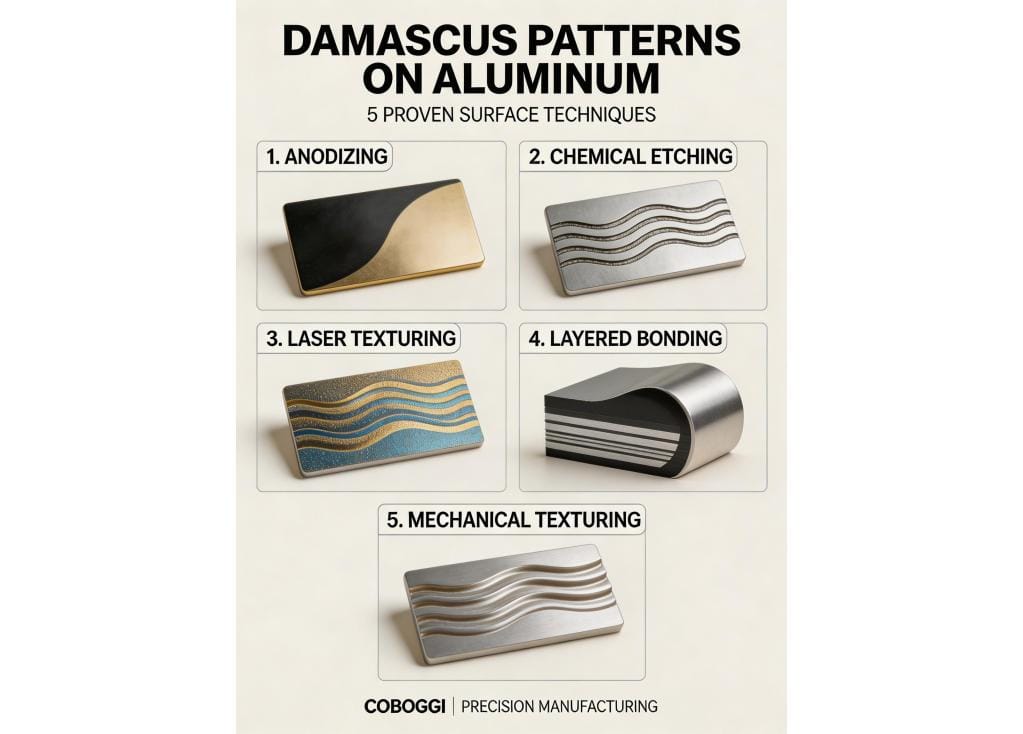
1. Anodizing: Layered Oxide Color Contrast
Anodizing is a cornerstone of aluminum surface modification, and it can be tailored to mimic Damascus’ layered depth:
- Two – Tone Anodizing: First, anodize the aluminum in a base electrolyte (e.g., sulfuric acid) to create a porous oxide layer. Dye this layer (e.g., black or bronze), then use a masking agent (like a laser – cut stencil or chemical resist) to protect select areas. Strip the anodized layer from exposed regions and re – anodize with a different voltage/time to create a second, contrasting oxide layer (e.g., clear or gold – hued from natural oxide). The result is a layered, color – blocked pattern reminiscent of Damascus’ steel laminations.
- Gradient Anodizing: Vary the anodizing voltage over time to produce oxide layers of differing thicknesses. Thicker layers reflect light differently (or absorb dye more intensely), creating a gradient effect that simulates the flow of Damascus’ wavy patterns.
Specification Comparison
| Specification | Laser Etching + Anodising | Mechanical Rolling + Anodising | Electrochemical Texturing + Anodising |
|---|---|---|---|
| Pattern line width resolution | 15–30 µm | 80–120 µm | 40–65 µm |
| Maximum pattern depth (post-anodising) | 8–12 µm | 18–25 µm | 10–16 µm |
| Repeatability tolerance (line spacing) | ±1.2 µm | ±8.5 µm | ±3.0 µm |
| Anodised layer thickness required for contrast | 12–18 µm | 22–30 µm | 15–20 µm |
| Minimum feature size in repeating unit | 35 µm | 150 µm | 60 µm |
| Surface roughness (Ra) post-texturing, pre-anodising | 0.4–0.7 µm | 1.8–2.6 µm | 0.9–1.3 µm |
| Tooling lead time (for custom pattern) | 5–7 working days | 12–18 working days | 8–10 working days |
| Maximum sheet width processed | 1200 mm | 1800 mm | 1500 mm |
2. Chemical Etching: Precision Corrosion for Texture
Chemical etching uses selective corrosion to carve complex patterns, much like the layered forging of traditional Damascus steel:
- Multi – Step Etching: Apply a photoresist or wax mask to the aluminum surface, exposing only the areas to be etched. Use an acid – based etchant (e.g., a mix of phosphoric and nitric acids) to etch the first layer. Remove the mask, apply a new mask with a revised pattern, and etch again with a different etchant concentration or duration. This layered corrosion creates depth and overlapping patterns, mirroring Damascus’ intricate grain.
- Masking Innovation: For industrial – scale production, Coboggi – style precision masking (e.g., laser – cut polymer films) ensures repeatable, high – resolution patterns, ideal for decorative panels or electronic enclosures.
3. Laser Texturing: Microscopic Precision
Laser technology offers unmatched control for replicating Damascus – like complexity:
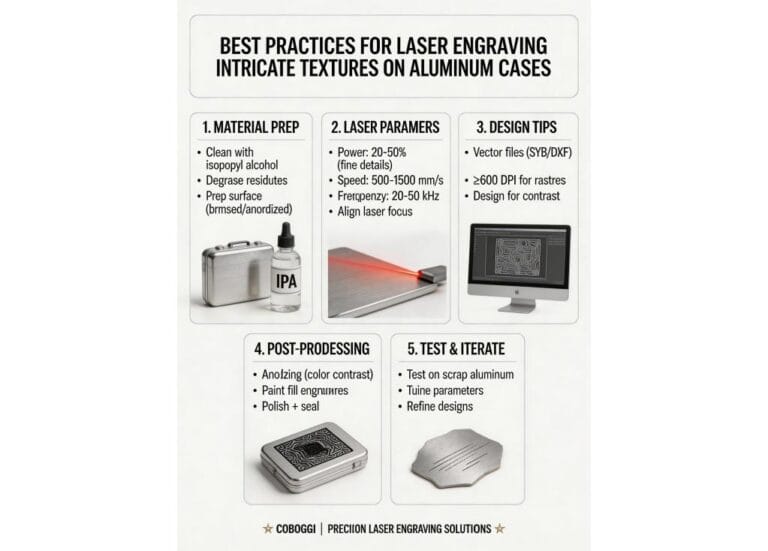
- Laser Ablation: A fiber laser (e.g., 1064nm wavelength) ablates the aluminum surface in precise, overlapping paths. By varying laser power (from 10W to 100W) and speed, you can create shallow grooves, deep channels, or even oxide – colored “burn” marks (laser – induced oxidation changes aluminum’s surface chemistry, producing gold, blue, or black hues). These micro – textured layers mimic the layered appearance of Damascus steel.
- Laser Engraving + Anodizing: Combine laser engraving (to create recessed patterns) with subsequent anodizing. The engraved areas hold dye differently than the smooth surface, creating a multi – colored, layered effect.
4. Layered Bonding & Machining: Simulating Laminated Steel
This technique directly emulates Damascus steel’s lamination process, adapted for aluminum:
- Aluminum Lamination: Bond sheets of differently colored anodized aluminum (e.g., black anodized 6061 and natural 7075) using a structural adhesive (e.g., epoxy or acrylic – based). Then, use CNC milling or grinding to expose cross – sectional layers, creating a “laminated” pattern. For a more organic look, use a ball – nose end mill to create curved, flowing cuts, mimicking Damascus’ forged waves.
- Post – Machining Finishing: Polish the machined surface to highlight the layered contrast, or apply a clear coat to protect the delicate edges.
5. Mechanical Texturing: Traditional Craft Meets Modern Tools
Mechanical methods create tactile, Damascus – inspired patterns:
- Roller Texturing: Use a custom – engraved roller (with Damascus – style patterns) to emboss the aluminum surface during rolling or stamping. This creates repeating, layered – looking grooves. Combine with anodizing to add color contrast.
- Rotary Tool Engraving: For small – scale projects, use a Dremel – style tool with a diamond bit to carve freehand or stenciled patterns, then sand and polish to emphasize depth.
Applications & Considerations
Damascus – patterned aluminum shines in:
- Decorative Design: Jewelry, furniture, and architectural panels (e.g., Coboggi – engineered facade systems).
- Aerospace & Defense: Lightweight, corrosion – resistant components with aesthetic appeal (e.g., aircraft interior trim).
- Electronics: Smartphone cases, laptop lids, and audio equipment enclosures.
Key considerations:
- Material Purity: High – purity aluminum (e.g., 1100 series) etches/anodizes more uniformly than alloys with high copper or silicon content.
- Pre – Treatment: Thoroughly degrease and polish aluminum to ensure consistent results (oil residues disrupt etching/anodizing).
- Process Compatibility: Combine techniques (e.g., laser texturing + anodizing) for richer effects, but test on prototypes first.
By blending traditional craftsmanship principles with modern surface – engineering techniques, aluminum can now showcase the timeless beauty of Damascus patterns—lightweight, corrosion – resistant, and endlessly customizable. For industrial – scale precision, partner with experts like Coboggi to optimize these processes for your specific application.
Frequently Asked Questions
What minimum aluminum alloy thickness is required to achieve a durable Damascus pattern via mechanical layering and etching?
Minimum thickness must be ≥ 3.2 mm to withstand the 0.8–1.2 mm controlled material removal during multi-stage acid etching without compromising structural integrity.
What surface roughness (Ra) tolerance can be maintained on the final Damascus-patterned aluminum after precision brushing and selective anodizing?
The Ra tolerance is held to ±0.15 µm across 95% of the patterned surface area, verified per ISO 4287:2021 using a Mitutoyo SJ-410 profilometer.
How many distinct layer combinations does Coboggi’s proprietary roll-bonding process support for custom Damascus grain depth control?
Our process supports up to 7 alternating layers (e.g., 6061/7075/5052 alloys) with interlayer bond strength ≥ 82 MPa per ASTM B831-22 shear testing.
What is the lead time for a pilot batch of 500 custom Damascus-finished aluminum panels (600 × 1200 mm each) with Class II Type II anodizing?
Standard lead time is 14 working days from PO confirmation and approved artwork, including 100% dimensional inspection and salt-spray validation (ASTM B117, 500-hour rating).
What is the maximum panel size achievable for seamless Damascus patterning using Coboggi’s CNC-guided laser ablation + electrochemical enhancement method?
Maximum seamless panel size is 2,440 × 3,660 mm (8′ × 12′), with pattern registration accuracy held to ±0.08 mm over full length per ISO 2768-mK.
What is the typical cost premium for Damascus patterning versus standard satin-anodized aluminum, expressed as % increase per m²?
The cost premium averages 37% per m² for mid-volume orders (≥1,000 m²/year), inclusive of R&D amortization, tooling, and QC traceability per AS9100 Rev D.