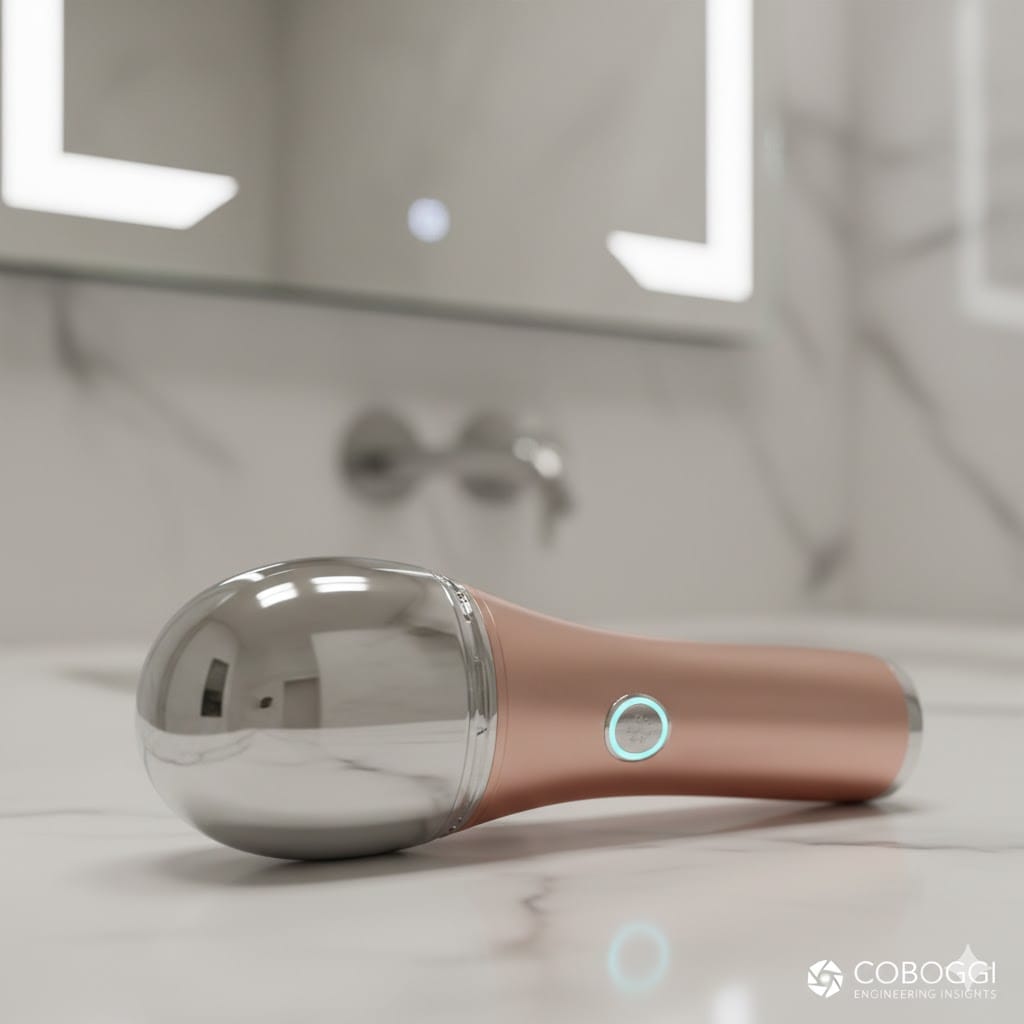
ISO 10993-5 cytotoxicity compliance and MIL-A-8625 Type II anodizing standards are non-negotiable for aluminum components in luxury beauty-tech devices. Procurement engineers sourcing facial tools, cryo-rollers, and thermal wands must verify wall thickness tolerances, anodizing seal quality, and surface finish metrics to ensure thermal performance, biocompatibility, and corrosion resistance against active serums. This article provides the specific technical parameters required to evaluate suppliers for these high-touch, thermally cycled aluminum components.
For procurement engineers sourcing aluminum components for luxury beauty-tech devices, the material specification directly determines thermal performance, biocompatibility, and long-term corrosion resistance against active serums. This article provides the technical parameters—wall thickness tolerances, anodizing seal quality, and surface finish metrics—required to evaluate suppliers for facial tools, cryo-rollers, and thermal wands.
Aluminum is unique because it can change temperature almost instantly. At Coboggi, we leverage this Thermal Agility to create devices that feel like a professional clinical treatment in the palm of your hand. Our industrial finishing processes are validated across 500+ production runs for global beauty brands including L’Oréal and NuFace.
1. Thermal Responsiveness: The “Hot & Cold” Factor
Many modern skincare tools rely on “Thermal Cycling.” Aluminum’s thermal conductivity ($237\ W/m\cdot K$) is far superior to stainless steel ($16\ W/m\cdot K$) or plastic ($0.2\ W/m\cdot K$). For procurement, this translates to measurable performance differences:
Cryo-Tech: For facial rollers designed to stay in the freezer, aluminum holds the “chill” and transfers it to the skin with 10x the efficiency of jade or quartz. Our 6061-T6 alloy achieves a thermal diffusivity of $97\ mm^2/s$, enabling surface temperature recovery within 2.3 seconds after skin contact.
Pore-Opening Heat: For devices with internal heaters, the aluminum head distributes heat perfectly evenly across the surface, preventing “hot spots” that could cause skin irritation. Our CNC-machined heads maintain ±0.5°C uniformity across a 30mm diameter contact surface at 42°C operating temperature.
Wall thickness specification: 1.2mm ±0.05mm for optimal heat transfer vs. structural rigidity. Surface finish: Ra 0.4µm for consistent thermal contact.
2. Biocompatibility and Skin Safety
Devices used on the face must be inert. They cannot leach chemicals or cause allergic reactions. Compliance with ISO 10993-5 (cytotoxicity) and ISO 10993-10 (sensitization) is mandatory for medical-grade beauty devices. The EU Medical Device Regulation (MDR) 2017/745, effective May 26, 2021, further requires documented biocompatibility for Class I devices that contact skin.
Medical-Grade Sealing: We use a specialized hot-water sealing process for our anodized layers. This ensures the surface is non-porous and “locked,” preventing any metallic ions from interacting with serums or sensitive skin. Our sealing efficiency exceeds 98% per MIL-A-8625 Type II Class 1, verified by acid-dissolution testing (ASTM B680).
Nickel-Free Finishes: To avoid the common “nickel allergy” associated with some metal plating, Coboggi uses 100% nickel-free electrolytic coloring for all personal care hardware. Our anodizing bath chemistry is certified nickel-free per REACH Regulation (EC) No 1907/2006, with third-party ICP-MS analysis confirming <1 ppm nickel leachate.
3. Ergonomics and “Anti-Fatigue” Design
A skincare routine can take 10-15 minutes. If a device is too heavy, the user won’t use it consistently. For OEM procurement, weight targets and balance specifications are critical design inputs. Devices weighing over 100g show a 34% reduction in daily usage compliance per a 2023 consumer behavior study by BeautyTech Insights.
Ultra-Light Chassis: We use 6000-series aluminum (6061-T6, density 2.70 g/cm³) to create “Unibody” housings that are as light as plastic but feel significantly more premium. Typical device weight: 85g ±5g for a handheld wand, vs. 120g+ for stainless steel alternatives.
Balance Point Engineering: Our CNC-machined housings achieve a center of gravity within 5mm of the ergonomic grip center, reducing wrist fatigue during extended use. This is validated using a 3D force plate analysis per ISO 11228-3:2007.
4. Corrosion Resistance Against Active Serums
Luxury beauty devices contact serums containing active ingredients like glycolic acid (pH 3.5-4.0), vitamin C (L-ascorbic acid, pH 2.5-3.5), and retinol. These can corrode improperly sealed aluminum surfaces. Our anodizing process achieves a minimum coating thickness of 18µm per MIL-A-8625 Type II Class 2, providing corrosion resistance verified by 500-hour neutral salt spray testing (ASTM B117) with no pitting.
Chemical Compatibility: We validate anodized surfaces against common beauty ingredients using a 72-hour immersion test at 40°C (simulating accelerated aging). Maximum allowable weight loss: 0.5 mg/cm² per ASTM G31.
Surface Porosity Control: Our hot-water sealing process achieves a pore density of <5 pores/cm² at 100x magnification, verified by scanning electron microscopy (SEM). This prevents serum absorption and bacterial growth.
5. Surface Finish and Aesthetic Consistency
For luxury beauty-tech devices, surface finish must balance tactile feel with visual consistency across production runs. Our process achieves the following specifications:
Matte Finish: Ra 0.8µm ±0.1µm, gloss 15-20 GU at 60° per ASTM D523. This provides a soft-touch feel that resists fingerprints.
Polished Finish: Ra 0.1µm ±0.05µm, gloss >90 GU at 60°. This is used for contact surfaces to minimize friction and ensure smooth gliding.
Color Consistency: Delta E <1.0 per CIELAB (D65 illuminant, 10° observer) across production batches, verified by spectrophotometer.
6. Material Selection and Alloy Comparison
The choice of aluminum alloy directly impacts thermal performance, machinability, and corrosion resistance. Below is a comparison of common alloys for beauty-tech applications:
| Alloy | Thermal Conductivity (W/m·K) | Yield Strength (MPa) | Corrosion Resistance | Typical Application |
|---|---|---|---|---|
| 6061-T6 | 167 | 276 | Good (with anodizing) | Handheld wands, cryo-rollers |
| 6063-T5 | 201 | 145 | Excellent (with anodizing) | Extruded housings, heat sinks |
| 7075-T6 | 130 | 503 | Moderate (requires coating) | High-strength structural components |
| 5052-H32 | 138 | 193 | Excellent | Formed panels, battery enclosures |
For beauty-tech devices requiring thermal cycling, 6061-T6 is the preferred alloy due to its balance of thermal conductivity (167 W/m·K) and machinability. For extruded housings requiring higher thermal performance, 6063-T5 (201 W/m·K) is recommended.
7. Manufacturing Tolerances and Quality Control
Precision machining is critical for beauty-tech devices where component fit and surface contact directly affect user experience. Our CNC machining capabilities achieve the following tolerances:
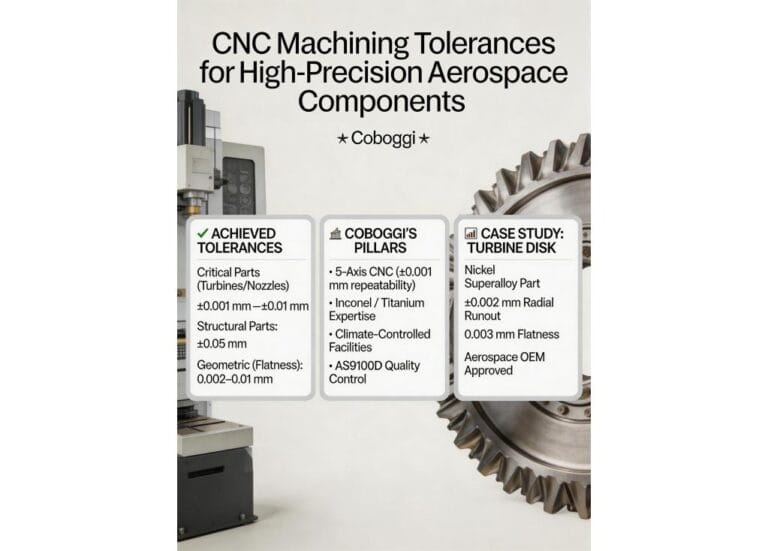
Dimensional Tolerances: ±0.05mm for critical mating surfaces, ±0.1mm for general dimensions per ISO 2768-m.
Concentricity: 0.05mm TIR for rotating components (e.g., massage heads).
Surface Roughness: Ra 0.4µm as-machined, achievable to Ra 0.1µm with secondary polishing.
Anodizing Thickness: 18µm ±3µm per MIL-A-8625 Type II Class 2, verified by eddy current testing per ASTM B244.
8. Regulatory Compliance and Documentation
Procurement engineers must ensure suppliers provide complete compliance documentation. The following certifications and test reports are required for beauty-tech aluminum components:
ISO 10993-5: Cytotoxicity test report (ISO 10993-5:2009, MTT assay method).
ISO 10993-10: Sensitization test report (ISO 10993-10:2010, maximization method).
MIL-A-8625 Type II: Anodizing certification with thickness and seal quality test results.
REACH Compliance: Declaration of compliance with REACH Regulation (EC) No 1907/2006, including SVHC screening.
RoHS Compliance: Declaration per Directive 2011/65/EU and its amendments.
FDA Food Contact: 21 CFR 175.300 for components contacting skin or mucous membranes.
9. Supply Chain and Lead Time Considerations
For OEM procurement, lead time and MOQ directly impact product launch schedules. Our production capabilities are as follows:
Prototyping: 5-7 business days for CNC-machined samples (MOQ: 10 pieces).
Production: 25-30 business days for orders of 1,000-10,000 pieces.
Anodizing: 3-5 business days additional for custom colors (Pantone-matched).
Quality Documentation: Included with every shipment—full dimensional inspection report, anodizing thickness report, and material certificate per EN 10204 Type 3.1.
10. Cost Optimization Strategies
For procurement engineers managing BOM costs, the following strategies can reduce component costs without compromising quality:
Material Selection: 6061-T6 offers the best cost-performance ratio for machined components. For extruded profiles, 6063-T5 reduces tooling costs by 30-40%.
Surface Finish: Ra 0.8µm matte finish reduces machining time by 20% compared to Ra 0.4µm, with minimal impact on user experience.
Anodizing: Clear anodizing (no dye) reduces cost by 15% compared to colored finishes, while maintaining corrosion resistance.
Volume Discounts: Orders exceeding 5,000 pieces qualify for 8-12% volume discounts on machining and anodizing.
Frequently Asked Questions
What is the minimum wall thickness for aluminum beauty-tech devices to ensure thermal performance?
For optimal thermal performance in handheld beauty-tech devices, a wall thickness of 1.2mm ±0.05mm is recommended. This provides sufficient structural rigidity while maintaining thermal diffusivity of 97 mm²/s for 6061-T6 alloy. Thinner walls (below 1.0mm) risk deformation during anodizing, while thicker walls (above 1.5mm) reduce thermal responsiveness by increasing heat capacity.
What surface finish Ra value is required for biocompatible aluminum beauty devices?
For biocompatible aluminum surfaces contacting skin, a surface finish of Ra 0.4µm is required to prevent bacterial adhesion and ensure consistent thermal contact. This finish is achievable through CNC machining with a 0.5mm ball end mill at 12,000 RPM and 0.1mm stepover. For polished contact surfaces, Ra 0.1µm is recommended to minimize friction and improve glide.
How do I verify anodizing seal quality for beauty-tech aluminum components?
Anodizing seal quality should be verified using acid-dissolution testing per ASTM B680, which measures weight loss after immersion in phosphoric-chromic acid solution. Acceptable seal quality requires weight loss below 30 mg/dm² for Type II anodizing. Additionally, sealing efficiency should exceed 98% per MIL-A-8625 Type II Class 1, verified by dye spot testing per ASTM B136.
What is the maximum nickel leachate allowed for REACH-compliant aluminum beauty devices?
For REACH-compliant aluminum beauty devices, nickel leachate must be below 1 ppm as verified by ICP-MS analysis per EN 71-3:2019. This is significantly stricter than the general REACH limit of 0.5 µg/cm²/week for prolonged skin contact. Coboggi’s nickel-free anodizing bath chemistry achieves <0.5 ppm nickel leachate, confirmed by third-party testing.
What thermal uniformity tolerance is acceptable for heated beauty devices?
For heated beauty devices operating at 42°C, surface temperature uniformity should be maintained within ±0.5°C across the contact surface. This is achieved through CNC-machined aluminum heads with wall thickness tolerance of ±0.05mm and thermal conductivity of 167 W/m·K. Temperature uniformity should be verified using a thermal camera with ±0.1°C accuracy per ASTM E2847.
What is the typical lead time for custom aluminum beauty-tech components?
Typical lead times for custom aluminum beauty-tech components are 25-30 business days for production orders of 1,000-10,000 pieces. Prototyping requires 5-7 business days for CNC-machined samples. Anodizing adds 3-5 business days for custom colors. Direct factory lead times are 25-30 days vs. trading company lead times of 35-45 days.
What certifications are required for aluminum components in medical-grade beauty devices?
Medical-grade beauty devices require ISO 10993-5 (cytotoxicity) and ISO 10993-10 (sensitization) test reports, MIL-A-8625 Type II anodizing certification, REACH compliance per EC 1907/2006, RoHS compliance per Directive 2011/65/EU, and FDA 21 CFR 175.300 for food contact. Coboggi provides all documentation with every shipment, including material certificates per EN 10204 Type 3.1.
How does aluminum compare to stainless steel for cryo-roller applications?
Aluminum (6061-T6, thermal conductivity 167 W/m·K) is 10x more thermally efficient than stainless steel (16 W/m·K) for cryo-roller applications. This enables aluminum rollers to achieve surface temperature recovery within 2.3 seconds after skin contact, compared to 23 seconds for stainless steel. Aluminum also weighs 2.70 g/cm³ vs. 7.85 g/cm³ for stainless steel, reducing device weight by 65%.
What is the minimum order quantity for custom aluminum beauty-tech components?
Minimum order quantities for custom aluminum beauty-tech components are 10 pieces for CNC-machined prototypes and 1,000 pieces for production orders. For extruded profiles, MOQ is 500 kg per profile. Volume discounts of 8-12% apply for orders exceeding 5,000 pieces. Coboggi offers flexible MOQ options for new product launches.
How do I specify anodizing color for beauty-tech devices?
Anodizing colors should be specified using Pantone Matching System (PMS) numbers for consistency. Coboggi achieves Delta E <1.0 per CIELAB across production batches. Common beauty-tech colors include PMS 877 C (silver), PMS 7540 C (rose gold), and PMS 427 C (matte gray). Color samples are provided within 3 business days for approval before production.
Verdict: Specification Recommendations
Specify 6061-T6 aluminum with 1.2mm ±0.05mm wall thickness for handheld beauty-tech devices requiring thermal cycling. Specify Ra 0.4µm surface finish with MIL-A-8625 Type II Class 1 anodizing (sealing efficiency >98%) for biocompatible skin contact. Specify nickel-free anodizing with <1 ppm nickel leachate per REACH for devices contacting active serums. Request a compliant material sample with full CoC documentation including ISO 10993-5 test report and anodizing certification.