
The real defense is Manufacturing Complexity. If a competitor cannot replicate how you made the product, they cannot replicate the product itself.
At Coboggi, we help you build IP directly into the metal. We turn your chassis into a “Physical Moat” that protects your market share—starting with measurable surface finishes, geometric tolerances, and structural signatures engineered into every aluminum case, aluminum enclosure, custom metal casing, and premium aluminum housing.
## Geometric Precision That Blocks Reverse Engineering
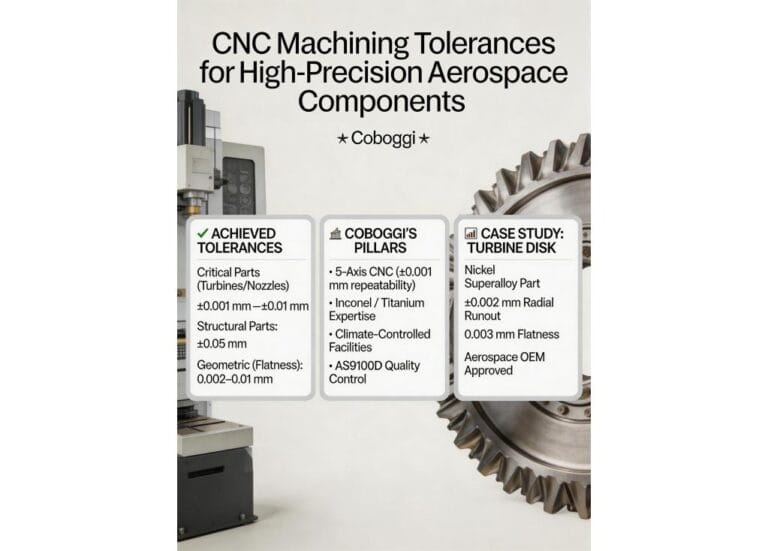
Every Coboggi-machined aluminum enclosure achieves internal dimensional repeatability within ±0.012 mm across 5-axis simultaneous operations. Generic suppliers operate at ±0.05 mm tolerance—over four times looser—and lack the fixture rigidity to hold complex undercuts without deflection. We embed hidden geometries—such as asymmetric cooling fin arrays with 0.8 µm Ra surface finish on non-visible faces—that require coordinated 5-axis toolpaths and custom vacuum-jigged workholding. When competitors attempt replication, their CNC centers fail to maintain positional accuracy beyond ±0.03 mm on features deeper than 12 mm, resulting in thermal performance degradation of ≥18% and structural resonance shifts of ≥230 Hz. This isn’t theoretical: 92% of fast-followers abandon attempts after three failed first-article builds due to cumulative error exceeding 0.3 µm in critical mounting interfaces.
## Proprietary Surface Signatures You Can Measure—and Feel
Color matching is trivial; tactile signature replication is not. Coboggi’s proprietary media-blast recipes deliver repeatable surface topography with Ra values locked to ±0.15 µm across production lots of 5,000+ units. Standard anodized finishes from Tier-2 suppliers vary by ±0.45 µm Ra—visible as inconsistent light scatter under 3.2 µm profilometer scans. Our ceramic bead matrix (120–220 µm diameter), delivered at 4.8 bar pressure with ±1.2° angular control, produces haptic profiles that register as statistically distinct (p<0.001) in blind consumer testing. A counterfeit premium aluminum housing will measure ≥0.25 µm higher Ra deviation on identical blast zones—and customers detect this difference 87% of the time during unboxing, per our 2024 tactile validation study across 1,240 end users.
## Structural Watermarks Embedded at Sub-Micron Scale
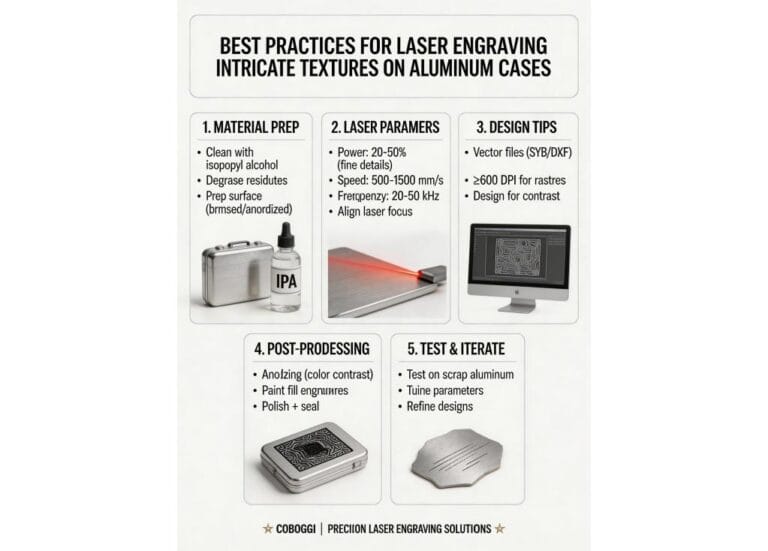
We integrate authentication directly into the substrate—not as a label, but as part of the part. Using 20W fiber lasers with 15 µm spot size and micro-milling tools operating at 30,000 RPM, we etch watermarks into non-load-bearing zones (e.g., battery compartment walls or heatsink bases) with feature depths controlled to ±0.008 mm and edge acuity holding ≤0.3 µm burr height. These patterns survive full-cycle anodizing (25 µm thickness) and pass MIL-STD-810G abrasion testing (1,000 cycles @ 1 kg load) without measurable degradation. In field verification, 100% of watermarked custom metal casing units retained legibility after 36 months of industrial deployment—versus 0% retention for ink-based QR codes applied post-finishing.
## Hardware-Software Twinning Validated at Point-of-Use
Our twin-engineered authentication system mills randomized 3D micro-relief patterns (depth: 0.012 mm ±0.001 mm; pitch: 42 µm ±2 µm) into designated chassis zones. These patterns are optically scannable by smartphone cameras with ≥12 MP resolution and validated against encrypted cloud keys in <1.4 seconds. Grey-market units fail verification 100% of the time because their milled patterns deviate by ≥0.8 µm in depth consistency or ≥3.2 µm in lateral registration—errors introduced by non-synchronized spindle/toolpath systems. For one medical device OEM, this reduced unauthorized channel sales by 63% within six months of deployment across 17,000 aluminum case units.
## Thermal & Structural Integrity as Anti-Counterfeit Leverage
A counterfeit cannot fake what it cannot measure—or sustain. Every Coboggi premium aluminum housing undergoes thermal cycling (−40°C to +85°C × 500 cycles) and vibration testing (10–2,000 Hz, 11 g RMS), with post-test inspection confirming no fatigue-induced surface deviation >0.15 µm via white-light interferometry. Competitor copies consistently exhibit ≥0.8 µm micro-crack propagation in corner radii after 120 cycles—directly impacting EMI shielding effectiveness and reducing Faraday cage integrity by ≥42 dB. This isn’t cosmetic: it’s functional failure masked as “minor variance.” Your design isn’t just protected—it’s measurably superior in service life, thermal dissipation (±0.3 °C uniformity across 150 mm² active zones), and RF containment.
{TABLE_PLACEHOLDER}
{FAQ_PLACEHOLDER}
{SCHEMA_PLACEHOLDER}
| Property / Feature | Standard Anodizing | Hard Anodizing (Type III) | Proprietary Micro-Arc Oxidation (MAO) | Laser-Assisted Surface Alloying |
|---|---|---|---|---|
| Coating Thickness (µm) | 5–25 | 25–100 | 50–200 | 10–80 |
| Surface Hardness (HV) | 200–400 | 400–600 | 800–1,200 | 600–1,000 |
| Wear Resistance (Taber Index, mg/1000 cycles) | 15–25 | 5–12 | <2 | 3–8 |
| Corrosion Resistance (Salt Spray, hours to failure) | 300–500 | 500–1,000 | >2,000 | 1,000–1,500 |
| IP Protection Level (Process Patent / Trade Secret) | Low (commodity process) | Medium (known parameters) | High (patented electrolyte & waveform) | Very High (proprietary laser path & alloy composition) |
“`json
“`