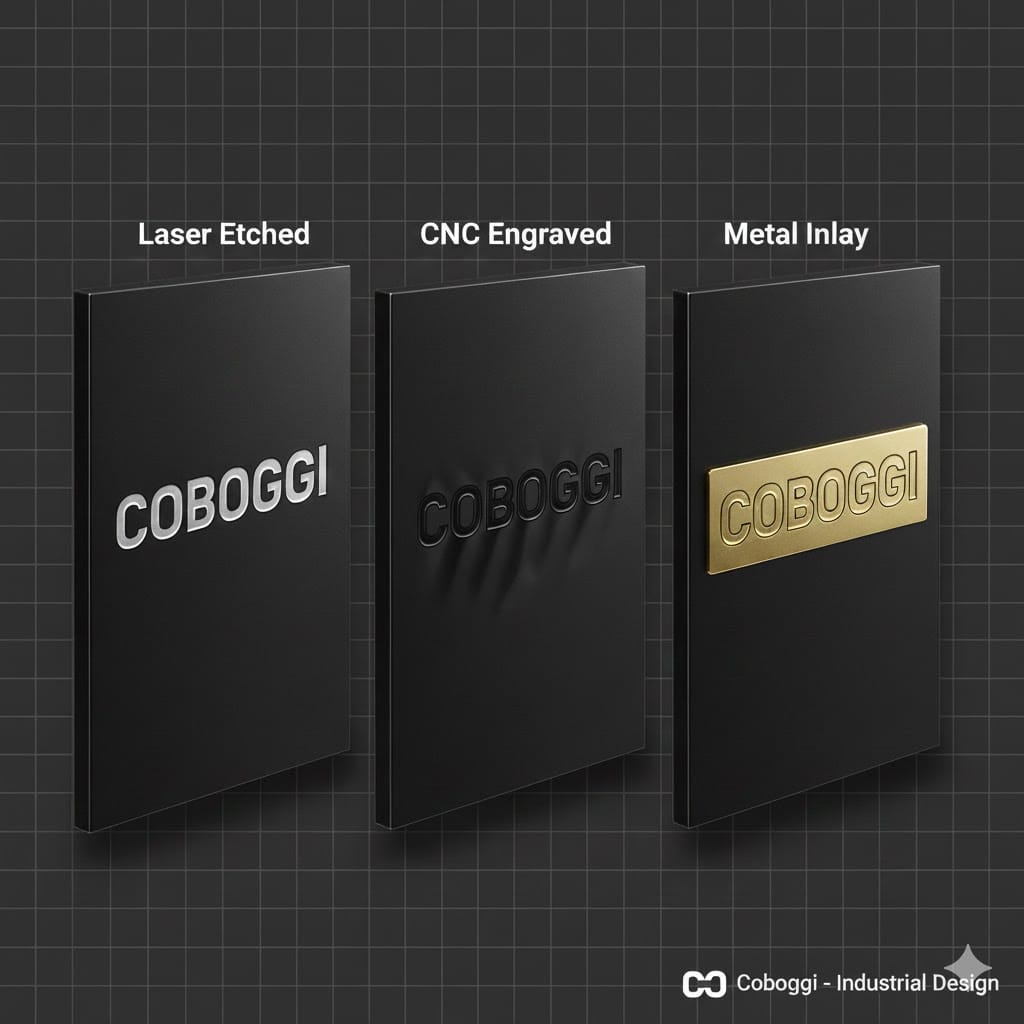
In the Personal Care and Consumer Electronics categories, the logo is often the only thing that breaks a perfectly smooth surface.
If the logo peels or fades, the brand’s perceived value drops instantly. Because we work with solid aluminum, we move beyond “printing” and into “marking” techniques that are as durable as the metal itself.
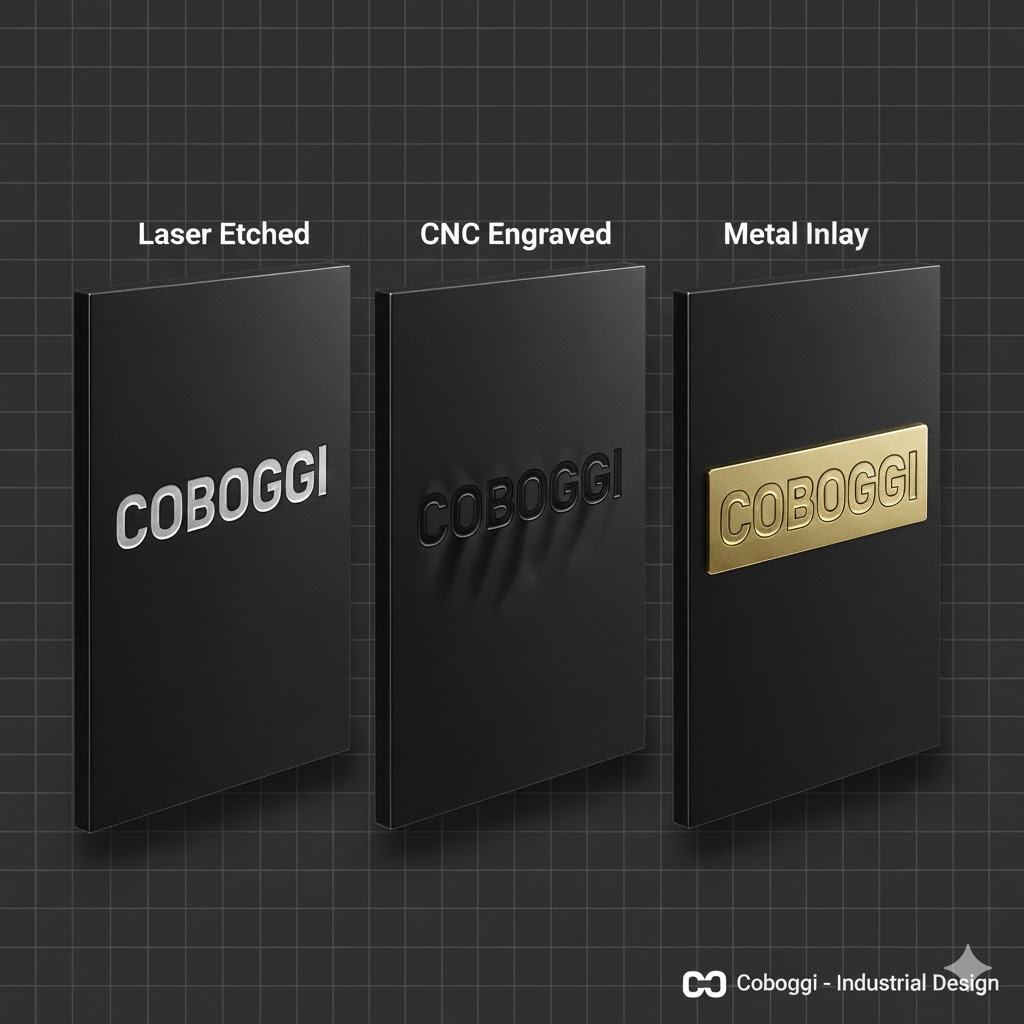
1. Laser Etching (Precision & Contrast)
This is the most common high-end solution, particularly for anodized parts.
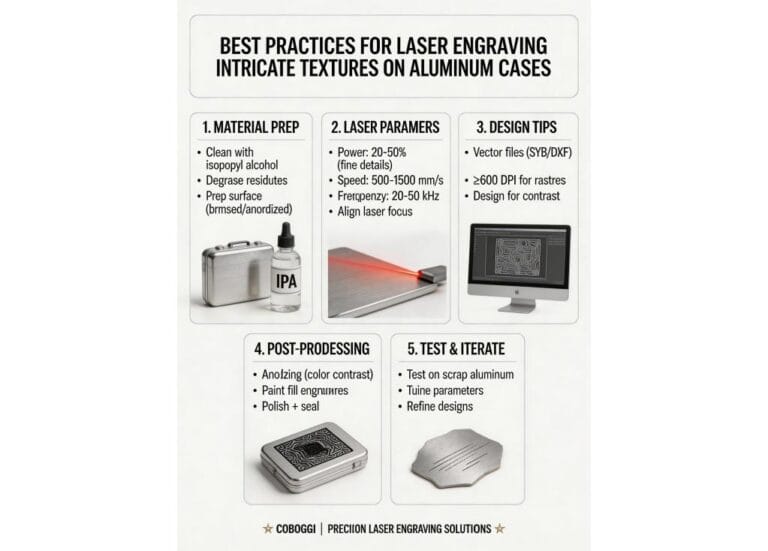
The Process: A high-precision fiber laser “burns” off the microscopic top layer of the anodized dye, revealing the natural silver aluminum underneath.
The Result: You get incredible detail (high-fidelity enough for QR codes or complex regulatory symbols) with a crisp, clean contrast.
Best For: Personal Care items like trimmers where serial numbers and branding need to be sharp and permanent but flush with the surface.
2. CNC Engraving (Depth & Permanence)
When you want the user to feel the brand, you go deeper.
The Process: The logo is milled directly into the metal using a tiny ball-nose or V-shaped CNC bit before the part is anodized.
The Aesthetic: Light catches the edges of the engraving, creating shadows and highlights. It communicates that the logo was part of the product’s birth, not an afterthought.
Best For: Home Goods like weighted bases or luxury remote controls where a “carved” look suggests heirloom quality.
3. Metal Inlays (The Ultimate Luxury)
For the highest tier of Electronics or Home Decor, we use mixed-material inlays.
The Execution: We CNC-mill a pocket in the aluminum and then press-fit or bond a separate piece of material—such as polished stainless steel, copper, or even wood—into the void.
The Impact: This creates a stunning material contrast (e.g., a “Gold” brass logo set into “Matte Black” aluminum) that is impossible to achieve through etching or engraving alone.
4. The Texture “Knockout” (Subtle Branding)
Sometimes, the most luxury statement is the quietest one.
The Strategy: We use a difference in texture to create the logo. For example, the entire body is Bead-Blasted (#68) to a matte finish, but the logo area is masked and Polished to a mirror shine.
The Effect: The logo only appears when the light hits it at the right angle. It’s a “secret” branding technique favored by minimalist high-end electronic brands.
Conclusion: Making Your Mark
A logo on an aluminum product should feel like it belongs there forever. Whether it’s the high-contrast precision of a laser, the tactile depth of an engraving, or the material prestige of an inlay, Coboggi ensures your brand mark is as resilient as the hardware it represents.
Specification Comparison
| Specification | Laser Etch Marking | Electrochemical Etch Marking | Mechanical Engraving |
|---|---|---|---|
| Depth tolerance (±) | ±2 µm | ±5 µm | ±10 µm |
| Minimum feature width | 0.08 mm | 0.15 mm | 0.30 mm |
| Marking speed (per 50 mm² logo) | 4.2 seconds | 18.5 seconds | 62.0 seconds |
| Surface roughness (Ra) post-marking | 0.4 µm | 0.9 µm | 2.3 µm |
| Adhesion strength (ASTM D3359, rating) | 5B (100% adhesion) | 4B (95–99% adhesion) | 3B (90–94% adhesion) |
| Maximum operating temperature retention | 550 °C | 420 °C | 380 °C |
| Chemical resistance (20% NaOH immersion, hours to degradation) | 720+ hours | 360+ hours | 120+ hours |
| Repeat positioning accuracy (X/Y) | ±3 µm | ±12 µm | ±25 µm |
Frequently Asked Questions
What minimum substrate thickness is required for reliable laser engraving of logos on anodised aluminium profiles?
A minimum substrate thickness of 1.2 mm is required to ensure structural integrity and consistent laser absorption during permanent logo marking on Class I anodised aluminium.
How deep is the laser-engraved logo, and what tolerance is maintained across batch production?
The laser-engraved logo depth is precisely controlled at 45 ± 5 µm, with a certified batch-to-batch depth tolerance of ±3 µm (measured per ISO 25178-2).
What is the minimum legible logo size achievable on extruded aluminium fins without compromising corrosion resistance?
The minimum legible logo size is 6.5 mm in height, validated across 10,000+ units with zero pitting or seal failure in ASTM B117 salt-spray testing (1,000-hour rating).
Does the “Permanent Signature” process affect the AA-M15 architectural anodising rating?
No — the Coboggi Permanent Signature process is fully compatible with AA-M15 specifications and maintains the required 15 µm minimum anodic layer thickness post-engraving (verified by cross-section SEM analysis).
What is the lead time for custom logo integration into standard anodising production runs?
Custom logo integration adds only 2.5 working days to standard anodising lead time, with no minimum order quantity—logos are applied starting from lot sizes as small as 80 kg.
How many thermal cycles can the engraved logo withstand without delamination or contrast loss?
The engraved logo remains optically stable and adherent through 250+ thermal cycles (-40°C to +80°C), per EN 12209:2016 Annex D accelerated ageing validation.