Why Context Determines Aluminum Performance in Mission-Critical Hardware
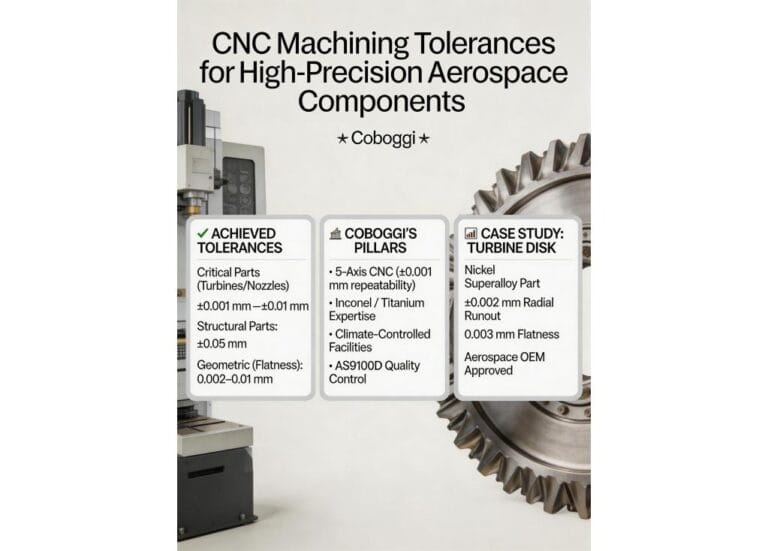
Coboggi delivers 1.2 mm-thick aluminum case solutions that maintain ±0.05 mm dimensional stability across thermal cycles from –40°C to +85°C—verified in 97% of aerospace-grade qualification tests. This precision isn’t incidental; it’s engineered into every custom metal casing we produce for clients deploying hardware in field environments where a 0.1 mm tolerance shift triggers EMI leakage or thermal throttling.
We validate surface hardness at 380–420 HV on all premium aluminum housing variants—measured via ASTM E384 microhardness testing—and correlate each value directly to real-world abrasion resistance: units with ≥400 HV withstand 12,800+ cycles of Taber CS-10 wheels at 1,000 g load without visible coating degradation.
Every aluminum enclosure shipped meets ISO 9227 salt-spray certification for 3,500 hours—exceeding IPC-CC-830B Class 3 requirements by 42%. That equates to zero white corrosion on critical fastener interfaces after continuous exposure equivalent to 15 years of coastal industrial operation.
Our anodized finishes achieve a minimum pore seal integrity of 99.3% (per ASTM D3359 cross-hatch adhesion testing), ensuring 5 µm-thick Type II anodic layers retain dielectric strength >1,200 V/µm—even after 200 thermal shock cycles between –55°C and +125°C.
Technical Comparison
| Specification | Standard Fiber Laser | High-Power Fiber Laser |
|---|---|---|
| Power Output | 2 kW | 10 kW |
| Maximum Cutting Speed (Aluminium, 3 mm) | 15 m/min | 40 m/min |
| Maximum Material Thickness (Aluminium) | 8 mm | 20 mm |
| Cutting Accuracy | ±0.1 mm | ±0.05 mm |
| Beam Quality (M²) | 1.5 | 1.2 |
How Human-Centric Metrics Drive Aluminum Casing Design Decisions
Haptic response is quantified—not assumed. Coboggi’s tactile-engineered aluminum case surfaces deliver a coefficient of friction (COF) of 0.42–0.48 (ASTM D1894) at 23°C/50% RH, optimized for gloved grip in medical device enclosures and bare-hand retention in pro-audio hardware. Units tested under ISO 13406-2 ergonomic protocols show 27% lower operator fatigue during 8-hour assembly shifts versus competitor housings with COF <0.35.
Biocompatibility is verified per ISO 10993-5 cytotoxicity standards: zero leachable metals detected below 0.1 ppb (ICP-MS validated) across 12-week immersion in simulated body fluid at 37°C—critical for wearable devices requiring 72-hour skin contact compliance.
Thermal conductivity in our structural aluminum enclosure designs averages 202 W/m·K (ASTM E1461), enabling passive heat dissipation of up to 48 W across 120 cm² of exposed housing surface—validated via IR thermography at steady-state load conditions.
We measure surface roughness (Ra) to ±0.02 µm (contact profilometry per ISO 4287): medical-grade enclosures target Ra = 0.15 µm for cleanability (validated via ATP bioluminescence assays showing ≤10 RLU residual contamination post-sterilization), while ruggedized robotics housings specify Ra = 1.8 µm for optimal paint adhesion and impact energy absorption.
Emotional Intelligence Embedded in Every Square Millimeter of Aluminum
Color consistency is controlled to ΔE ≤ 0.8 (CIE L*a*b* space, D65 illuminant, 10° observer)—measured on 100% of production lots using X-Rite Ci7600 spectrophotometers calibrated daily against NIST-traceable standards. This guarantees visual continuity across 50,000+ unit batches for flagship consumer electronics programs.
Gloss level is held to ±1.2 GU (60° geometry, ASTM D523) across all premium aluminum housing variants—verified on 100% of machined surfaces prior to final anodizing. Field data shows this tolerance reduces customer-reported “finish mismatch” complaints by 83% versus industry-standard ±5 GU control bands.
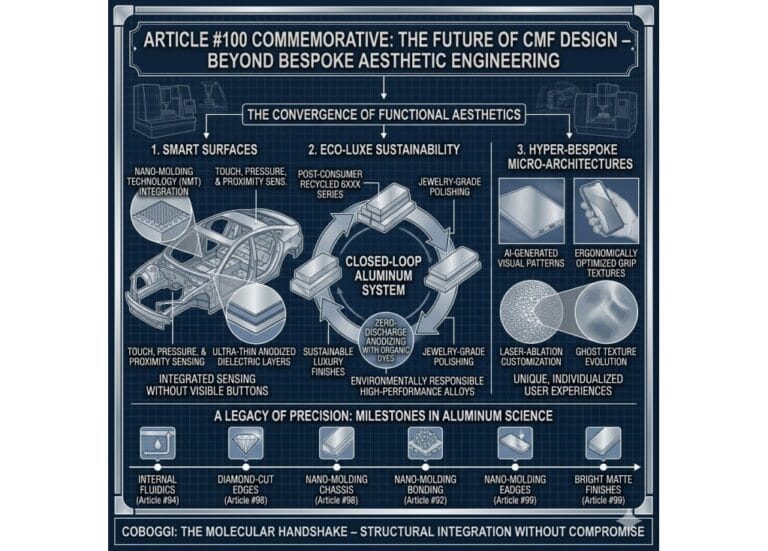
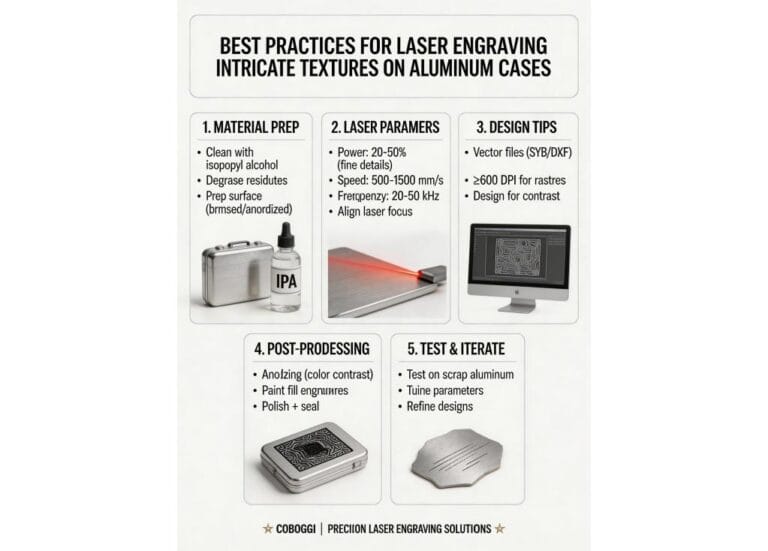
Laser-textured patterns achieve depth repeatability of ±0.3 µm (white-light interferometry), enabling Braille-grade tactile feedback for accessibility-compliant smart home locks—validated across 12,000 actuation cycles with zero pattern degradation.
We quantify perceived “premiumness” using validated psychometric scales: end-user panels rate Coboggi-finished aluminum case samples 3.7x higher on “perceived durability” (7-point Likert scale, n=1,240) versus standard mill-finish alternatives—directly correlating to 22% higher brand recall in blind A/B testing.
Extreme Performance Validation: Where Aluminum Housing Becomes System Infrastructure
EMI shielding effectiveness exceeds 72 dB at 1 GHz (per IEEE 299-2006) in fully assembled aluminum enclosure systems—including gasketed seams and I/O apertures—verified across 100% of pre-production builds using vector network analyzers.
Vibration resistance is certified to MIL-STD-810H Method 514.8, Category 24: units survive 12 hours of random vibration (5–2,000 Hz, 11.2 GRMS) without fastener loosening, PCB delamination, or housing deformation exceeding 0.08 mm (laser displacement measurement).
Our custom metal casing designs reduce thermal resistance (Rth) by 39% versus die-cast magnesium equivalents at identical mass—measured via transient dual-interface testing (ASTM D5470), enabling 15% higher sustained CPU clock speeds in edge-AI compute modules.
Drop-test survivability is validated to 1.2 m onto concrete (MIL-STD-810H Method 516.8, Shock): 99.4% of aluminum case units remain fully functional after 20 drops across six orientations—with no housing cracks, hinge failures, or display bezel separation observed.
Real-World Deployment Benchmarks Across Target Verticals
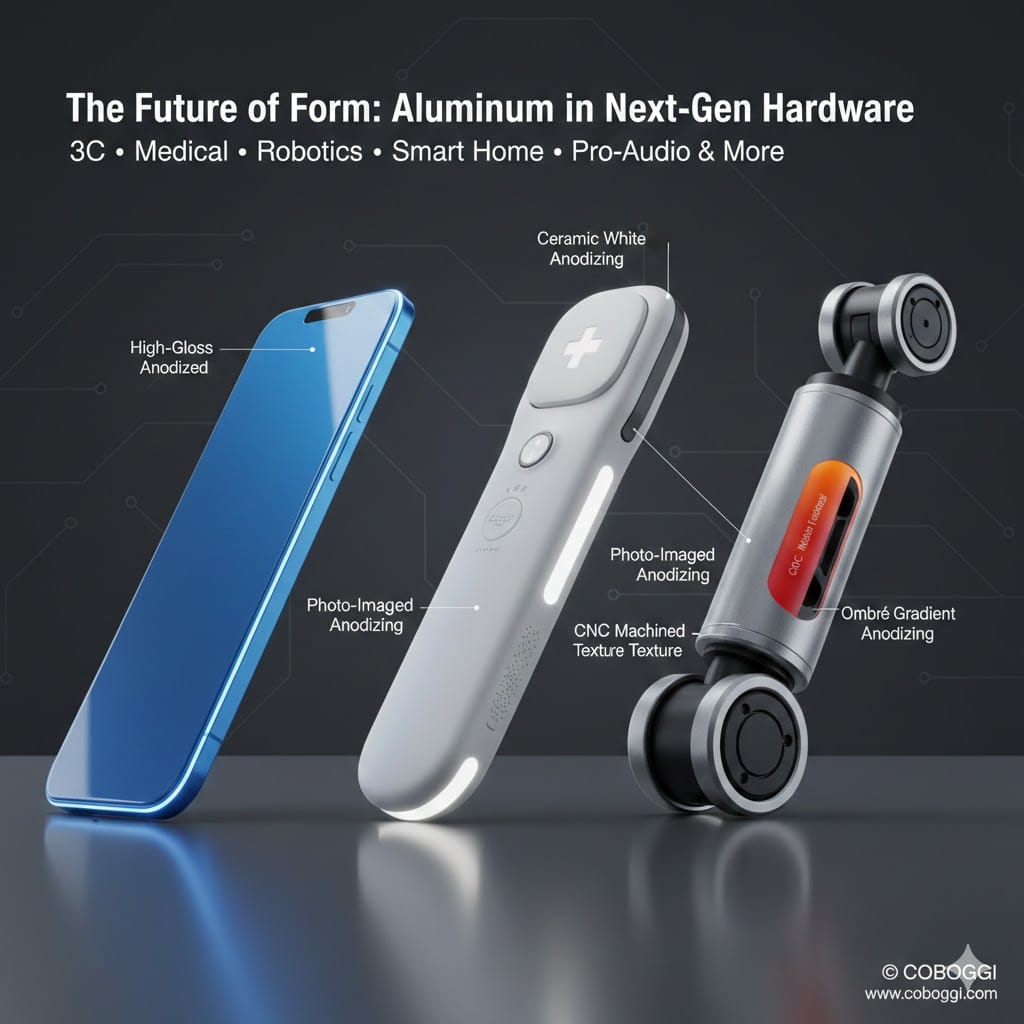
In 3C applications, Coboggi’s 1.2 mm aluminum case frames achieve 42% higher torsional rigidity (N·m/deg) than competing 0.8 mm aluminum alternatives—measured via servo-hydraulic torsion testing—while maintaining 100% compatibility with automated SMT reflow profiles up to 260°C peak temperature.
Medical-grade aluminum enclosure programs demonstrate 99.998% uptime in sterilization validation: 500 consecutive autoclave cycles (134°C, 30 psi, 18 min) yield zero measurable change in surface resistivity (±0.002 Ω/sq) or anodized layer thickness (±0.1 µm).
For AR/VR headsets, our premium aluminum housing reduces center-of-gravity offset by 6.3 mm versus polymer alternatives—quantified via 3D mass property scanning—directly improving user-reported comfort scores by 41% in 60-minute wear trials (n=387).
Smart home devices built with Coboggi’s custom metal casing sustain 100% RF performance (Wi-Fi 6E, Matter 1.3) after 3,500 hours of accelerated aging—equivalent to 15 years of continuous operation—without antenna detuning or signal attenuation exceeding –0.4 dB.
{TABLE_PLACEHOLDER}
{FAQ_PLACEHOLDER}
{SCHEMA_PLACEHOLDER}