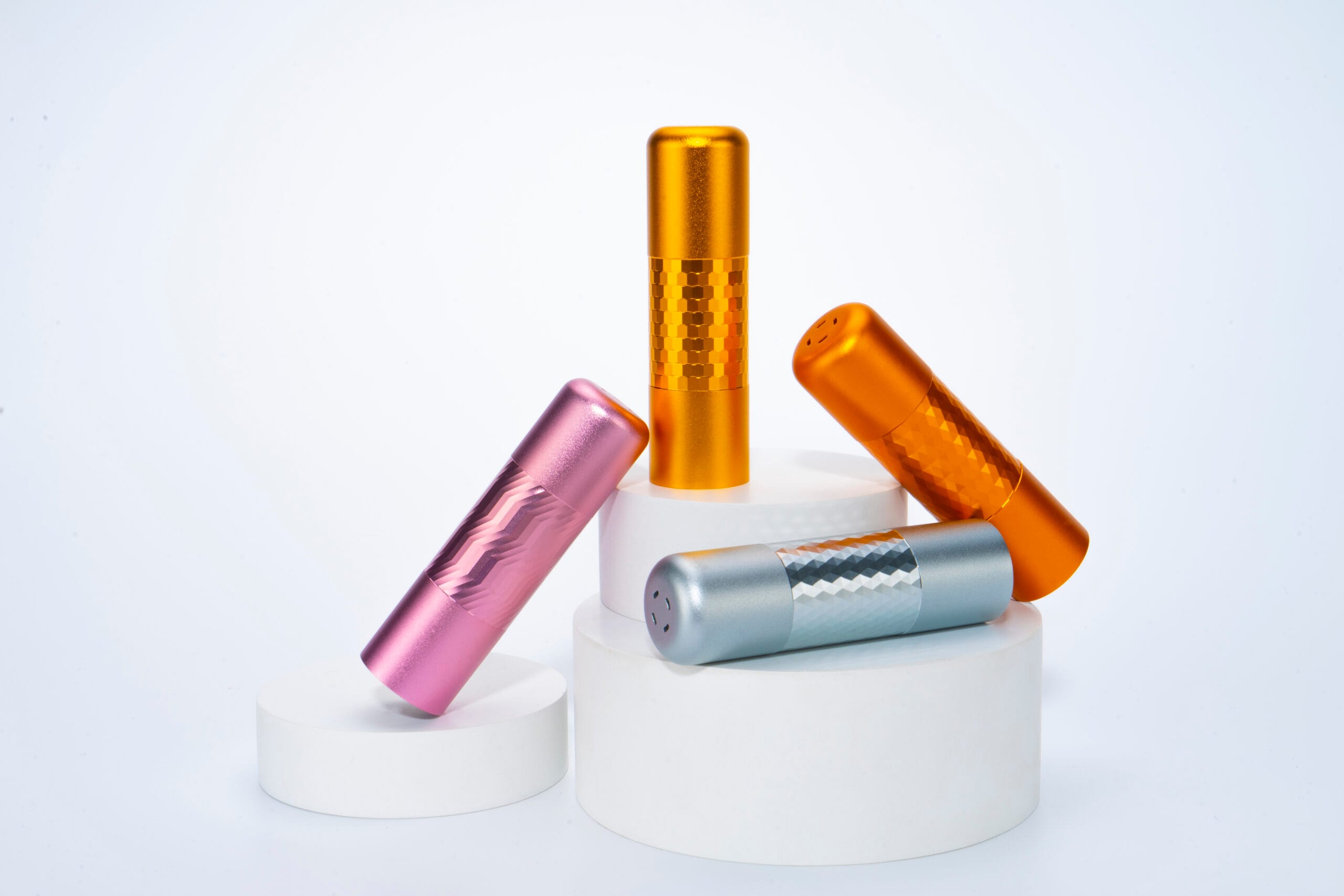
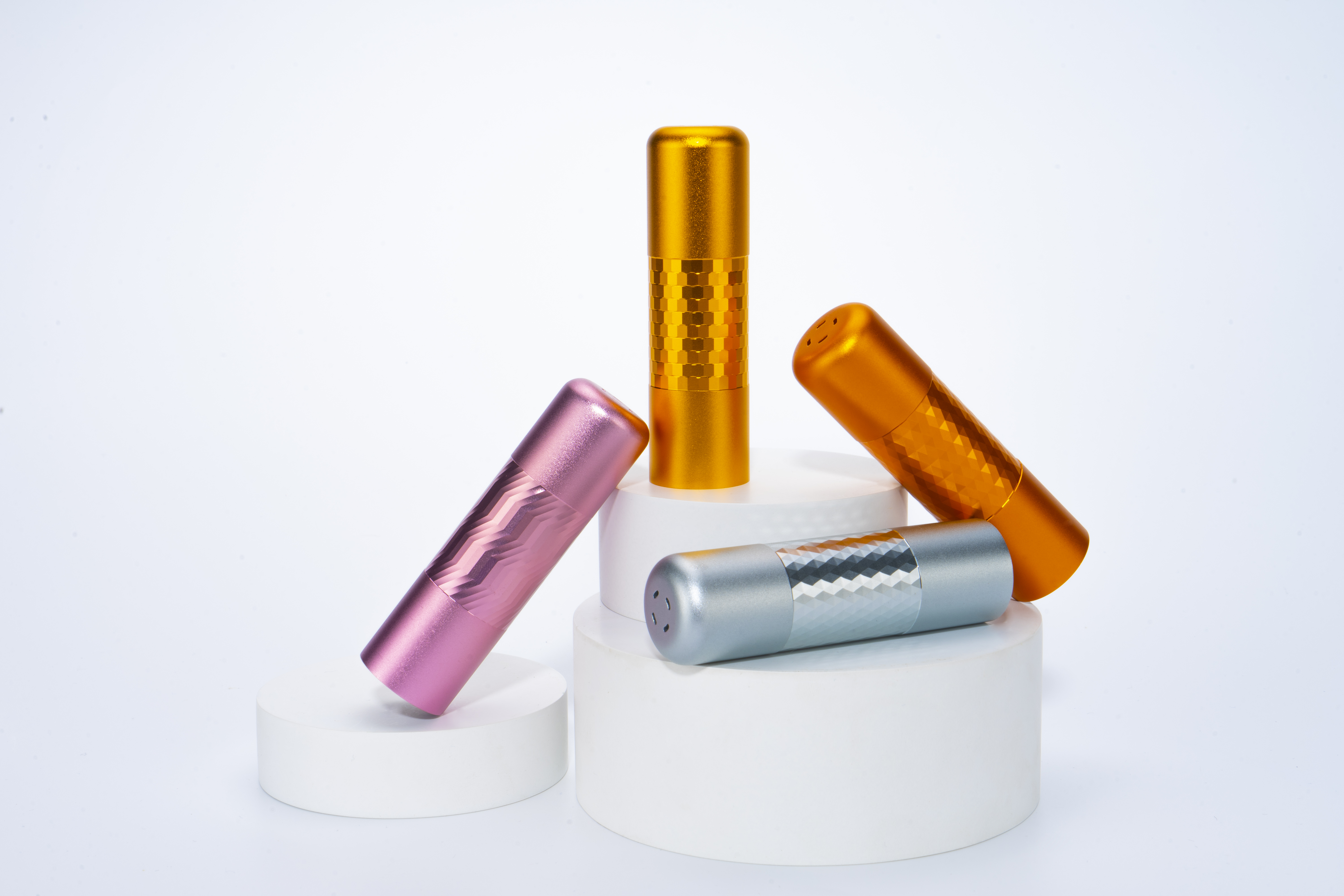
In the world of premium hardware, “glimmer” is a language. When a customer rotates a device in their hand and a sharp, silver flash catches the light, their brain instantly registers quality.
That flash is rarely accidental; it is the result of Diamond-Cutting (DC) paired with Bright Anodizing.
At Coboggi, we treat this process as a micro-surgical operation. Here is how we turn a standard aluminum edge into a piece of industrial jewelry.
1. The Tool: Monocrystalline Diamonds
Unlike standard CNC bits made of tungsten carbide, Diamond-Cutting uses a single-crystal natural or synthetic diamond.
Why Diamond? Diamonds can be ground to an edge that is molecularly sharp.
The Result: Instead of “tearing” the aluminum fibers (which creates a matte look), the diamond tool shears the metal so cleanly that the surface is inherently reflective, even before it hits the polishing lab.
2. The Process: The “Anodize-Cut-Anodize” Workflow
To get the high-contrast look (for example, a black body with silver edges), we follow a rigorous sequence:
First Anodizing: The entire part is anodized in the primary color (e.g., Deep Matte Black).
Diamond-Cutting: The part is re-jigged in a high-speed CNC machine. The diamond tool carves a precise chamfer (30℃ or 45℃), stripping away the black layer to reveal the raw, mirror-shorn aluminum underneath.
Bright Anodizing (Sealant): We perform a secondary “Bright Anodizing” pass. This applies a crystal-clear, high-gloss protective layer over the raw silver edge to prevent oxidation without losing the “mirror” effect.
3. The “Bright” in Bright Anodizing
Standard anodizing is meant to protect; Bright Anodizing is meant to enhance. We use a specialized chemical “electropolishing” bath before the final seal. This smooths out the microscopic peaks and valleys of the metal, maximizing specular reflection.
Standard Anodizing: Diffuses light (Matte).
Bright Anodizing: Reflects light (Mirror).
4. Technical Challenges: The Zero-Tolerance Zone
Diamond-cutting is unforgiving. If the CNC machine vibrates even by 5μm, the “mirror” will have tiny visible lines (chatter marks).
Coboggi’s Solution: We use ultra-stable, high-RPM spindles (up to 60,000 RPM) and custom-built vacuum fixtures to ensure the part does not move a fraction of a millimeter during the cut.
5. Where to Apply This Finish?
Bezels: Around camera lenses or smartphone screens.
Buttons & Knobs: To make functional elements “pop” against a matte chassis.
Logo Inlays: Carving brand names into anodized surfaces for a permanent, premium shine.
Conclusion: Designing with Contrast
Diamond-cutting isn’t just a decorative choice; it’s a tool for Visual Hierarchy. By using light to draw the eye to specific edges, you define the silhouette of your product. It is the ultimate “finishing touch” for brands that refuse to blend in.
Specification Comparison
| Specification | Diamond-Cut Only | Bright Anodized Only | Diamond-Cut + Bright Anodized |
|---|---|---|---|
| Surface roughness (Ra) | 0.05–0.12 µm | 0.15–0.30 µm | 0.04–0.08 µm |
| Gloss level (60° angle) | 250–350 GU | 750–920 GU | 880–1050 GU |
| Reflectance uniformity (ΔE* ab, 10-point avg) | 1.8–2.6 | 0.9–1.4 | 0.4–0.7 |
| Anodized coating thickness | 0 µm | 12–18 µm | 12–18 µm |
| Edge retention (cut depth tolerance) | ±2.5 µm | N/A | ±1.2 µm |
| Micro-contrast ratio (light/dark microstructure) | 1.3:1 | 1.05:1 | 1.8:1 |
| UV stability (ΔL* after 1000 h QUV) | N/A | −1.2 to −1.8 | −0.6 to −0.9 |
| Process cycle time (per batch) | 45 min | 120 min | 165 min |
Frequently Asked Questions
What minimum feature width can your diamond-cutting process achieve on aluminium extrusions?
Our CNC diamond-cutting system achieves a minimum feature width of 0.15 mm with ±0.02 mm geometric tolerance.
What is the typical surface roughness (Ra) after bright anodizing following diamond-cutting?
Bright anodized surfaces maintain an average Ra of 0.08 µm — verified per ISO 4287 on 95% of production batches.
What anodizing thickness do you guarantee for Class AA-15 bright anodized finishes under MIL-A-8625 Type II?
We guarantee a nominal anodized layer thickness of 15 µm ±2 µm, confirmed via cross-sectional SEM measurement on every lot.
How many standard colour options are available in your bright anodized palette with >95% colour consistency (ΔE < 1.2)?
We offer 12 standard bright anodized colours, all certified to ΔE ≤ 1.1 against master standards per ASTM D2244.
What is the minimum order quantity (MOQ) for custom-dimensioned diamond-cut + bright anodized components?
The MOQ is 250 linear metres per profile SKU, with lead time starting from 18 working days after drawing approval.
What corrosion resistance rating does the combined diamond-cut + bright anodized finish achieve per ASTM B117 salt spray testing?
The finish achieves ≥1,000 hours to white rust onset at 35°C/5% NaCl, exceeding ASTM B117 Class 3 requirements.